Perth Council Deploys Piercing Noise Device to Deter Homeless Under Bridge
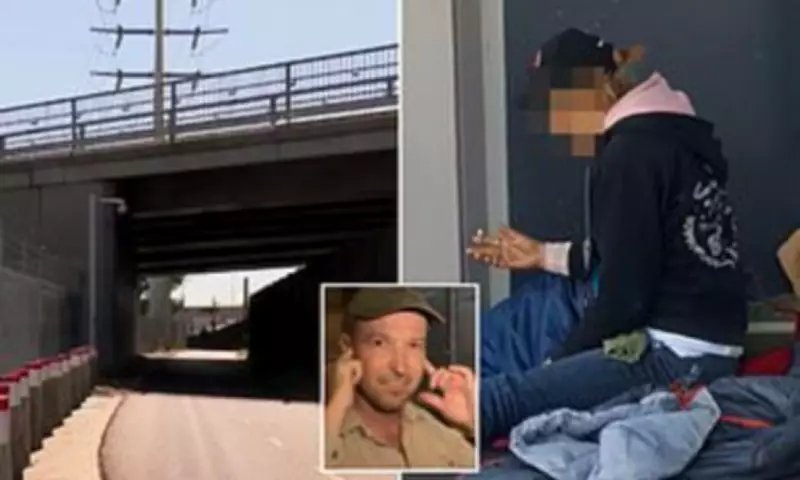
Residents and activists in Perth have expressed outrage after the local council installed a device emitting loud, piercing noises to discourage homeless people from camping under a bridge. The controversial technology was set up at the Lord Street Bridge underpass near a train line in East Perth over the weekend, creating a shrill, buzzing sound designed to be uncomfortable for human ears.
Hostile Architecture Sparks Public Backlash
The device, which was reportedly turned off by Tuesday morning following public pressure, represents what critics describe as "hostile architecture"—adaptations of public spaces intended to deter loitering or sleeping. This practice often includes features like spikes in doorways, bench dividers, or sloped seats to prevent people from lying down.
Jesse Noakes, who runs the independent media publication The Last Place on Earth, shared a recording of the irritating noise. "It's really piercing. It's almost painful, and that's the whole idea," he said, with fingers in his ears. "[Council] want it to be painful for people who are thinking of coming and rolling out a sleeping bag, or chucking a tent on the side of this bike path. That is an audible anti-homeless device. Hostile architecture, built in."

Footage of the shrill sound devices in Perth has circulated widely on social media, where users were quick to condemn the council's actions. Many highlighted that the noise would be distressing not only for people but also for animals in the area.
- One social media user stated: "That is a disgusting thing for the council to do."
- Another commented: "How about they spend money on actually helping the homeless."
- A third added: "In their effort to prevent homeless people from sleeping rough in certain places, they've made it hostile to all people. What about native animals in the area? Are they damaged too? It's cruel."
Impact on Homeless Individuals and Wider Community
Matthew Swain, who has been sleeping rough for two years, reported hearing similar noises in several areas of Perth. "It's definitely really loud under the underpass," he told 7News. "I don't go and stay there because I don't like encroaching on other people's spots, and that's like a known spot for, you know, some crew. I couldn't stay there with that noise and like where I went to stay last night and was setting up in one of the car parks, one of the Wilson's car parks, I noticed the noise, not quite at that level, but yeah, had to leave pretty much straight away."
In response to inquiries, a spokesman for the Public Transport Authority (PTA), which manages the sound devices, confirmed to news.com.au that the devices are no longer emitting sound. "The City of Perth requested the installation of a noise device at the Lord Street underpass," he said. "The noise device has been turned off. We will be asking the City of Perth to determine a more suitable way forward."
Council Defends Safety Measures Amid Controversy
The council defended the device as part of a "broad safety approach" following "ongoing reports of antisocial and criminal behaviour and community concerns about safety in the area." A spokesman stated, "The City’s focus remains on improving safety and amenity for all users of the area. This includes increased security patrols, the installation of CCTV and the deployment of mobile CCTV trailers to support safer access and use of the underpass."
This incident is not the first time Western Australia has seen controversial uses of loud sounds to deter homeless people. In 2023, the City of Bunbury played The Wiggles' song "Hot Potato" on loop at the Graham Bricknell Music Shell outdoor stage in the town centre, south of Perth. That measure was switched off after The Wiggles intervened, expressing disappointment that their music—created to bring joy to children—was being used for such a purpose.

The deployment of noise devices in Perth has ignited a broader debate about the ethics of hostile architecture and the treatment of vulnerable populations in urban spaces. Critics argue that such measures exacerbate the hardships faced by homeless individuals, while proponents claim they address safety and antisocial behaviour concerns. As the council reviews its approach, the incident underscores the ongoing challenges in balancing public safety with compassion for those experiencing homelessness.