

A new report from youth homelessness charity Centrepoint reveals that more than 130,000 young households are currently stuck on social housing waiting lists in England, creating a backlog that would take over six years to clear at current rates. The charity warns that the housing system is forcing young people to 'put their lives on hold' due to insufficient numbers and quality of social homes.
Personal Story: Four-Year Wait for Chloe Harris
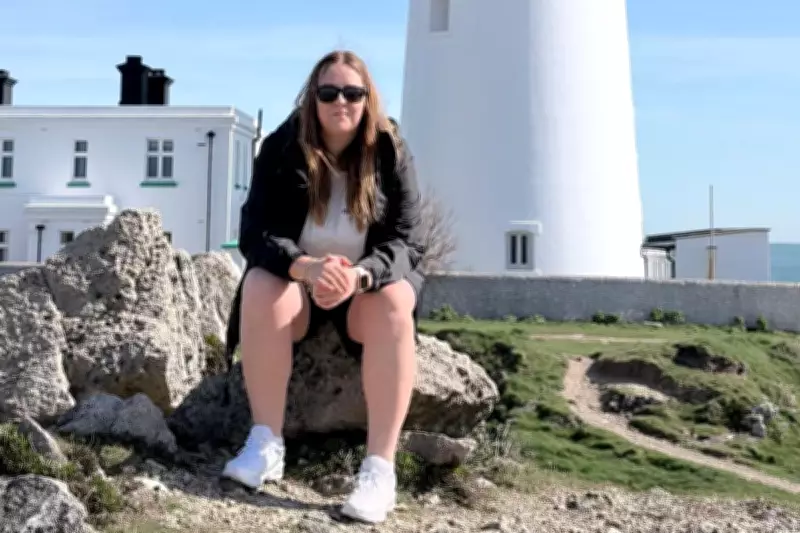
Chloe Harris, 25, spent four years on her local social housing list before moving into charity-funded supported accommodation, never having received an offer. She described the bidding process as particularly difficult due to her low priority band C status, which left her in constant uncertainty. 'When you bid, it goes live at midnight on Wednesday. You stay up late because you want to see your position. It was telling me I was second in a queue, and then I’d wake up the next morning and I’m 43rd. How does that happen? It gives you false hope when your mental health is already at rock bottom,' she said.
Ms Harris, who experienced street homelessness after financial abuse, now volunteers with homelessness charity Alabare, which previously provided her with supported accommodation. She noted that having to 'prove' her homelessness to the local authority was one of the hardest parts: 'To have to prove you are sleeping on the street... you lose every sense of self-respect possible. It can be the tipping point for a lot of people.'

Mismatch Between Supply and Demand
The Centrepoint report, based on official data and Freedom of Information requests, highlights a stark mismatch between available housing and young applicants' needs. Nearly half (48 per cent) of young applicants require one-bedroom properties, but only 24 per cent of current social housing stock matches this. This deficit means that even if young people rise through the waiting list, there is often nowhere for them to go.
Key Findings from the Report
- Two-thirds (66 per cent) of young people in social housing said they were at risk of homelessness.
- One in three young people report discrimination blocking them from private rentals.
- There has been a 10 per cent fall in HMO registered landlords since 2019/20, the most common accommodation for young people.
Ella Nuttall, Centrepoint’s policy and research manager, said: 'Young people should be able to take safe, stable housing for granted. It’s the foundation for everything else in life. Without it, the risk of repeated homelessness, poor mental health, and long-term disadvantage increases. The wait between requesting support and getting it is simply too long. We’re effectively asking young people to put their lives on hold here: at a time when most of their peers are starting work and exploring the world around them, young people in housing crisis are trapped in temporary accommodation or worse.'
Government Targets Under Scrutiny
The Labour government has pledged to build 1.5 million homes by 2029 and 180,000 social homes by 2036 to boost affordability and tackle homelessness. Currently, 1.3 million people are on waiting lists for social housing. However, experts say the social home target falls short of what is required. Housing charity Shelter has called for 90,000 social homes per year for a decade to compensate for the net loss of 260,000 social homes in the ten years to 2022/23.
Ms Nuttall added: 'The government are making the right noises when it comes to prevention and support – but it’s increasing the level of housebuilding, including the building of suitable social homes, that will transform things. Without that, too many young people will continue facing homelessness and be excluded from stable housing and the opportunity to move forward with their lives.'
The government was approached for comment.






