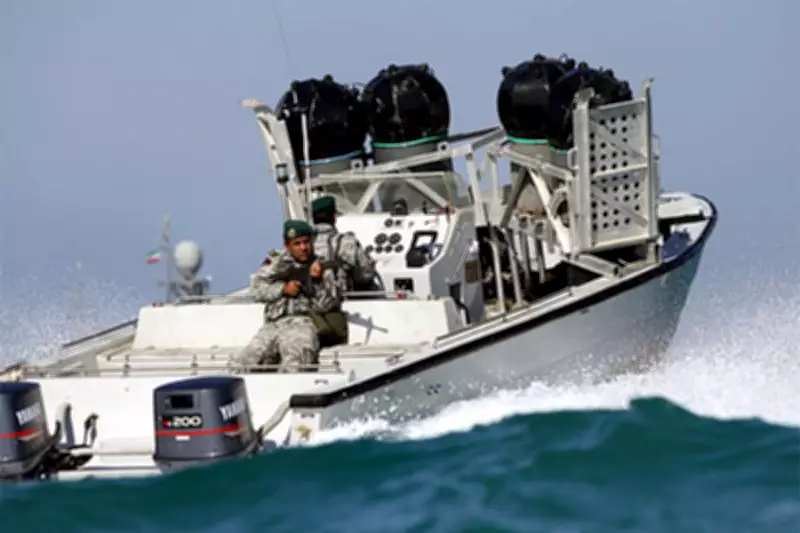
Sea Mines in the Strait of Hormuz: A Global Trade Threat
U.S. intelligence officials have assessed that Iranian forces have deployed a small number of mines in the Strait of Hormuz, a critical choke point for global shipping, according to recent reports. This move provides Iran with an additional means, alongside missiles and drones, to threaten maritime vessels and disrupt international trade routes.
U.S. Navy's Mine Countermeasures Shift
The U.S. Navy recently decommissioned its dedicated minesweeping vessels that were operating in the Persian Gulf region. However, it retains other ships and aircraft equipped for finding and destroying mines. As a computer scientist researching mine detection, I have explored how artificial intelligence techniques, such as machine learning, can assist navies in identifying modern sea mines. Here is an in-depth look at how these mines function and the methods used to neutralize them.
Types of Modern Sea Mines
The mines most commonly depicted in films, like those in "Godzilla Minus One," are floating spheres tethered to the seabed, known as moored mines. They feature small protrusions called Hertz horns that trigger upon contact with a ship. In contrast, influence mines respond to a ship's magnetic, acoustic, or pressure signature, rather than direct impact. Modern mines often combine multiple sensing modes, with some designed to detonate only after a certain number of ships have passed, allowing them to target higher-value vessels while ignoring smaller ones or minesweeping attempts. Examples include the Iranian Maham 3, which utilizes both magnetic and acoustic sensors.

Not all mines float; many modern variants sit on the seabed, making them particularly effective in shallow waters where ships pass closer to the ocean floor. These bottom mines can be exposed, partially buried, or completely hidden in sediment. Examples include the Iranian Maham 7 and the Manta mine, used by Iraq during the 1991 Gulf War. Deployable from small vessels or aircraft, these mines are triggered when they sense a ship overhead. More advanced designs, such as rising mines, launch upward toward a target once detected.
Mine Countermeasures and Disruption
A key advantage of naval mines lies not only in the damage they inflict but also in the significant time and resources required to locate and clear them. Even the mere possibility of mines can disrupt shipping and necessitate extensive, costly clearance operations. This was evident during the 1980s Tanker War in the Persian Gulf and Red Sea, where Iran and Iraq deployed relatively small numbers of mines, causing substantial shipping disruptions and forcing lengthy clearance efforts despite limited direct damage.
Countermeasures often employ uncrewed systems to trigger mines by mimicking ship signatures or disable them with explosive charges. However, more targeted approaches require reliable detection of individual mines, driving the need for advanced technological solutions.
Mine Hunting with AI and Sonar
Mine detection is best understood as a wide-area sonar search, generating numerous contacts—any anomalies in the sonar data. Automatic target recognition algorithms then triage these contacts, classifying them as minelike objects or benign. This is followed by higher-confidence identification using divers or camera systems, forming a detect-classify-identify pipeline.
To collect data, an uncrewed surface vehicle, deployed from a larger ship, tows a sonar platform called a towfish at a fixed height above the seabed. This platform, resembling a small missile, carries multiple sensors, including port and starboard side-scan sonar. The British Royal Navy is reportedly preparing to send this type of towed sonar array to the Persian Gulf region.
Sonar devices use sound rather than light to create images, assembling one-dimensional measurements of returned sound energy into continuous seabed imagery. Objects appear with a bright highlight facing the sonar and a shadow extending away, aiding in detection.

Advanced Detection Techniques
Researchers have developed various techniques for detecting minelike objects in sonar imagery. Early methods segmented imagery into regions showing highlights paired with acoustic shadows, while statistical approaches model seabeds to identify anomalies. Template-like matched filters are used for objects with known geometric characteristics.
More advanced methods incorporate machine learning, utilizing features derived from texture, intensity, and shadow geometry for classification. Recently, deep learning approaches applied directly to sonar imagery have shown improved performance, particularly in complex environments. However, their effectiveness depends on the availability of representative training data. High-resolution side-scanning sonar data is expensive to collect and label in sufficient quantities for training robust deep learning systems.
Perhaps, once it becomes safe, navies can clear mines from the Strait of Hormuz, adding to the limited supply of this crucial data for future advancements in mine detection technology.