Gulf Nations in Race for South Korea's Advanced Air Defence Missiles
Arab nations are urgently seeking to secure South Korea's Patriot-style air defence missile systems, following their demonstrated success in intercepting Iranian attacks. The Cheongung missile interceptor, also known as M-SAM Block II, has become a highly sought-after defence asset for Gulf countries amidst the ongoing US-Iran war.
Proven Performance in Combat
South Korea's homegrown medium-range surface-to-air missile system achieved a remarkable reported interception rate of 96 percent against Iranian missiles fired at the United Arab Emirates. This NATO-standard interceptor rivals the capabilities of the US-made Patriot PAC-3 system while being produced at approximately a quarter of its price.
"Middle Eastern countries are lining up to buy South Korean missiles right now," South Korea's finance minister Koo Yun Cheol told Bloomberg News. "They are requesting weapons from South Korea because of their accuracy – the fact that they destroy ballistic missiles with a success rate of over 90 percent."

Shifting Defence Procurement Patterns
Although Patriot and Terminal High Altitude Area Defence (THAAD) systems remain deployed in the Middle East to counter Iranian threats, demand is increasingly shifting toward South Korea's more affordable and faster-to-deliver interceptors. This trend reflects a broader regional push to reduce reliance on American weapons systems.
The UAE pioneered the adoption of Cheongung batteries, signing a substantial $3.5 billion deal in 2022 with South Korean defence contractors LIG Nex1, Hanwha Systems, and Hanwha Aerospace for ten units. Saudi Arabia and Iraq followed suit in 2024, each securing agreements to acquire this advanced air defence platform.
Combat Deployment and Production Challenges
The recent interception events mark the first known combat deployment of a South Korean-made air defence system overseas. Following this success, Abu Dhabi has accelerated efforts to fast-track delivery of remaining batteries and has separately requested thirty additional interceptors, prompting airlifts from Daegu this month.
However, Seoul has indicated that production constraints limit its ability to expedite deliveries significantly. Existing commitments have created substantial backlogs, though South Korean manufacturers are implementing measures to increase output.
Technical Specifications and Cost Advantages
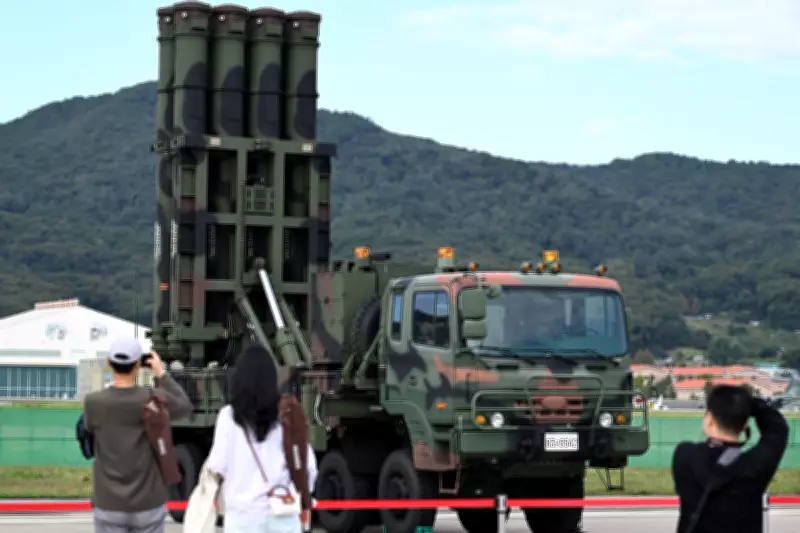
The Cheongung-II battery system emphasizes speed and operational simplicity, featuring four launcher vehicles each carrying eight launch tubes, supported by multifunction radar and engagement control stations. With a maximum range of approximately 40 kilometers and interception capabilities at altitudes below 15-20 kilometers, the system operates effectively within the engagement envelope of Iranian ballistic missiles and drones.
Financially, the interceptor presents a compelling value proposition at about 1.5 billion won or $1 million per unit. This contrasts sharply with the $4 million price tag for Lockheed Martin's Patriot PAC-3 missile. Delivery timelines further differentiate the systems, with PAC-3 deliveries requiring four to six years compared to South Korea's potential nine to twelve month production acceleration through double-shift operations.
Strategic Context and Limitations
South Korea's missile interceptors demonstrate particular effectiveness against Iranian systems due to historical technology sharing between Tehran and Pyongyang since the 1980s. Iran's Shahab-3 ballistic missile, for instance, derives from North Korea's Nodong missile technology.
Nevertheless, experts caution that successful interceptions against Iranian missiles do not guarantee equivalent performance against more advanced North Korean systems. "Iran's older missiles resemble North Korea's, but North Korea's latest systems are far more advanced," noted Yang Uk, a research fellow at the Asian Institute for Policy Studies. "Missiles such as the KN-23 and KN-24 can perform evasive maneuvers, and none of the missiles Iran launched this time had that capability."

South Korea's Growing Defence Export Profile
Seoul has recorded approximately $55 billion in defence sales over the past four years, currently ranking as the world's tenth-largest arms exporter. Beyond the Cheongung system, South Korea's defence portfolio includes the K2 Black Panther main battle tank and K9 Thunder self-propelled howitzer.
Arms exports to the Middle East have surged dramatically, increasing from about $240 million in 2019 to approximately $740 million in 2024 – more than tripling over five years. According to the Stockholm International Peace Research Institute, South Korea now holds the ninth position globally in arms exports with a three percent market share.
Approximately sixty percent of Seoul's defence exports from 2021 to 2025 were directed to Poland, which has significantly increased military spending in response to Russia's war in Ukraine. This diversification demonstrates South Korea's expanding influence in the global defence market as nations seek reliable, cost-effective alternatives to traditional Western suppliers.