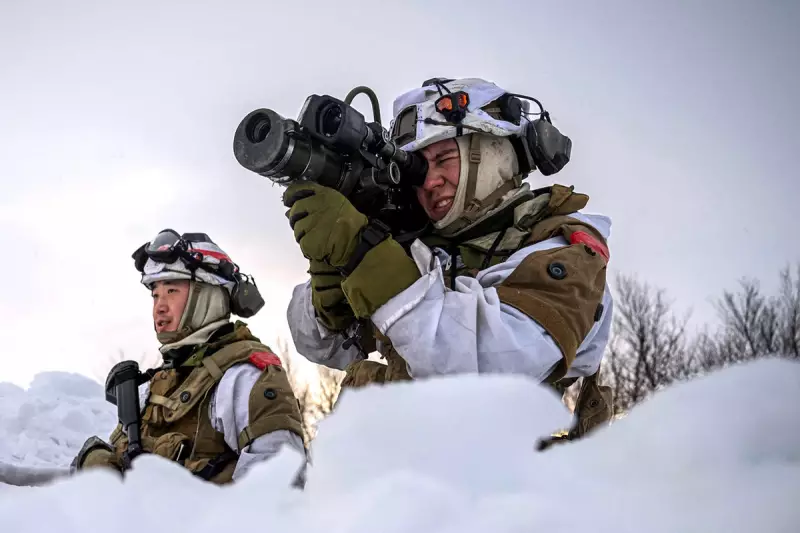
In recent years, the Arctic region has become a focal point for global defence strategies, with numerous nations significantly ramping up their military presence and spending. This surge in activity is driven by strategic interests, resource competition, and geopolitical tensions, making the Arctic a critical arena for international security. The key players in this region include Russia, the United States, Canada, Denmark, Norway, Sweden, Finland, and Iceland, all of which hold Arctic territory and are actively enhancing their military capabilities.
Russia's Dominant Arctic Military Posture
Russia controls approximately half of the Arctic landmass and has been aggressively modernising its military infrastructure since 2005. The nation has reopened and upgraded dozens of Soviet-era bases on its mainland and northern islands, maintaining a high state of readiness. A notable example is the nuclear testing site on Novaya Zemlya, an Arctic archipelago, where Russia conducted a test launch of its nuclear-powered Burevestnik cruise missile in October 2025, although no nuclear explosions have occurred there since 1990.
Key Russian Military Assets
The Kola Peninsula in the European Arctic is a strategic hub, hosting about two-thirds of Russia's second-strike nuclear capabilities, according to Mathieu Boulegue, a fellow at the Polar Institute. This area is also home to the Northern Fleet, headquartered in Severomorsk, which operates six of Russia's twelve nuclear-armed submarines. The fleet's access to the North Atlantic via the Barents Sea is crucial for Moscow, underscoring the region's importance in global defence dynamics.

United States and Canada: Collaborative Defence Efforts
The United States and Canada have a long-standing partnership in Arctic defence, primarily through the North American Aerospace Defense Command (NORAD), established in 1957. They are currently modernising NORAD, with Canada procuring two over-the-horizon radar systems to cover the Arctic and polar approaches, expected to be operational by 2028. Additionally, former U.S. President Donald Trump has advocated for a new missile defence system, dubbed Golden Dome, highlighting Greenland's perceived strategic value, though this proposal has been met with resistance from Denmark and Greenland.
Military Bases and Personnel
Washington maintains the Pituffik Space Base in northern Greenland under a defence agreement with Denmark, while most U.S. Arctic forces are stationed across eight bases in Alaska, totalling around 22,000 military personnel. Canada operates five Arctic bases, including Alert on Ellesmere Island, the world's northernmost permanently inhabited settlement, and is developing a refuelling facility on Baffin Island for offshore patrol ships, despite project delays.
Denmark's Strategic Role in Greenland
Denmark's Joint Arctic Command, based in Nuuk, Greenland, comprises about 150 military and civilian personnel. It oversees operations at the Kangerlussuaq air base and four smaller stations in eastern and northeastern Greenland. A unique element is the Sirius dog sled patrol, a military unit conducting reconnaissance in extreme conditions, which has drawn criticism from figures like Trump. Denmark also has a liaison officer at the Pituffik Space Base, reinforcing its defence ties with the U.S.
Scandinavian and NATO Contributions
Sweden and Finland, both recent NATO members, are integrating their militaries with the alliance while maintaining their Arctic capabilities. Sweden has an air force base at Lulea and an army base in Boden, though no installations north of the Arctic Circle. Finland operates an air base in Rovaniemi and a Jaeger Brigade base in Lapland. Norway, as NATO's monitor for a vast North Atlantic area including the Arctic, has multiple military installations above the Arctic Circle, such as four air bases and two navy bases, but none on the Svalbard archipelago.
Iceland's Unique Defence Setup
Iceland, a NATO member without a standing military, relies on its coastguard service and hosts rotational deployments of U.S. Navy P-8A Poseidon aircraft at Keflavik air base. NATO fighter jets also rotate through Keflavik periodically to secure Icelandic airspace, typically for two to three weeks, three times a year, showcasing the collaborative nature of Arctic defence efforts.

This overview highlights the complex and evolving military landscape in the Arctic, driven by national interests and alliance dynamics. As nations continue to invest in defence assets, the region remains a critical focus for global security strategies, with implications for international relations and stability.