Australian Defence Personnel Isolated During US Submarine Strike on Iranian Vessel
Three Australian military personnel serving aboard a United States Navy submarine were reportedly confined to their cabins during an offensive operation that resulted in the sinking of an Iranian warship off the coast of Sri Lanka last week. The incident has sparked significant diplomatic and operational scrutiny regarding the role of embedded foreign personnel in active combat scenarios.
Details of the Submarine Attack and Australian Involvement
Prime Minister Anthony Albanese confirmed that three Australian defence force members were aboard the USS Charlotte, a nuclear-powered attack submarine, when it launched a torpedo at the IRIS Dena vessel on Wednesday. The Prime Minister emphasised that no Australian personnel participated in any offensive actions against Iran, stating that these arrangements are part of long-standing third-country defence agreements.
"I can confirm that there were three Australian personnel on board that vessel," Albanese told Sky News. "I can confirm also, though, that no Australian personnel have participated in any offensive action against Iran. These are long-standing third country arrangements that have been in place for a long period of time."

According to sources familiar with the operation, the Australian navy personnel were deliberately isolated during the attack by being sent to their rooms. The Department of Defence has not provided official comment on their specific activities during the operation nor identified their ranks or roles onboard the submarine.
The Sinking of IRIS Dena and International Reactions
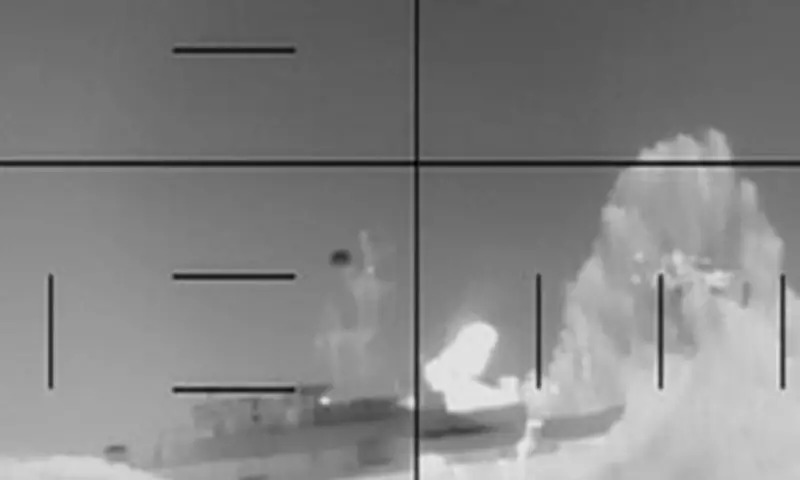
The IRIS Dena, an Iranian warship returning from naval exercises hosted by India, was approximately 75 kilometres off Galle, Sri Lanka, when it sent a distress call in the early hours of Wednesday morning. Footage of the attack captured a massive explosion beneath the vessel's stern, followed by haunting images of the warship sinking after being struck by a torpedo.
This incident marks one of the rare instances since the Second World War where a submarine has successfully sunk a surface warship. US Secretary of War Pete Hegseth described the event at a Pentagon briefing, noting: "Yesterday, in the Indian Ocean, an American submarine sunk an Iranian warship that thought it was safe in international waters. Instead, it was sunk by a torpedo - a quiet death. The first sinking of an enemy ship by a torpedo since World War Two."
Iranian Foreign Minister Abbas Araghchi condemned the sinking as an "atrocity at sea" and warned that the United States would "bitterly regret" the attack. The Dena was reportedly carrying nearly 130 crew members, with the normal complement for such a vessel being 140 personnel.
AUKUS Training Program and Broader Implications
Prime Minister Albanese clarified that the Australian personnel were aboard the submarine as part of the AUKUS training program, which facilitates experience exchange across various defence assets, including nuclear-powered submarines. "It's not just personnel, it's engineers, it's technicians, it's people learning those skills, whether they be in the United States or the United Kingdom," he explained.
It is understood that up to 100 Australian defence force members are expected to be deployed on US submarines throughout this year as part of the AUKUS initiative. The program aims to enhance interoperability and technical expertise among the allied nations.
Escalating Tensions and Military Responses
The sinking has significantly escalated regional tensions, with former Royal Navy chief Lord West describing the event as transforming a regional conflict into a "global war." In comments to the Daily Mail, West stated: "While it is a horrible event, it is acceptable as the US is at war with Iran. Nobody declares war these days but that's where we're at. This is now a global war."
Additional reports emerged over the weekend suggesting that the USS Charlotte's captain issued two warnings to the Iranian warship's crew before firing torpedoes. Iranian sources claim that these warnings were ignored by the commander aboard the Dena.

In response to the escalating situation, the British attack submarine HMS Anson has reportedly been diverted from exercises in Australia and is now heading toward the Middle East, though its current location remains undisclosed.
Operational Protocols and Legal Considerations
The Prime Minister reiterated that Australian defence personnel embedded with third-country assets operate strictly in accordance with Australian law and policy. "What they do is ensure that Australian Defence Force personnel, where they're embedded in third countries' defence assets, they act in accordance with Australian law, with Australian policy, and that, of course, is taking place across the board," Albanese affirmed.
The confinement of Australian personnel during the offensive action raises important questions about operational protocols and the delineation of responsibilities when military personnel from allied nations are embedded during active combat operations. The Sri Lankan navy responded to the distress signal from the sinking vessel, arriving to find patches of oil in the water and life rafts, highlighting the immediate humanitarian and environmental consequences of the attack.