

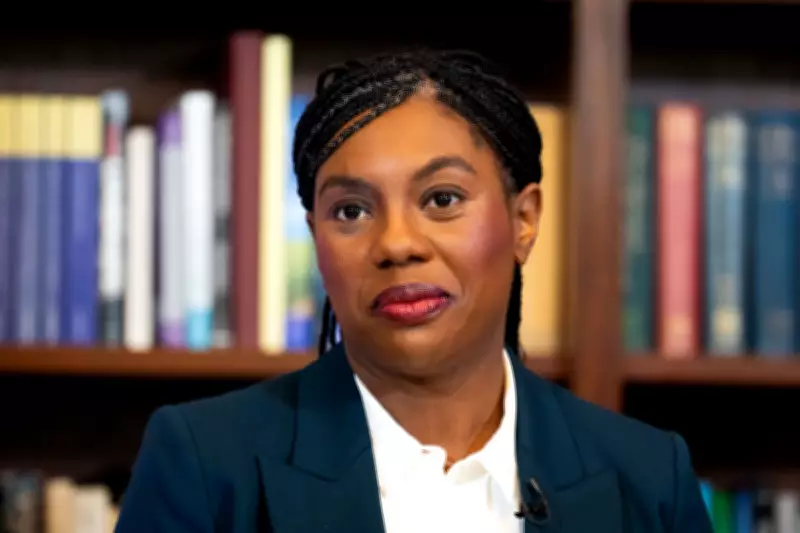
Badenoch Declares Trump Represents Enduring US Shift, Commits to Major Army Expansion
Tory leader Kemi Badenoch has issued a stark warning that the United States' policy of turning away from European defence commitments represents a permanent new normal that will persist beyond Donald Trump's presidency. In a significant address to the London Defence Conference, she simultaneously pledged to increase the British army by 20,000 personnel if the Conservatives return to government, describing this as the largest net troop expansion since the Second World War.
"European Strategic Autonomy is a Fairytale"
Ms Badenoch expressed personal dismay at President Trump's provocative language and unorthodox diplomatic approach, acknowledging that many find his actions anathema and his treatment of allies needlessly confrontational. However, she cautioned strongly against the comforting illusion that a change in White House leadership would reverse underlying strategic trends.
"If we comfort ourselves with these ideas we will miss the underlying lesson that Trump's presidency is not the start, but a continuation of a change in US outlook and behaviour," she stated unequivocally. "For decades, the United States has been complaining... at least privately... that Europe is not pulling its weight on defence."

The Conservative leader pointed to historical precedents including Ronald Reagan's invasion of Grenada without British consultation and President Biden's unilateral withdrawal from Afghanistan as evidence that the "Special Relationship" has not always been as special as popularly imagined. "President Trump may be unorthodox in how he talks to us but there are forces at play here that are much larger than his presidency," she argued.
Her central warning was blunt: "The mirror that he is holding up to Europe and that we are finding it so uncomfortable to look in is showing us that without the United States, we cannot properly defend ourselves. At present, European strategic autonomy is a fairytale."
Pledging Historic Military Expansion
Against this backdrop of perceived American disengagement, Ms Badenoch announced detailed plans for what she described as "the largest net increase in British troops under any government since the Second World War." This would involve recruiting 6,000 regular soldiers and 14,000 reservists, accompanied by funding for their accommodation and equipment.
The funding mechanism would involve reinstating the controversial two-child benefit cap and redirecting those resources toward defence spending. Additionally, she proposed reallocating £17 billion from government research and development budgets and what she termed "Ed Miliband's disastrous net-zero projects" to establish a new sovereign defence fund.
"This fund will invest in British defence start-ups, protecting our supply chains and delivering drone technology right across our armed forces, ensuring our army, navy and air force can fight as war is fought today," she explained. "It is not yet 3 per cent, but it is a start. We will find more savings till we get there."
Political Context and Broader Implications
Ms Badenoch's speech comes at a politically charged moment, with increasing scrutiny of the current government's defence policies. Prime Minister Sir Keir Starmer has faced questions about his commitment to raise defence spending to 5 per cent of GDP and criticism over delays in publishing detailed Defence Investment Plan specifics.
The timing is particularly sensitive with King Charles III and Queen Camilla scheduled for a state visit to the United States at the end of April, a trip that some are calling to be cancelled amid diplomatic tensions. Sir Keir has previously criticised President Trump's threats regarding Iran, questioning the American leader's values after comments about "wiping out a whole civilisation."
Ms Badenoch framed her proposed military expansion as essential for national sovereignty and global influence. "We must reassert ourselves as a serious power in the world. Show our allies what we bring to the table and show our enemies that we are ready to defend ourselves," she urged. "If we do not... we will have no say in whatever comes next."

This represents a deliberate reversal of post-Cold War policies that gradually reduced British military personnel numbers, signalling a fundamental shift in Conservative defence thinking should they regain power. The pledge underscores growing concerns about European security architecture amid perceived American retrenchment, regardless of who occupies the Oval Office in future administrations.





