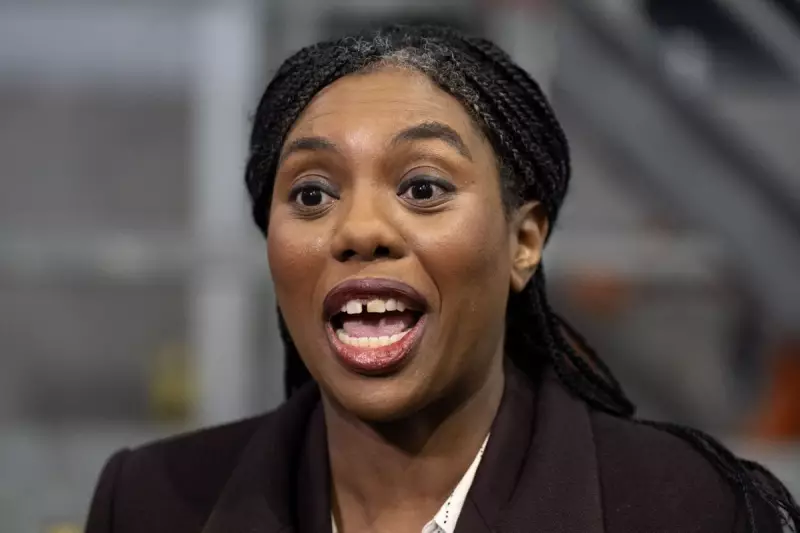
Conservative Party leader Kemi Badenoch has issued a stark warning that the United Kingdom risks becoming a "poodle" to former US President Donald Trump if it fails to bolster its national defences. Her comments come amid escalating global tensions and direct economic threats from Mr Trump targeting the UK and Europe.
Trump's Tariff Threats Over Greenland Ambitions
The immediate context for Mrs Badenoch's intervention is a series of provocative statements from Donald Trump. On Sunday 18 January 2026, Mr Trump used his Truth Social platform to announce sweeping new tariffs against several nations, including the UK. He stated that 10 per cent tariffs would be imposed on February 1 against Denmark, Norway, Sweden, France, Germany, the UK, the Netherlands, and Finland.
These punitive measures, Trump declared, would escalate to 25 per cent on June 1 and remain in place until a deal is secured for the United States to purchase Greenland. In a lengthy post, he framed the potential annexation as a strategic necessity to prevent Chinese and Russian control of the territory, a claim he asserted only the US could counter.

Badenoch's Call for a Stronger Britain
In an interview with The Telegraph, the Tory leader positioned robust defence spending as fundamental to national sovereignty and economic revival. "Getting Britain working again means fixing our economy and fixing our country, and that means putting our national interest first and rebuilding our defences," Mrs Badenoch stated.
She presented a clear cause-and-effect scenario for inaction: "Otherwise we will end up being poodles as the US annexes Greenland and we're slapped with tariffs because we have not shown any strength." Her argument connects domestic economic policy with international standing, suggesting that weakness in one arena invites exploitation in the other.
Critique of Reform UK and Labour's Foreign Policy
Mrs Badenoch also turned her fire on political rivals, both within and outside the Conservative fold. She criticised Reform UK, the party to which former minister Robert Jenrick dramatically defected last week, for a lack of seriousness on national security.
She highlighted that Mr Jenrick's defection speech contained "nothing about Russia's war in Europe, nothing about China's growing economic and security penetration and nothing about Iran, North Korea, cyber warfare, AI, or the erosion of the rules-based order." She accused Reform of being "afraid to speak seriously about hostile states" and referenced a scandal involving its Welsh leader taking bribes from Russia.
The Conservative leader also attacked Prime Minister Sir Keir Starmer's approach, which she characterised as dangerously abstract. She accused him of "allowing Chinese state influence in universities and infrastructure, Chinese intimidation and espionage on British soil" while relying on diplomacy without the necessary hard power to back it.
Mounting Political and Global Instability
The week's events have created a perfect storm of political and diplomatic challenges for the UK government:
- Robert Jenrick's defection to Reform UK has exposed internal fractures and raised questions about the Conservative Party's direction.
- Donald Trump's tariff ultimatum directly threatens UK-European trade and forces a difficult diplomatic stance on Greenland.
- Labour's position, articulated by Shadow Foreign Secretary Lisa Nandy, is that it would not support any action regarding Greenland that the territory itself did not endorse.
- Greenlandic protesters have themselves condemned what they call the "circus" of Trump's tariff threats.
Mrs Badenoch's warning ultimately frames the upcoming general election as a critical juncture for Britain's role in a volatile world. She contends that without significant investment in defence and a clear-eyed view of hostile states, the UK's ability to act independently and protect its interests will be severely compromised, leaving it vulnerable to the whims of more powerful allies.