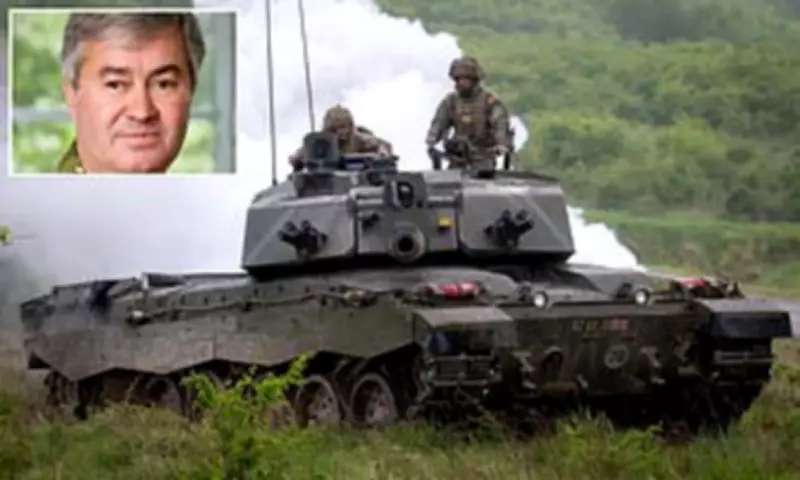
Former General Delivers Stark Warning on British Army Capabilities
In a sobering assessment of Britain's military preparedness, a former senior commander has declared that the British Army has become so depleted through sustained reductions that it would struggle to undertake meaningful combat operations. General Sir Richard Barrons, who co-authored Labour's Strategic Defence Review last year, stated that UK land forces would be incapable of performing anything 'substantial' in a wartime scenario.
Army Reduced to Supporting Role in Major Conflicts
Speaking to BBC Radio 4's Briefing Room programme, General Barrons explained that current armed forces could only make 'a very small contribution on land, in the air and at sea' to operations led by either the United States or NATO allies. The former commander, who now works for the Chatham House policy institute, offered a particularly vivid illustration of the army's diminished capacity: 'Today's army frankly could do one very small thing, essentially it could seize a small market town on a good day.'
This stark evaluation comes amid growing concerns about Britain's defence posture, particularly in light of escalating tensions with Iran and increasing Russian aggression across Europe. The warning highlights fundamental questions about whether the UK retains sufficient military strength to protect its national interests in an increasingly volatile global landscape.

Troop Numbers Halved Since Cold War Era
The manpower crisis within the British Army represents one of the most dramatic indicators of military decline. Official figures reveal that troop numbers have plummeted from approximately 156,000 at the conclusion of the Cold War to just 73,000 today - representing a reduction of more than fifty percent over three decades. This dramatic downsizing has occurred despite repeated warnings from defence experts about the growing complexity of global security threats.
General Barrons' comments echo concerns raised in last year's Strategic Defence Review, which he co-wrote alongside former NATO secretary general Lord Robertson and Russia specialist Fiona Hill. That comprehensive assessment described the proposed changes as 'the most profound transformation to defence in 150 years' and warned that British forces remain 'not currently optimised for warfare against a peer military state.'
Defence Investment Plan Delays Compound Concerns
The ongoing uncertainty surrounding the government's delayed Defence Investment Plan has further exacerbated anxieties about military readiness. Originally scheduled for publication last autumn, the crucial blueprint for future defence spending remains unpublished, with both Prime Minister Sir Keir Starmer and defence minister Al Carns declining to provide a definitive timeline for its release.
Shadow defence secretary James Cartlidge has criticised this postponement, arguing that the delay has 'left the UK vulnerable as the world becomes more dangerous.' He emphasised the particular urgency given current global conflicts, stating: 'At a time of war and conflict on multiple fronts, and amid the most dangerous time for our country since the cold war, instead of delivering rapid rearmament, Labour is presiding over a procurement freeze.'
Strategic Defence Review Highlights Multiple Vulnerabilities
The comprehensive Strategic Defence Review identified numerous critical weaknesses in Britain's defence infrastructure beyond simple troop numbers. According to the document, the UK faces potential threats including attacks on military installations both domestically and overseas, sophisticated long-range drone and cruise missile assaults, debilitating cyber-attacks targeting national infrastructure, and significant disruptions to economic interests and international trade routes.
The review further warned that defence medical services would struggle to manage mass casualty events, while recruitment crises have left the military with insufficient personnel for meaningful deployment. The assessment concluded with a sobering observation: 'The UK is entering a new era of threat and challenge. The West's long-held military advantage is being eroded as other countries modernise and expand their armed forces at speed.'

These revelations come alongside separate concerns about Royal Navy capabilities, highlighted recently by criticism of the time taken to deploy HMS Dragon to help defend Cyprus from Iranian missile threats. Together, these developments paint a concerning picture of Britain's military readiness as global tensions continue to escalate.