Public Skepticism on Defence Funding: Britons See War as Disruptive, Not Existential
A recent survey has highlighted a critical divide in British public opinion regarding national defence. While the majority of Britons acknowledge an increasingly dangerous world, they perceive the threat of war as a disruptive challenge rather than an existential one. This perception directly impacts their willingness to support increased investment in the military, particularly if it involves higher taxes or cuts to public services.
Government Accused of Complacency on Defence
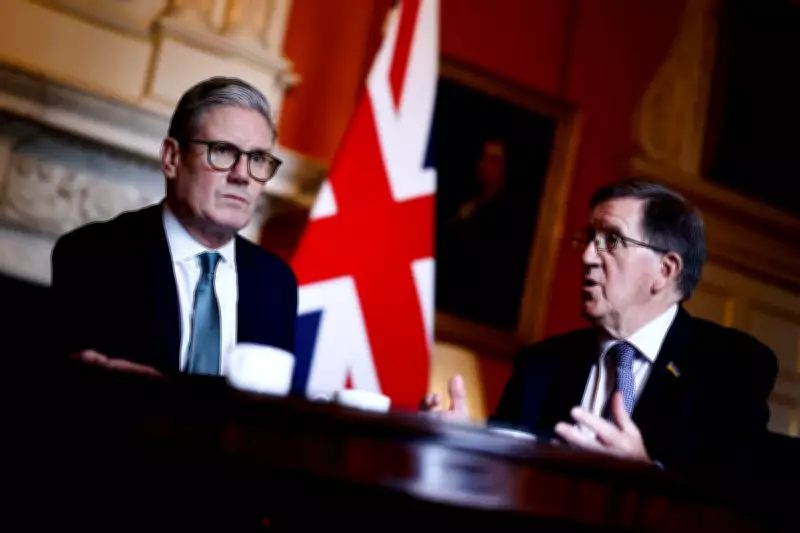
Former Labour minister and ex-Nato secretary general George Robertson has accused the government of "corrosive complacency" in defence matters, a charge that underscores broader concerns. Despite ministers like Armed Forces Minister Al Carns declaring the country is on a "war footing" and Prime Minister Keir Starmer emphasizing global volatility, the public remains unconvinced of the need for sacrifices. The government's efforts to frame the current security environment as more insecure have failed to translate into public backing for necessary fiscal measures.
Polling Reveals Public Concerns and Resistance
Public First conducted extensive polling on security attitudes, revealing that 85% of Britons believe the world is becoming more dangerous, with 60% viewing it as the most unstable in their lifetime. Nearly half think Britain is unprepared to defend itself, yet only a third feel it is ready. However, when faced with the implications of higher defence spending, resistance emerges:

- 43% oppose paying higher taxes for defence, with only 28% in support.
- 39% reject increasing defence at the expense of public service cuts.
- 51% oppose trade-offs between living standards and defence spending.
This reluctance stems from how threats are perceived: 39% worry most about cyberattacks disrupting critical systems, while only 29% fear direct military attacks like soldiers or missiles.
Geographical and Historical Contexts Influence Views
The lack of recent homeland conflict experience in the UK contrasts sharply with countries like Poland, which has doubled its defence spending since 2022 due to geographical proximity to threats. A Dutch policymaker noted that Brits lack a "liberation day" mentality, making threats seem distant in time and space. Additionally, 39% of Britons identify Russia as the biggest threat, but fail to connect this to specific vulnerabilities, such as undersea cable cuts, highlighting a government communication failure.
Trust Deficit and Competence Concerns
More depressingly, 54% of voters believe the government already has sufficient funds and merely needs to reallocate them, viewing the issue as one of competence rather than resources. This reflects a broader decline in political trust, where people feel let down by leaders and are hesitant to provide more money perceived as likely to be wasted. As difficult fiscal choices loom, ministers must improve their communication and decision-making to convince the public of the necessity for increased defence investment.