China's Accelerating Nuclear Arsenal Sparks Global Concern
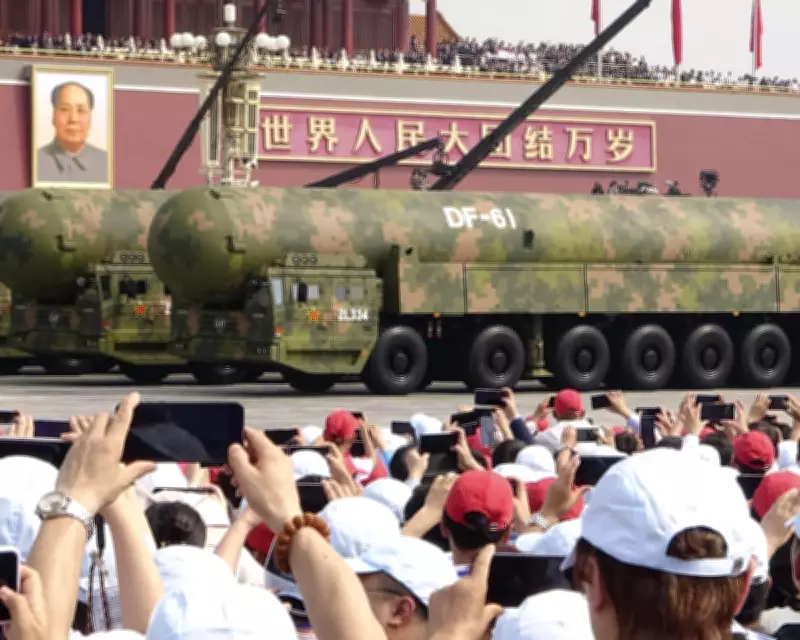
In a striking display of military might, Chinese DF-61 intercontinental ballistic missiles were paraded through Beijing on 3 September 2025, commemorating the 80th anniversary of victory over Japan. This visual spectacle underscored a far more alarming reality: China is engaged in the most rapid nuclear weapons expansion of any nation, raising profound questions about global security and the adequacy of international diplomatic responses.
The Doomsday Clock Ticks Closer to Midnight
The Bulletin of the Atomic Scientists recently advanced the symbolic Doomsday Clock to a mere 85 seconds to midnight, citing escalating nuclear risks in unprecedented ways. This grim assessment comes as nuclear disarmament diplomacy grinds to a global standstill. The expiration of the New START treaty, the last major arms control pact limiting US and Russian strategic forces, further dismantles the fragile architecture of nuclear restraint that has persisted for decades.
According to the 2025 Stockholm International Peace Research Institute (Sipri) report, nearly all nine nuclear-armed states are pursuing intensive modernisation programmes. These include developing new hypersonic missiles and so-called 'useable' low-yield tactical nuclear weapons. Of an estimated global inventory of 12,241 warheads, about 9,614 were held in military stockpiles for potential use as of January 2025, with the US and Russia possessing roughly 90% of these.

Beijing's Opaque and Rapid Expansion
While lagging behind the superpowers with an estimated 600 warheads, China's nuclear arsenal is growing faster than any other country's. Sipri calculates that China has been adding about 100 new warheads annually since 2023. The institute projects that Beijing could potentially possess at least as many intercontinental ballistic missiles as either Russia or the United States by the turn of the decade.
Beijing offers no clear explanation for this dramatic surge and continues to reject multilateral arms control talks. An official Chinese white paper from November restated its position that nations with the largest arsenals must make the first move through 'drastic and substantive reductions'. Until then, China claims it will maintain its nuclear capabilities at the 'minimum level required for national security', without defining what that level entails.
Diplomatic Silence and Global Implications
Prime Minister Keir Starmer's recent diplomatic engagement with President Xi Jinping in January 2026 reportedly avoided this critical issue altogether. While the talks addressed Chinese threats to UK national security, the existential threat posed by proliferating nuclear weapons remained conspicuously absent from the agenda. This silence is particularly notable given the Pentagon's December warning that China's historic military buildup has made the US homeland 'increasingly vulnerable'.
The US Department of Defense highlighted what it termed a more attack-ready, 'hair-trigger' nuclear posture in China, noting the recent installation of about 100 ICBMs in silos in northern China. Furthermore, the Pentagon asserted that Beijing was testing its ability to strike US forces in the Pacific, potentially crippling future American military assistance to Taiwan, with China reportedly expecting to 'fight and win a war on Taiwan by the end of 2027'.
Questions of Control and Motivation
President Xi's motivations remain ambiguous. The nuclear drive could represent a quest for status parity with the US and Russia, genuine security fears in what Xi described to Starmer as a world of 'rampant' powers following 'the law of the jungle', or a strategic calculation to facilitate the conquest of Taiwan and establish Chinese superpower dominance.
Disturbingly, questions persist about Xi's complete control over China's armed forces. The recent mysterious sacking of General Zhang Youxia, second in the military hierarchy, on allegations of disloyalty and leaking nuclear secrets to the US, raises the spectre of internal disagreements over nuclear and Taiwan policies. This echoes cold war anxieties about who ultimately controls nuclear arsenals.

Britain's Complicated Position
Starmer's diplomatic silence on China's nuclear expansion is perhaps unsurprising given Britain's own nuclear posture. The UK is expanding its nuclear strike capability through the purchase of US F-35A nuclear-capable fighter jets and is reportedly permitting the US to store nuclear bombs at RAF Lakenheath for the first time in two decades. This positions Britain poorly to criticise others, sending an implicit message of nuclear normalisation rather than restraint.
As arms control mechanisms fail and global leaders appear increasingly reckless, the unchecked nuclear arms race detailed by Sipri represents what many experts consider the most immediate existential threat to humanity—surpassing even the climate crisis and pandemic disease in its urgency. The time for alarm, as the Doomsday Clock indicates, is unequivocally now.