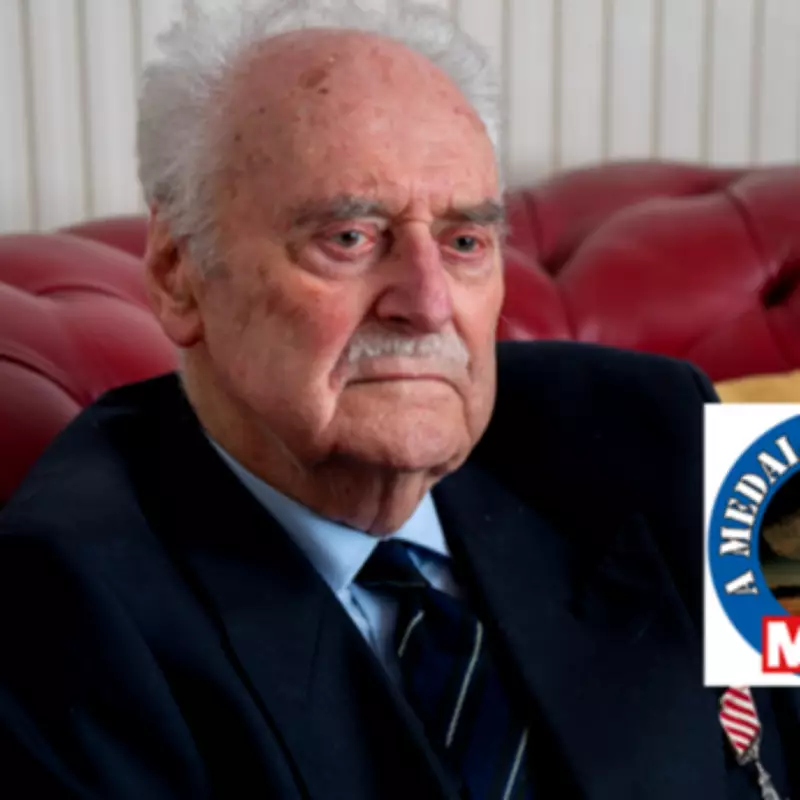
Public Line Streets to Honour Cold War Pilot on His Final Journey
Squadron Leader Pete Peters, a distinguished Cold War hero who flew top-secret atomic missions, has been laid to rest with full military honours after a heartfelt public response. His son, Gareth, had initially feared that no mourners would attend the funeral, but following appeals in the media and on social media, veterans and villagers turned out in droves to pay their respects.
A Hero's Send-Off in Lakenheath
The streets of Lakenheath in Suffolk were lined with well-wishers as the procession made its way to the crematorium. The RAF Association provided a bugler, standard bearer, and coffin drape, while former RAF chaplain Eddie Wynn delivered a reading. The turnout was so significant that the crematorium was packed with people eager to hear tributes to the 94-year-old veteran.
Pete Peters was the last survivor of Operation Bagpipes, a critical mission in 1954 where he flew three times through US mushroom clouds to gather data for allied weapons scientists. He piloted high-altitude electric Canberra jets through turbulence, using special filters installed in the wing-tips and bomb bay to collect atomic debris. His son Gareth remarked, "He flew all over the world, sucking up atomic debris in some very high-risk activities. The end result was that our atomic scientists could work out what the Russians were doing."

Campaign for Recognition and a Medal
After nuclear veterans won a campaign for a medal under the previous Tory government, Pete was initially refused his award because he was not exposed to British radiation. However, after the Mirror took up his case, Labour's Defence Secretary John Healey ordered a rethink. Pete, whose real name was Patrick, received his Nuclear Test Medal hand-delivered in time for Remembrance Sunday.
This recognition extended to his fellow crew members of 1323 Flight and 540 Squadron, some of whom were lost at sea due to the mission's secrecy. The medal was later awarded to hundreds of others involved in sampling French and Chinese clouds. Gareth noted that the campaign brightened his father's final years, allowing him to visit a museum where his Canberra bomber's cockpit was preserved and share his story with academics and students.
Personal Reflections and Legacy
When Armed Forces Minister Al Carns visited Pete to deliver the medal in person, the veteran told him, "it's about bloody time." Pete believed all his crew mates died from cancer and credited his survival from a colon tumour to an NHS surgeon's skill. Despite blood tests before and after his flights, he was never informed of the results.
Inspired to fly by seeing prisoners of war return home through a local air base as a boy, Pete served in Bomber Command, flying deep into enemy territory to gather intelligence on nuclear weapons. He also piloted nuke-armed Victor bombers on Iron Curtain patrols, contributing to Europe's safety. Over a 40-year RAF career, he served with NATO in Germany and in psychological warfare at the MoD in Whitehall.
He was married to Rosemary for 66 years until her death in 2022, and they had two children. At the crematorium, Gareth quoted from his father's memoirs: "In turns I have been challenged, tried and tested, overworked, frightened stiff and many times thrown off a cliff - but I have never, never, been bored." The Last Post and Reveille rang out, marking the end of a remarkable life dedicated to service and sacrifice.