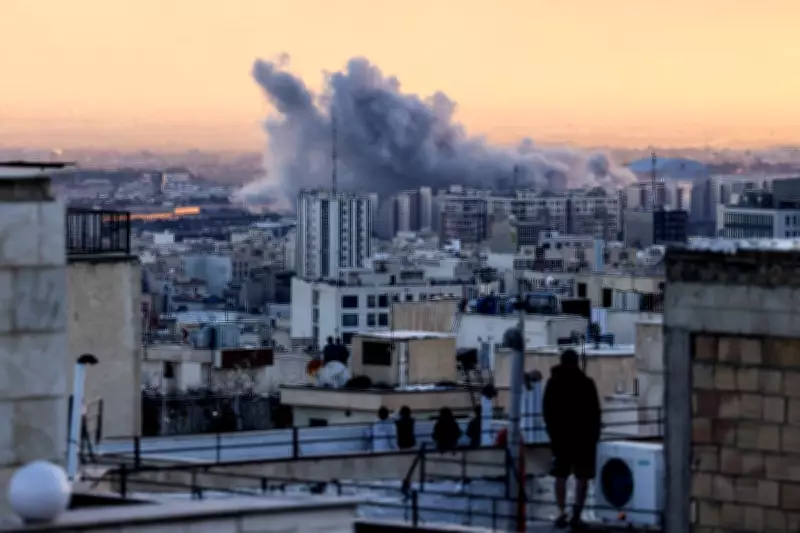
Congress Demands Oversight as US Military Uses AI to Target Iran Sites
Members of Congress have issued urgent calls for increased oversight of artificial intelligence usage in warfare following revelations that the U.S. military is employing AI systems to help determine which sites in Iran to attack. As conflict in the Middle East intensifies alongside growing AI integration, multiple publications including The Independent have documented the technology's expanding role in military operations.
AI Systems in Combat Operations
NBC News reported on Wednesday, citing two informed sources, that the U.S. military is utilizing AI systems developed by Palantir to identify potential targets for airstrikes in the ongoing Iran conflict. The Washington Post further detailed last week that Palantir's Maven Smart System employs classified satellite data and surveillance to provide instantaneous targeting and prioritization assistance to U.S. forces during their striking campaign against Iranian targets.
The Maven Smart System incorporates Anthropic's Claude tool, which a Department of Defense source told The Independent helps military personnel process vast quantities of intelligence reports more rapidly than human analysts could manage alone. However, the source emphasized that Claude does not make final decisions about which targets to strike, maintaining that ultimate authority remains with human operators.

Lawmakers Voice Grave Concerns
Several Democratic representatives have expressed alarm about the military's AI applications in NBC News' coverage. Representative Jill Tokuda of Hawaii, a member of the House Armed Services Committee, stated: "We need a full, impartial review to determine if AI has already harmed or jeopardized lives in the war with Iran."
Senator Elissa Slotkin of Michigan, a former CIA analyst serving on the Senate Armed Services Committee, highlighted accountability issues: "It's really up to the humans, and in this case the Secretary of Defense, to ensure that there's human redundancy for the foreseeable future, and that is what we just don't have confidence in."
Representative Sara Jacobs of California, another House Armed Services Committee member, emphasized the need for safeguards: "We have a responsibility to enforce strict guardrails on the military's use of AI and guarantee a human is in the loop in every decision to use lethal force, because the cost of getting it wrong could be devastating for civilians and the service members carrying out these missions."
Civilian Casualties and AI's Role
A newly published investigation by The Independent and conflict monitoring group Airwars identified Abdul-Rahman al-Rawi, a 20-year-old student, as the first known civilian killed in a series of airstrikes acknowledged to have been conducted with AI assistance. Abdul-Rahman perished during one of dozens of U.S. attacks in February 2024 against Iraqi government-aligned forces and Iranian-backed militias operating in Iraq and Syria.
The Associated Press has reported that at least 1,230 people in Iran have been killed in the conflict, according to local officials, though the number of civilian casualties remains unclear. A preliminary Pentagon investigation found the U.S. responsible for unintentionally bombing an all-girls' school in Minab, Iran, on February 28, as reported by The New York Times. The strike killed approximately 175 people, predominantly children, though it remains uncertain whether AI played any role in this particular incident.
Military Leadership Acknowledges AI Integration
Admiral Brad Cooper, who leads U.S. Central Command, publicly confirmed the military's deployment of AI tools against the Iranian regime. In a video statement on Wednesday, Cooper explained: "Our warfighters are leveraging a variety of advanced AI tools. These systems help us sift through vast amounts of data in seconds so our leaders can cut through the noise and make smarter decisions faster than the enemy can react."
The admiral continued: "Humans will always make final decisions on what to shoot and what not to shoot and when to shoot, but advanced AI tools can turn processes used to take hours and sometimes even days into seconds."

When questioned about the school bombing report outside the White House on Wednesday, former President Donald Trump responded: "I don't know about it." The Independent has contacted both Palantir and the Department of Defense for additional comments regarding these developments.