

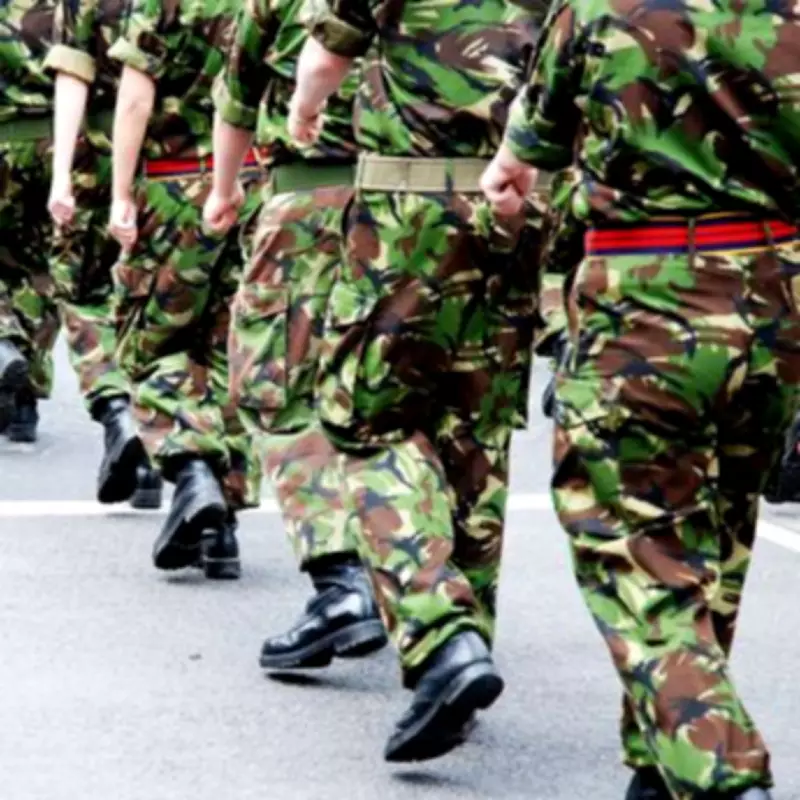
Conscription Debate Intensifies as UK Faces Military Preparedness Concerns
Fears about international conflict are escalating across the United Kingdom, with defence experts describing the nation as "underprepared and under attack" while recommending serious consideration of enforced conscription models. This stark assessment comes amid growing geopolitical tensions and questions about traditional military alliances.
Shrinking Forces and Alliance Uncertainties
The British Army currently comprises just 70,000 troops – representing the smallest military force the nation has maintained in over two centuries. This concerning statistic emerges alongside increasing doubts about the reliability of international partnerships, particularly with the United States under President Trump's "America First" policies. A newly published report by Civitas, authored by MPs and a former senior NATO advisor, suggests the UK can no longer depend on America to honour Article Five of the NATO treaty, which guarantees collective defence among member states.
The report describes this development as "the final nail in the coffin" of the traditional alliance framework, noting that the US is "already acting in a manner which can be perceived as being contrary to the interests of some of its allies." This assessment has prompted European nations to implement various preparedness measures, from distributing emergency survival guides to citizens to reintroducing forms of compulsory military service.

European Context and UK Historical Position
Across the continent, multiple NATO countries including Denmark, Estonia, Finland, Greece, Latvia, Lithuania, Norway, Sweden, and Turkey maintain mandatory conscription systems, with Croatia set to join them this year. Germany and France have implemented voluntary programmes while leaving open the possibility of compulsory service if volunteer numbers prove insufficient.
The United Kingdom presents a unique case, having abolished conscripted military service in 1963. Historically, enforced service has only been implemented during relatively brief periods: from 1916-1920 during the First World War, and from 1939-1960. However, Britain remains distinctive as the only country that recruits individuals under 18 into the Armed Forces, accepting volunteers from age 16 upwards.
Expert Analysis and Societal Implications
Dr. Jonathan Parry from the London School of Economics highlights significant ethical concerns about current recruitment practices, noting that approximately a quarter of army recruits enlist before turning 18, with many coming from economically disadvantaged backgrounds. He emphasises that military service represents one of the few professions requiring individuals to potentially take lives, raising substantial moral questions even when participation is voluntary.
Regarding potential conscription models, Dr. Parry suggests that "full mass conscription is obviously going to be hard to justify, given the high level of coercion and costs involved." Instead, he points toward "much more 'light touch' versions of conscription" that would be "less coercive, disruptive and more likely to be effective."
The Patriotic Myth and Democratic Concerns
Professor Vincenzo Bove challenges the romanticised notion that compulsory military service functions as a "school for the nation" that forges shared national identity across social divides. His research indicates that while conscription effectively creates strong military identities, this often occurs at the expense of broader cultural cohesion and institutional trust.
"A key feature of military organisations – especially under conscription – is their institutional and social isolation from civilian society," Professor Bove explains. "This isolation tends to strengthen loyalty within the military community, but it can also weaken identification with civilian institutions that are portrayed as inefficient, constrained, or intrusive."

The erosion of trust in democratic institutions represents a significant concern, with Professor Bove noting that "cohorts exposed to conscription tend, in the long run, to exhibit lower trust in democratic institutions." Dr. Marco Giani from King's College London echoes this sentiment, describing institutional trust as "the glue of democracy" that becomes essential during periods of national crisis.
Practical Challenges and Historical Precedents
The practical implementation of conscription faces substantial hurdles, including potential resistance from citizens. Current surveys suggest most young Britons would be unwilling to fight for the UK, indicating that draft resistance could become a serious issue during major conflicts. Historical precedents show that punishment for conscientious objectors has ranged from imprisonment to death sentences during the First World War, though approaches softened by the Second World War for practical manpower reasons.
Dr. Giani suggests that universal conscription remains unlikely in Britain, noting that "the case for forcing people into the army has always been weaker here" due to geographical factors. As an island nation, Britain has never faced the constant land-invasion threats that make mass armies essential for continental European countries.
Future Possibilities and Recruitment Alternatives
Experts point toward more plausible alternatives to full-scale conscription, including voluntary short-term military schemes that allow young people to "try out" army life. Such approaches could help address current recruitment challenges while making armed forces careers appear more accessible and appealing to broader segments of society.
The report concludes that "new forms of governance and the development of a war-capable political process are well overdue," calling for comprehensive societal mobilisation and preparation for potential conflicts. As Poland distributes detailed 48-page survival guides to 17 million households and European nations reassess their defence postures, the debate about Britain's military preparedness and the role of conscription continues to intensify within political and defence circles.





