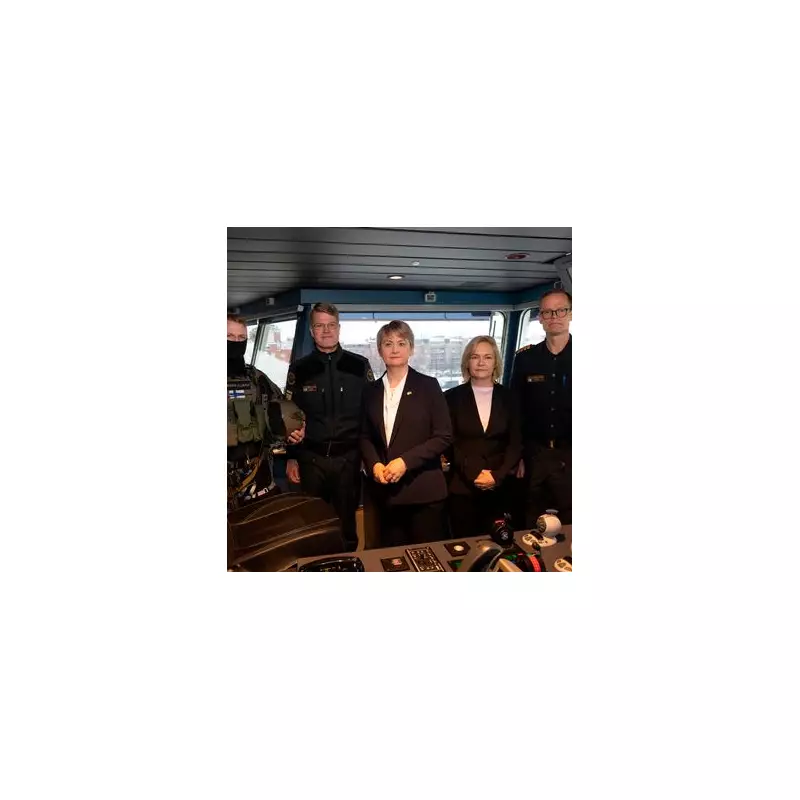
Foreign Secretary Yvette Cooper witnessed a dramatic and forceful demonstration of maritime security on the front line with Russia during a visit to Finland. The Mirror's Political Editor, Lizzy Buchan, accompanied the Foreign Secretary as Finnish Border Guard forces staged a vivid drill, showing how they would storm and seize a suspect vessel.
A Chilling Demonstration on NATO's Eastern Flank
On Tuesday, 14th January 2026, aboard the Finnish offshore patrol vessel Turva in Helsinki, the scene was set for a startling display. As observers looked on, armed and masked guards rappelled down from a helicopter onto the ship's deck. They raced to the bridge, shouting commands, in a simulated takeover of the vessel.
This was a meticulously planned drill by the Finnish Border Guard, a force tasked with policing the nation's 830-mile border with Russia along NATO's strategically vital eastern flank. The demonstration was laid on for Ms. Cooper as she began a two-day tour of Finland and Norway, underscoring the high-stakes security environment.

The location felt palpably tense. The Turva was stationed in the Gulf of Finland, its ice-filled waters stretching eastward to the Baltic Sea and, ultimately, to St Petersburg. Russia's proximity was alarmingly clear, a constant reality for Finland which must continuously grapple with Vladimir Putin's tactics of sabotage and hybrid warfare.
The Clear and Present Danger of Russia's Shadow Fleet
Ms. Cooper's visit sharply highlighted that the threats faced by Finland are directly relevant to British national security. In an interview, the Foreign Secretary intensified her rhetoric on the urgent need to confront the so-called 'shadow fleet'. This network of ageing oil tankers, often sailing under dubious flags of convenience, serves two sinister purposes for the Kremlin.
Firstly, these vessels are instrumental in evading Western sanctions, funnelling oil revenues that fund Russia's illegal war in Ukraine. Secondly, and perhaps more insidiously, these dark ships have been repeatedly accused of targeting and damaging critical undersea infrastructure. This infrastructure carries the lifeblood of modern economies: telecommunications data and vital energy supplies including electricity, oil, and gas.
The Finnish Border Guard is already actively confronting this fleet in the Gulf of Finland and has conducted raids on vessels suspected of endangering subsea cables. The UK is now closely examining its options. It is believed Britain is assessing the legalities of using military force to board such vessels, following its support for a US special forces raid on a Russia-linked tanker just last week.
Arctic Tensions and the Global Power Struggle
The Foreign Secretary's Nordic tour comes at a time of escalating geopolitical competition in the High North. Climate change is reshaping the region, with warming seas opening new shipping lanes and exposing previously inaccessible resources beneath the melting ice.
This has triggered a fresh power struggle, further complicated by the statements of US President Donald Trump. His threats to annex Greenland, a semi-autonomous Danish territory, have thrust Arctic security to the top of the global agenda.
Britain aims to demonstrate it can play a pivotal role alongside NATO allies in shaping the security architecture of the Arctic. However, analysts warn that President Trump's potential actions could dramatically undermine these cooperative efforts and destabilise the fragile balance in the region.
The dramatic drill on the Turva was more than a spectacle; it was a stark reminder of the tangible, physical threats emanating from Russia and the complex, multi-domain challenges facing the UK and its allies in an increasingly contested world.