Cyprus Bomb Shelter Crisis Exposed by Drone Attack, Officials Admit 'Ill-Prepared'
Civil defence force officer Valentinos Pangalos has revealed that people across Cyprus have been left feeling "very scared" following a recent drone attack that targeted the island. The incident has starkly highlighted the nation's inadequate bomb shelter infrastructure, with officials admitting that almost 20% of listed shelters are either unsuitable or do not exist at all.
Emergency Sirens Sound as Drone Threat Emerges
At precisely 12:33 pm on 2 March, Valentinos Pangalos received urgent orders to activate emergency sirens at Paphos International Airport. A suspicious object, believed to be an explosive-laden drone, had been detected heading directly toward the facility. This alarming development came barely twelve hours after an Iranian-made Shahed-type drone crashed into a hangar at RAF Akrotiri, significantly heightening security concerns across the eastern Mediterranean island.
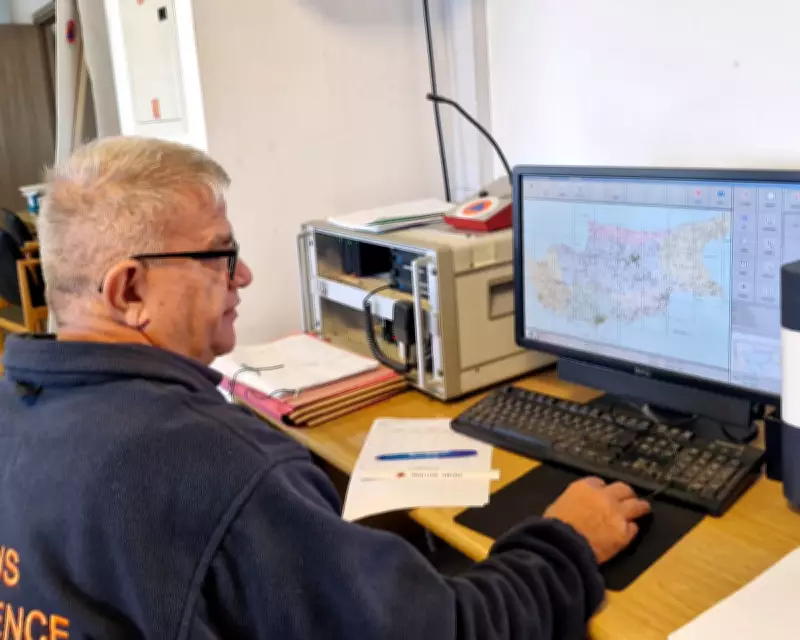
"In my 24 years of service, I had never been asked to do anything like it," said Pangalos, one of the longest-serving officers in Cyprus's civil defence force. "Receiving such an abrupt order was incredibly intense." He emphasised that this was merely the beginning of a broader security crisis that has placed Cyprus on high alert in a manner not witnessed since the 1974 Turkish invasion.

Panic and Understaffing Plague Civil Defence Response
Officials report that telephones in the civil defence force's cramped operations room have been ringing incessantly for days, with initial reports suggesting additional attempted drone strikes originating from Lebanon, located just 150 miles away. "People have felt very scared. They've been panicking since the drone attack," explained Pangalos, who is now working extended shifts at the force's dilapidated headquarters on the outskirts of Nicosia.
Elderly Cypriots, who retain vivid memories of the 1974 invasion and the subsequent traumatic displacement of refugees, are among the most vocal in expressing their fears. "At all hours, we receive calls, especially from the elderly, asking where the nearest refuge is and what they should do," Pangalos added. "Unfortunately, we are severely understaffed, which complicates our response efforts."
Officials Concede Systemic Failures and Inadequate Shelters
Behind her file-covered desk, Maria Papa, the chief officer of the civil defence force, openly conceded that the emergency caught Cypriot authorities completely off guard. "This security crisis has exposed just how ill-prepared we are," she stated with a sigh. "Improvement is needed across the board, starting with shelters, increasing our staff, and upgrading this very building. I have been requesting these changes for years."
Pinboards in apartment block foyers have begun displaying lists of nearby neighbourhood refuges, only for residents to discover that many are cramped garages or dilapidated cellars in damp, neglected buildings. The interior minister recently announced that approximately 480 of the 2,480 bomb shelters officially listed with authorities are unsuitable, inaccessible, privately controlled, or entirely non-existent.
Political Fallout and Calls for Urgent Reforms
Faced with this stark reality, President Nikos Christodoulides acknowledged that action is long overdue. "We are not at all happy with the state of the shelters," he told reporters, after it was revealed that no more than 45% of Cyprus's one million residents could be accommodated in currently available bunkers. "I will not embellish the situation, especially in a country that experienced invasion and occupation 52 years ago," he said, referencing the 35,000 troops stationed in the breakaway Turkish-held north.
Christodoulides has since announced the appointment of a national coordinator, based on European standards, to enhance crisis response effectiveness. Legislation has also been drafted to provide incentives for constructors to build bunkers in apartment blocks, addressing the critical shortfall. "To date, we've asked people to make shelters available voluntarily, out of the goodness of their heart," Papa noted, highlighting the inadequacy of the current system.

Public Fear and International Concerns Intensify
As cries of state incompetence grow louder, demands for substantive change have intensified. In the coming weeks, Israeli civil protection experts are scheduled to visit Cyprus as authorities seek best practices from Israel, which boasts some of the world's toughest civil defence laws. Enhanced early warning systems are also under development.
"We must remember that Cyprus is actually very safe," Papa insisted. "It is the British bases that have been targeted, but we are also contending with a siege mentality stemming from 1974." However, the visible presence of European warships and fighter jets forming a protective cordon around the island, at Nicosia's request, has reinforced public anxiety that Cyprus is being drawn into the wider conflict with Iran.
"I won't hide it, I'm scared," confessed Yiota Andreou, a 67-year-old pastry shop owner in Nicosia who lives near the US embassy. "Why are all these ships here if we are as safe as they claim? It is terrible that shelters are in such a state, that governments have turned a blind eye, wasted money, and shown no concern for us."
Opposition Demands Effective Solutions Amid Widespread Panic
Stefanos Stefanou, leader of the main opposition leftwing AKEL party, told the Guardian that "effective and fast solutions" are now vital to improve a civil protection system that has repeatedly failed the country. "It is clearly not working," he asserted, citing deadly forest fires last summer where civil defence units were similarly caught off-guard.
"People fear what they perceive, and in Paphos and areas around the British bases, where sirens have been sounding, there has been significant panic," Stefanou explained. "We've seen people rushing to supermarkets to stockpile food, creating incredible scenes. The time has come for solutions that will allow everyone to feel safe."