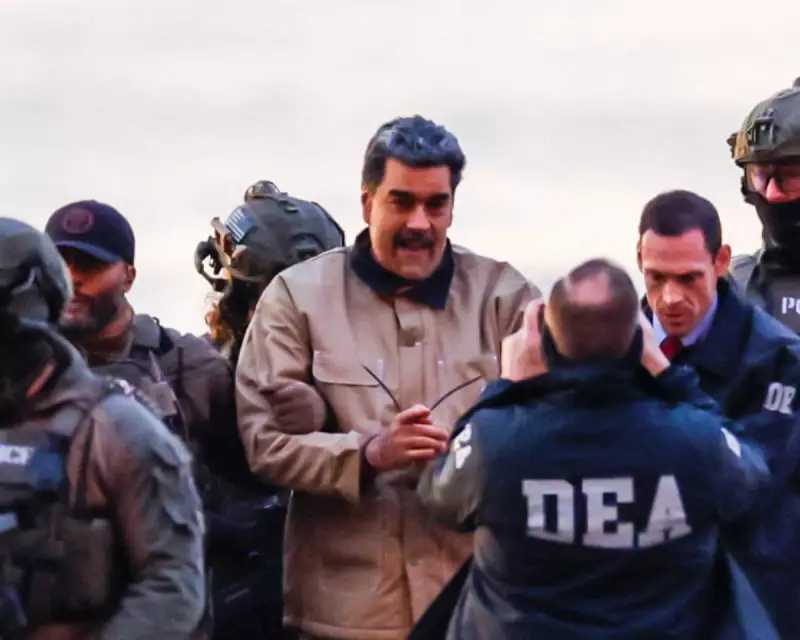
A legal memo from the US Justice Department, made public on Tuesday, has revealed that the Trump administration received approval to use military force to capture Venezuela's president, Nicolás Maduro, while deliberately avoiding a conclusion on whether the operation violated international law.
The Legal Justification for 'Absolute Resolve'
The 22-page document, authored by T Elliot Gaiser of the Office of Legal Counsel (OLC), provided the legal framework for the operation, codenamed 'Absolute Resolve'. The memo addressed the UN charter's prohibition on using force inside another country without consent, self-defence, or UN Security Council approval. However, Gaiser explicitly stated that reaching a definitive conclusion on international law was "unnecessary".
He argued that as long as then-President Donald Trump had the authority under US domestic law to authorise the mission, the question of international law compliance did not need to be resolved. This reasoning effectively reinforced a controversial 1989 OLC memo, signed by William Barr, which asserted that a president has the inherent constitutional authority to override international treaties like the UN charter to conduct 'forcible abductions' on foreign soil.

Precedents and Political Context
The memo cited historical precedents for the military assisting the FBI abroad, including the arrests of an al-Qaida member linked to the 1998 Africa embassy bombings and a Libyan militant accused in the 2012 Benghazi attack. It justified seizing Maduro by citing his 2020 US indictment on drug trafficking charges and the regional instability threatened by his disputed 2024 election win.
Critically, Gaiser advised Trump that the operation would constitute the start of an armed conflict under international law and was the type of "boots on the ground" action likely to require congressional approval. However, because the administration assured him there were no plans for a sustained military campaign or occupation of Venezuela, he concluded Trump would not need to seek authorisation from lawmakers.
The memo's release follows its provision to lawmakers last week and precedes a Senate vote on a war powers resolution aimed at forcing Trump to seek congressional approval for any further military action in Venezuela.
Legal Repercussions and Expert Criticism
Legal experts have previously criticised the 1989 memo as legally defective, noting that since the US Senate ratified the UN charter, it holds the same force as domestic law, which the president is constitutionally bound to uphold. Despite these controversies, the circumstances of Maduro's arrest are not expected to complicate the criminal case against him, as US courts have consistently ruled that how a defendant is brought to court does not affect the trial's validity.
This memo represents the second major legal interpretation provided to the Trump administration regarding Venezuela. The Guardian previously reported a separate classified OLC memo from 5 September authorised strikes on boats trafficking cocaine in international waters, arguing it targeted the financial lifeline of cartels waging war on US allies.