

Queen Maxima Commences Dutch Army Reservist Training Programme
In a significant move highlighting contemporary security anxieties, Queen Maxima of the Netherlands has formally initiated her training to become a reservist within the Dutch armed forces. The Royal House announced this development, explicitly stating the decision stems from the recognition that "our safety can no longer be taken for granted." This personal commitment from the monarch underscores a broader European trend of reinforcing military capabilities.
Royal Family's Military Engagement
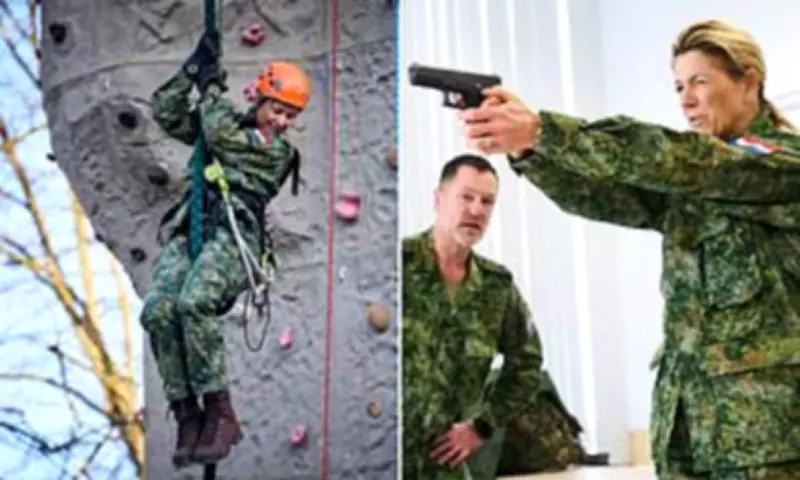
The 54-year-old Argentine-born queen is following directly in the footsteps of her daughter, Crown Princess Amalia, the 22-year-old heir to the Dutch throne. Princess Amalia successfully concluded her own basic military training as a volunteer reservist just last month. Official photographs released by the Royal House depict Queen Maxima actively participating in a comprehensive "mental skills" training course held in Breda. The images show her engaging in marksmanship practice, scaling walls, and performing pool jumps, illustrating the physical and tactical demands of the programme.
The Dutch Ministry of Defence confirmed the queen's voluntary enrolment, noting her desire, "like many others, wants to make a contribution to that security." Upon commencing her training, Queen Maxima was granted the initial rank of soldier. The ministry outlined that following the completion of her specialised education, she will be promoted to the rank of lieutenant colonel. Reservists, the statement clarified, perform a crucial supportive function for the standing military and are typically deployed within the Netherlands, though overseas voluntary assignments are occasionally possible.

European Context of Military Mobilisation
Queen Maxima's decision aligns with a concerted push by the Dutch military to enhance recruitment, a drive intensified by ongoing geopolitical instability, particularly Russia's war in Ukraine. The incoming Dutch coalition government, scheduled to be sworn in imminently, has already unveiled ambitious plans to expand the nation's total military personnel to 122,000. Currently, the force stands at approximately 80,000 individuals, encompassing military staff, civilians, and reservists.
Klaas Meijer, a spokesperson for the Defence Ministry, expressed pride in the queen's choice, hoping it would inspire others to consider military service. "We are of course very proud that she is doing this and hope that other people will think, 'hey, this is something I could do'," Meijer stated. The training curriculum for reservists like Queen Maxima is extensive, covering essential components such as physical resilience, self-defence techniques, advanced marksmanship, proficient map reading, and a thorough understanding of military law.
This Dutch initiative mirrors wider continental efforts. Nations across Europe are actively bolstering their defensive postures and recruitment pipelines. Germany has approved new plans to attract more military recruits. France recently launched a new volunteer programme aimed at training thousands of young adults, with ambitions to scale up significantly by 2035. Similarly, Belgium has reactivated two military brigades as part of its defence enhancement strategy.
Broader Strategic and Financial Implications
The collective drive to recruit new military personnel across European states is anticipated to place considerable strain on existing defence budgets. However, this push also aligns with and accelerates commitments made at a recent NATO summit, where member nations agreed to increase defence spending. The necessity of such investment was emphasised by retired General Jean-Paul Palomeros, former head of the French Air Force, who remarked that ensuring younger generations understand "that freedom and peace are not taken for granted" is a vital, albeit challenging, endeavour requiring substantial financing and resources.

The royal tradition of military service persists elsewhere in Europe, exemplified by Princess Elisabeth of Belgium, who undertook a year at a military school five years ago, following her father King Philippe's own educational path. The convergence of royal participation, governmental policy, and heightened public awareness of security threats marks a pivotal moment for European defence, with Queen Maxima's personal commitment serving as a prominent symbol of this renewed focus on national and continental security preparedness.





