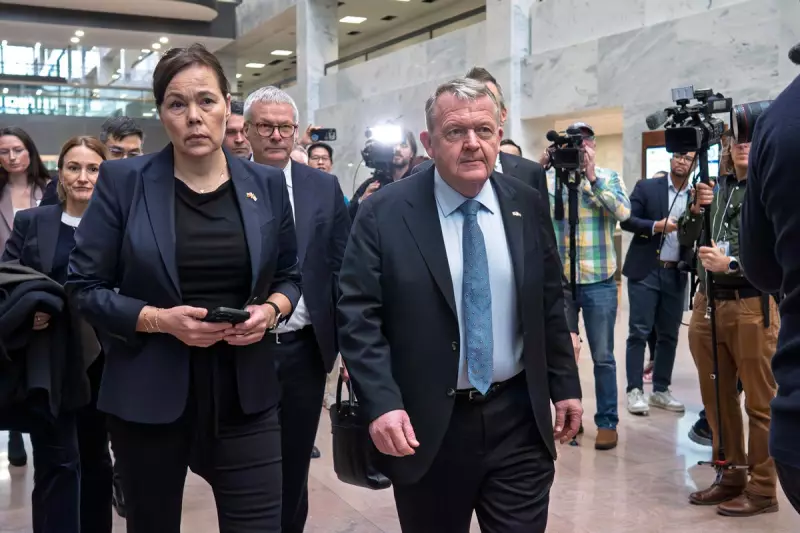
Troops from key European NATO nations have begun arriving in Greenland, following tense talks in Washington that revealed a stark rift between the United States and its allies over the future of the strategically vital Arctic island.
Troops Land as Diplomatic Talks Stall
The military movements come directly after a meeting on Wednesday 14 January 2026 between Danish and Greenlandic officials and representatives of the Trump administration ended in a declared "fundamental disagreement." Danish Foreign Minister Lars Løkke Rasmussen, who attended the talks with Greenlandic Foreign Minister Vivian Motzfeldt, stated it remained "clear that the president has this wish of conquering over Greenland."
In response, European allies are mobilising. French President Emmanuel Macron confirmed that the first French military elements were en route, with about 15 soldiers from a mountain infantry unit already in Greenland's capital, Nuuk, for an exercise. Germany's Defence Ministry announced it would deploy a 13-person reconnaissance team to the island on Thursday 15 January.

Denmark Bolsters Arctic Presence with NATO Allies
Concurrently, Denmark has announced a significant increase in its military footprint in the Arctic region. Danish Defence Minister Troels Lund Poulsen stated this would be done "in close cooperation with our allies," citing an unpredictable security environment. "This means that from today and in the coming time there will be an increased military presence in and around Greenland of aircraft, ships and soldiers, including from other NATO allies," Poulsen said.
While NATO officially referred questions to Danish authorities, an alliance official, speaking anonymously, confirmed that NATO is examining ways to collectively bolster its presence in the Arctic. For residents in Nuuk, the troop deployments were seen by some as a protective measure. Maya Martinsen, 21, told the Associated Press it was "comforting to know that the Nordic countries are sending reinforcements," but suggested the underlying dispute was about the island's untapped "oils and minerals."
A Clash of Visions for Greenland's Future
The core of the disagreement stems from U.S. President Donald Trump's stated ambition to "take over" Greenland to access its mineral wealth and counter growing Russian and Chinese interest in the Arctic. "We really need it," Trump told reporters in the Oval Office. "If we don't go in, Russia is going to go in and China is going to go in."
Following the White House meeting, Foreign Minister Rasmussen firmly rejected the possibility of a U.S. purchase or military takeover, warning that such an action "would be the end of NATO." He also expressed scepticism that Greenlanders would ever vote for U.S. rule, questioning whether America would fund a Scandinavian-style welfare system on the island.
To manage the ongoing crisis, Rasmussen announced the creation of a working group with American officials to address security concerns while respecting Denmark's "red lines." President Trump, meanwhile, remained characteristically ambiguous about the outcome, stating only, "We'll see how it all works out. I think something will work out." As European troops land on the ice, the diplomatic freeze over Greenland's future shows no sign of thawing.