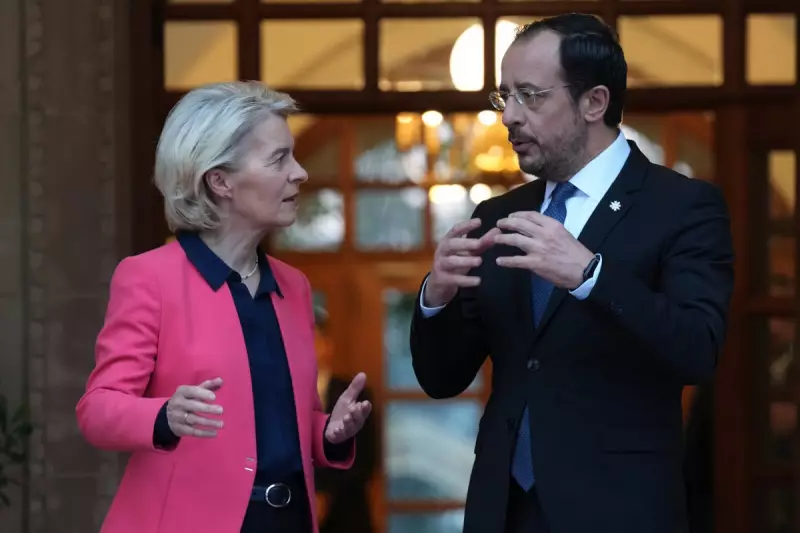
The European Union has unveiled a major new financial lifeline for Ukraine, with the bulk of a massive €90 billion loan package earmarked for the country's urgent military requirements over the next two years. European Commission President Ursula von der Leyen announced the plan on Wednesday, 14 January 2026, stating it is designed to fortify Ukraine against Russia while stabilising its war-ravaged economy.
A Two-Pronged Financial Shield
The landmark €90 billion (approximately $105 billion) loan program, agreed upon by EU leaders last month, is split into two clear tranches. A significant 60 billion euros ($70 billion) is dedicated to military support, enabling Kyiv to procure vital defence equipment. A further 30 billion euros ($35 billion) is allocated for direct budget aid, helping to keep the Ukrainian state functioning.
President von der Leyen emphasised the strategic thinking behind the move. "We all want peace for Ukraine, and for that Ukraine must be in a position of strength," she told reporters. "With the military assistance, Ukraine can stand strong against Russia, and at the same time it can integrate more closely into Europe’s defence industrial base."

Conditions and Timelines for Critical Aid
The financial support comes with stringent conditions attached. Von der Leyen insisted that Ukraine must undertake pro-democracy reforms, particularly in the rule of law and the fight against corruption, to secure the loans. "These conditions are non-negotiable for any financial support," she stated firmly. This follows heightened scrutiny on corruption in Ukraine, including the high-profile resignation of President Volodymyr Zelenskyy's chief of staff, Andrii Yermak, last year after anti-corruption investigators searched his residence.
The Commission aims for the loan money to start flowing by April 2026, a critical deadline as the International Monetary Fund estimates Ukraine will need 137 billion euros ($160 billion) over 2026 and 2027, with the government facing severe financial strain by spring. However, the spending plan must first be endorsed by EU member states and the European Parliament.
Procurement and International Collaboration
The military portion of the loan is intended primarily for purchasing equipment from Ukraine itself, EU nations, and other European Economic Area countries like Norway. Officials noted that, in some cases, funds could also be used under a NATO scheme for European allies and Canada to buy arms from the United States for donation to Ukraine.
Recognising the substantial funding gap, the EU is counting on other nations, including Britain, Canada, Japan, and Norway, to contribute. Meanwhile, the IMF is preparing its own new multi-billion dollar loan package for Ukraine, expected to be endorsed next month.
The loan agreement includes a crucial provision for repayment: Kyiv will only be required to repay the money once Russia ends its war and pays reparations for the damage inflicted, offering the beleaguered nation vital breathing space as the conflict approaches its fourth year.