Former Armed Forces Chief Warns of 'Significant' Risk to UK Warships in Hormuz
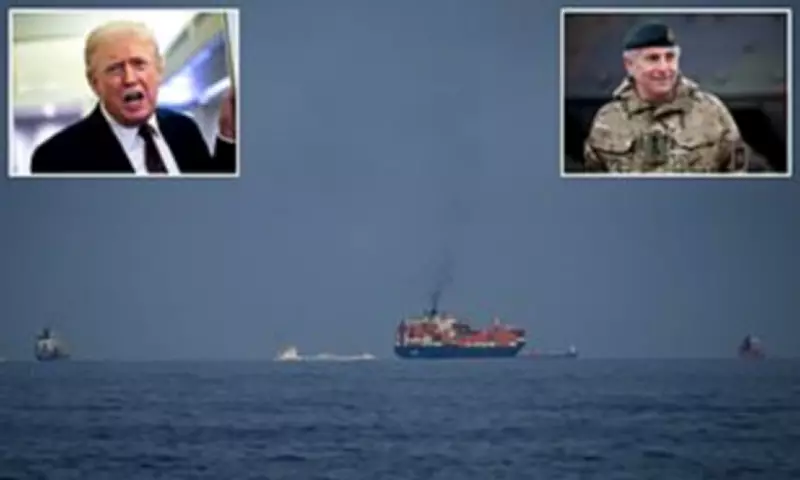
British warships face a significant risk of being sunk if dispatched to the Strait of Hormuz, according to a former professional head of the Armed Forces, who nonetheless argues they should be sent anyway. General Sir Nick Carter, speaking today, emphasised that agreeing to Donald Trump's request for naval assistance to counter Iranian forces disrupting Gulf shipping aligns with the UK's national interest.
Vulnerabilities in the Gulf
Sir Nick cautioned that any Royal Navy vessels deployed to clear mines or escort tankers would be highly vulnerable to attacks by the Islamic Revolutionary Guard Corps (IRGC). He highlighted the IRGC's expertise in controlling the strait, utilising a naval force comprising small boats, drones, and missiles. Clearing mines could take months if laid extensively, all while facing threats from shore-based assaults.
In an interview with BBC Radio 4's Today programme, he explained: "You are very vulnerable when you do it. On the assumption there are no mines in the water, the threat is principally about shore-based drones and shore-based missiles. Modern air defence systems are capable of dealing with that, as we have seen over the course of the last two or three weeks of this war. But we should be in no doubt that if they put together all of the IRGC capabilities … it would be quite exciting going through the Straits of Hormuz."

When questioned if "quite exciting" implied potential ship losses, Sir Nick confirmed: "It would be challenging, no doubt about it, the risks as I have described them are significant."
Balancing Risks with Global Interests
Despite these dangers, Sir Nick stressed the need to balance the risks against the UK's and global economy's interest in keeping the Strait of Hormuz open. He advocated for a well-coordinated operation led by the Americans with multinational involvement, noting that no single nation, including the US Navy, possesses the capability to manage the task alone.
This stance emerges as Sir Keir Starmer appears poised to refuse Trump's demand for Royal Navy warships to secure the key oil and gas route, currently blockaded by Tehran's forces. Questions linger over the availability of such vessels, with the UK having withdrawn its last mine counter-measures vessel just before hostilities began. Alternatives, such as deploying mine-hunting drones, are under consideration.
NATO Tensions and Diplomatic Navigation
Trump has warned that NATO faces a "very bad" future if member states fail to assist, reiterating calls for allied help in the Strait of Hormuz. He told the Financial Times: "It's only appropriate that people who are the beneficiaries of the strait will help to make sure that nothing bad happens there." Previously, he urged the UK, China, France, Japan, and South Korea to contribute ships.
An ally of Sir Keir downplayed Trump's warnings, attributing them to White House rhetoric. Work and Pensions Secretary Pat McFadden told Sky News: "It's a very transactional presidency and our job is to navigate this, to always remember that the friendship between the United States and the United Kingdom runs very deep. It's a good relationship. It's enduring and I think it will outlast all the personalities involved."
Sir Nick offered a more direct critique of NATO's role, stating: "NATO was created as an - underlined four times - defensive alliance and all of its articles are essentially orientated towards defence. It was not an alliance designed for one of the allies to go on a war of choice and then oblige everyone else to follow. It was not designed for that at all and I am not sure that is the sort of NATO that any of us wants to belong to."
The debate underscores the complex interplay between military strategy, diplomatic relations, and economic imperatives in a volatile region.