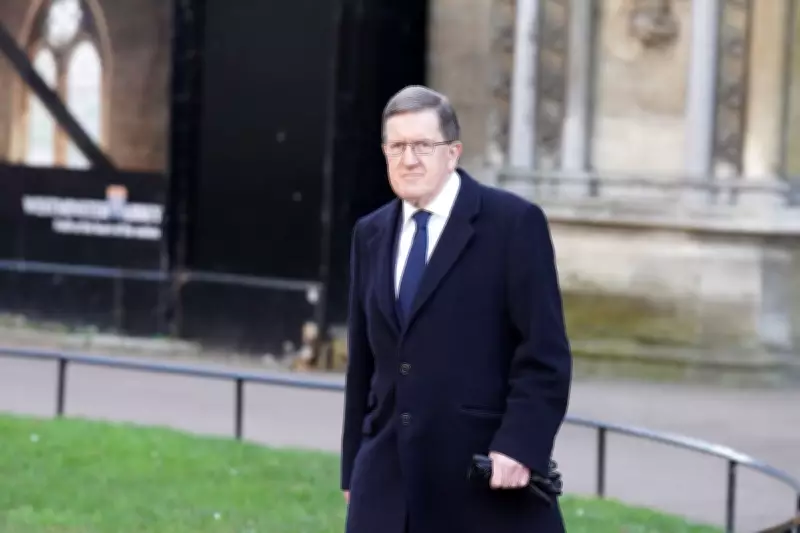
A former Nato secretary general has cautioned that Britain’s military reliance on the United States is “no longer tenable” and that the UK should not anticipate a return to previous levels of cooperation with Washington, even after Donald Trump leaves office.
Lord Robertson’s critique of UK defence policy
In his second criticism of the government’s defence strategy within a fortnight, Lord George Robertson—a former Labour defence secretary tasked by the prime minister with drafting the Strategic Defence Review (SDR)—condemned Britain’s “naive belief” that the US would “always be there” during crises. He argued that this mindset has eroded the UK’s military capabilities.
Trump’s presidency has already strained UK-US relations, particularly over the Iran war and Nato’s opposition to his demand to annex Greenland.

Speaking at Chatham House on Wednesday, Lord Robertson asserted that “long-term trends,” including an increasing US focus on China and scepticism toward globalisation, would render American foreign policy “more transactional” irrespective of the White House occupant. He insisted Britain must evolve into a “more autonomous military actor.”
“It’s clear that our high level of military dependence on the US is no longer tenable,” he stated.
Recent interventions and parliamentary report
The Labour peer, who rarely spoke out against government policy before his recent remarks, had earlier criticised a lack of urgency in boosting defence spending, accusing senior politicians of “corrosive complacency.”
His latest comments follow a report by the House of Lords International Relations and Defence Committee, which he chairs, examining the UK-US relationship. The report urged ministers to “banish the sentimental illusion” of a “special relationship” that would endure forever.
Peers called for a “rebalancing” of ties with Washington and deeper engagement with other nations, especially in Europe, as a “hedge against a less dependable ally.”
Growing concerns over UK defence capabilities
These warnings come amid rising anxiety about Britain’s ability to defend itself in a period of global instability. MPs from both sides of the Commons have expressed concern over the government’s failure to publish its Defence Investment Plan.
In-year savings were blamed for delaying the deployment of HMS Dragon to Cyprus weeks after the Iran crisis began and Tehran attacked the UK’s base on the island.
Ongoing questions remain about the reduction of the British Army to around 70,000 personnel and its use of poor, outdated heavy vehicles and tanks.
Previous calls for re-evaluation
Wednesday’s report is not the first parliamentary committee to call for a reassessment of the UK-US relationship this year. Last month, the Joint Committee on the National Security Strategy advised the government to “move away” from its reliance on the US for defence and security, citing “demonstrable areas of tension” between London and Washington.
US ambassador’s response
In response to Lord Robertson, US Ambassador to London Warren Stephens insisted the UK remains America’s “closest ally.”
He said: “The United States’ National Security Strategy makes it a top priority to ‘support our allies in preserving the freedom and security of Europe.’ That is a commitment we fulfil every day through our work with the United Kingdom. The United States will continue working alongside our closest ally, the United Kingdom, to keep our countries and our citizens safe and prosperous. Our countries face a host of complex threats in the modern world and the only way to counter those threats is through preparedness, co-operation with likeminded allies, and sustained investment in our collective security.”
The Ministry of Defence has been contacted for comment.