France's Strategic Military Buildup in the Middle East
France is dramatically escalating its military presence across the Middle Eastern theatre, deploying its flagship aircraft carrier alongside multiple warships, as President Emmanuel Macron intensifies diplomatic outreach to key regional players. This dual strategy aims to secure France's role in shaping post-war negotiations while maintaining what Macron insists is a strictly defensive posture.
Unprecedented Naval Deployment
President Macron has authorized what he describes as an "unprecedented" naval mobilization, sending eight warships, two helicopter carriers, and the nuclear-powered aircraft carrier Charles de Gaulle—equipped with twenty Rafale fighter jets—to the eastern Mediterranean and broader Middle East. The French frigate Languedoc has positioned itself off Cyprus to enhance anti-drone and anti-missile defenses, following a strategic partnership agreement signed between the two EU nations in December.
Additional French frigates have been dispatched to the Red Sea to safeguard maritime security and freedom of navigation. Macron emphasized that this deployment enables France to "respond to emergency situations" and potentially evacuate French nationals if required. With over 400,000 citizens residing in the Middle East—more than any other European country—including substantial populations in Israel and the United Arab Emirates, France has significant interests to protect.

This swift French action contrasts with the United Kingdom's more measured approach, where opposition parties have criticized Prime Minister Keir Starmer's government for delays in deploying the HMS Dragon destroyer. While the UK has sent Typhoon and F-35 fighter jets alongside air defense systems, France's rapid deployment establishes it as the European nation with the most prominent military footprint in the region.
Defensive Posture and Regional Alliances
President Macron has repeatedly characterized France's military involvement as strictly "defensive," asserting "We are not at war with anyone" following a tragic drone attack in Iraq that killed one French soldier and injured several others. Despite this defensive framing, France maintains robust defense agreements with Gulf allies including Qatar, Kuwait, and the UAE, where it has doubled its stationed Rafale fighter jets to twelve at its permanent base in Abu Dhabi.
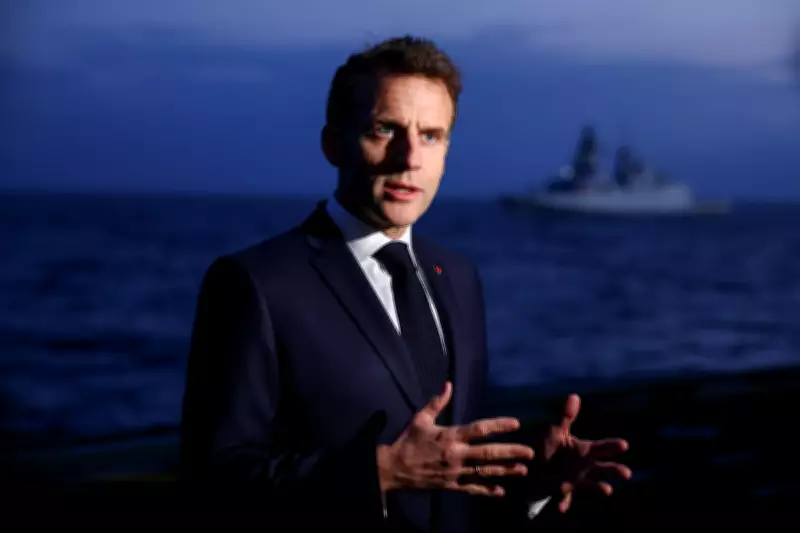
French authorities have acknowledged that Rafale jets have intercepted drones targeting the UAE since the conflict's inception. "We stand by the side of our allies and our friends," Macron declared during his visit to the Charles de Gaulle, noting continued interceptions in recent days. Former President François Hollande cautioned that while protecting nationals and reassuring partners is crucial, France must remain vigilant against potential attacks on its warships, which would necessitate defensive retaliation.
Diplomatic Outreach and Historic Ties
Concurrently with military deployments, Macron is spearheading diplomatic initiatives to de-escalate regional conflicts. He has engaged directly with Iranian President Masoud Pezeshkian—the first Western leader to do so since the war began—urging Iran to halt strikes against regional countries, though this appeal has thus far gone unanswered. Macron maintains that "a diplomatic solution" is essential to ending the escalation and has agreed to remain in contact with Iranian leadership.
France's historic ties with Lebanon, a former French protectorate, remain central to its diplomatic strategy. Macron has called for Hezbollah to cease fighting and urged Israel to renounce ground offensives, while supporting Lebanese military efforts to assume security control from Hezbollah. France maintains 800 troops in the UN peacekeeping force in Lebanon and recently delivered 60 tons of emergency aid, including medical supplies and shelter materials, to Beirut.

Strategic Calculations and Global Ambitions
Political analyst Bertrand Badie, an international relations professor at Sciences Po Paris, suggests Macron's approach reflects his longstanding ambition to assert France's global influence. With domestic approval ratings low and approximately one year remaining in his term, Macron may have more to gain diplomatically than other European leaders. However, Badie cautions against excessive optimism, questioning France's actual leverage in resolving the crisis and noting that "this crisis cannot be resolved by French remedies."
Looking ahead, Macron is promoting an international effort to secure the Strait of Hormuz—a vital energy corridor—proposing that warships could escort commercial vessels once hostilities subside. As the conflict's most intense phase potentially continues for weeks or months, France positions itself militarily and diplomatically to influence the eventual post-war landscape, balancing defensive capabilities with ambitious peacemaking aspirations.