France's 2026 Budget Finally Passes, Paving Way for Major Military Expansion
France's long-delayed budget for the current year is poised for formal adoption on Monday, a critical step that will unlock significantly higher military spending as pledged by President Emmanuel Macron. The move comes amid heightened global security concerns linked to Russia's ongoing war in Ukraine and escalating conflicts in the Middle East.
Chaotic Parliamentary Process Culminates in Constitutional Maneuver
The expected passage of the budget represents the conclusion of a months-long and deeply chaotic legislative process that laid bare the profound divisions within France's fractured Parliament. Lawmakers proved incapable of reaching a compromise, forcing Prime Minister Sébastien Lecornu to utilise his special constitutional authority to push the bill through without a parliamentary vote. He is widely anticipated to withstand two no-confidence motions scheduled for Monday evening, maintaining the government's fragile hold on power.
Substantial Defence Funding Increase Amid Broader Austerity
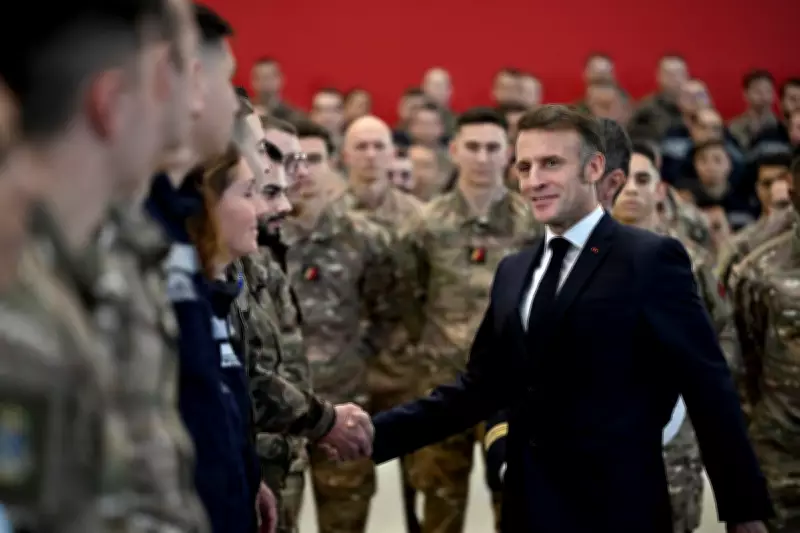
President Macron has repeatedly vowed to bolster defence expenditure to counter what he describes as an expanding spectrum of threats, ranging from Russian aggression and nuclear proliferation to terrorism and sophisticated cyberattacks. While an emergency law was passed in December to avert a government shutdown, the full 2026 budget is essential to provide the armed forces with the sustained funding required for a meaningful build-up.

The Defence Ministry is set to receive an additional 6.7 billion euros this year compared to 2025—a notable exception in a budget that otherwise seeks to curb spending across most other government sectors. This injection of capital will finance key acquisitions, including a new nuclear-powered attack submarine, 362 armoured vehicles to modernise the army, and new Aster surface-to-air missile systems.
Furthermore, France is launching a new voluntary military service programme this year, aimed at training thousands of young volunteers, predominantly aged 18 and 19.
Deficit Reduction Targets and Political Concessions
The government has set a target of reducing the budget deficit to 5% of GDP, down from 5.4% in 2025. Public spending is projected to edge down slightly from 56.8% to 56.6% of GDP, as authorities attempt to rein in the national debt within the European Union's second-largest economy.
France has faced considerable pressure from both EU institutions and credit rating agencies to address its debt burden, prompting the centre-right government to pursue widespread spending cuts. However, lacking a parliamentary majority, Prime Minister Lecornu was compelled to grant costly concessions to Socialist lawmakers to prevent them from supporting efforts to topple his administration. The most symbolic of these is the suspension of President Macron's deeply unpopular pension reforms, which sought to raise the retirement age from 62 to 64.
The state deficit is projected at 131.9 billion euros, remaining almost stable compared to the previous year. To help meet fiscal targets, businesses will shoulder several tax increases, including an extra levy on large corporate profits expected to raise 7.3 billion euros in 2026.
Macron's Focus Shifts to Global Stage as Presidency Nears End
President Macron, 48, is soon to enter the final year of his presidency in spring 2027. He has largely withdrawn from the domestic political fray since his contentious 2024 decision to call snap legislative elections, a move that plunged Parliament into turmoil and triggered the collapse of successive governments over budgetary disputes.
Prime Minister Lecornu, the fourth head of government in just two years, has already survived six no-confidence votes initiated by the hard left and far right. Macron, meanwhile, has concentrated his efforts on foreign policy, European affairs, and defence strategy. In recent weeks, he has advocated for robust security guarantees for Ukraine in any future peace deal with Russia, joined European leaders in a demonstration of solidarity with Greenland, and supported designating Iran's Revolutionary Guard as a terrorist organisation within the EU.

As his choice of sunglasses sparked a minor sensation at the Davos gathering of world leaders, Macron's pointed remarks that France prefers "respect to bullies"—widely interpreted as a rebuke to former US President Donald Trump's tariff threats—garnered significant international attention, underscoring his active role on the global diplomatic stage.