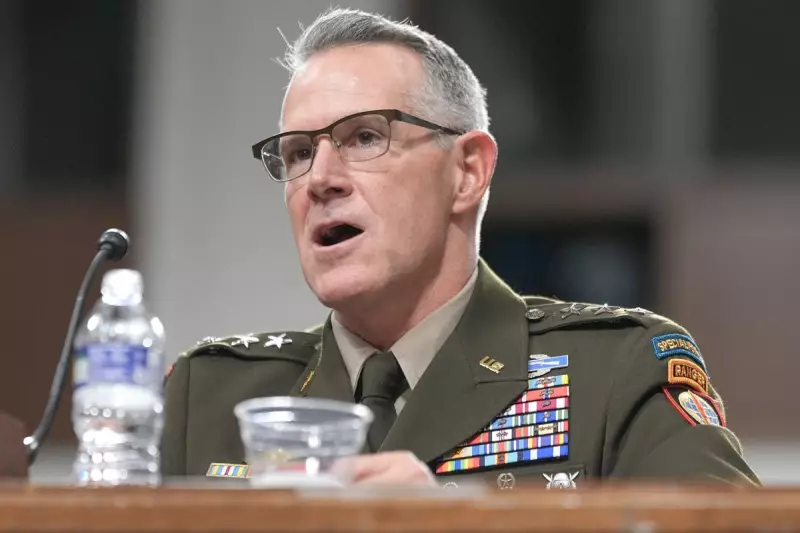
A senior Marine Corps general nominated to lead all United States military operations in Latin America faced intense questioning from lawmakers on Thursday, revealing he is unaware of the Trump administration's long-term strategic plans for the region despite a significant recent military buildup.
Confirmation Hearing Reveals Strategic Uncertainty
Lieutenant General Francis Donovan, the nominee to head US Southern Command (SouthCom), told the Senate Armed Services Committee he stands ready to oversee an expanded American presence that began ahead of the capture of Venezuelan leader Nicolás Maduro. However, he admitted he does not know how long this enhanced focus will last or the broader strategic blueprint.
The hearing on 15 January 2026 saw Democrats and Independent Senator Angus King of Maine press Donovan for details on how he would command SouthCom and the administration's vision. "So you don’t know what the plan is now? You don’t know why all those ships and aircraft and soldiers are there?" King asked pointedly. "Senator, I do not," Donovan replied, explaining his current role as vice commander of US Special Operations Command does not involve planning for the region.

Expanded US Presence and Scrutiny Over Strikes
If confirmed, Donovan would replace Navy Admiral Alvin Holsey, who retired last year. Holsey's departure came amid increasing scrutiny over the Trump administration's deadly strikes on alleged drug boats, a policy that represents a remarkable extension of American power in Latin America.
This military pivot culminated earlier this month with US troops deposing and apprehending Maduro. The operation was the endpoint of a pressure campaign that started with the largest military buildup in the region in generations. It expanded to include dozens of attacks on boats accused of drug smuggling and the seizure of sanctioned oil tankers linked to Venezuela.
When asked by Senator Mark Kelly, an Arizona Democrat, if SouthCom would need to be "much different" this year due to the Western Hemisphere pivot, Donovan answered unequivocally: "Yes I do."
Broader Concerns Over Surveillance and Legal Boundaries
The hearing also served as a platform for lawmakers to question other aspects of the administration's security policies. Lieutenant General Joshua Rudd, nominated to lead the National Security Agency (NSA), was grilled over surveillance and fears the agency could be used against Americans for their political views.
Senator Elissa Slotkin of Michigan, a former CIA analyst, voiced concerns that the administration could order the NSA to spy on citizens—an act forbidden by federal law. "Will you reject that?" Slotkin asked. Rudd pledged to execute his duties "in accordance with the Constitution and all applicable laws."
The NSA has been without a permanent director since Trump fired General Tim Haugh last year. The role is critical as the director also runs the Pentagon's Cyber Command. Despite the pointed questions, lawmakers from both parties indicated they expect the nominations of Donovan and Rudd to be approved. A confirmation vote has not yet been scheduled.