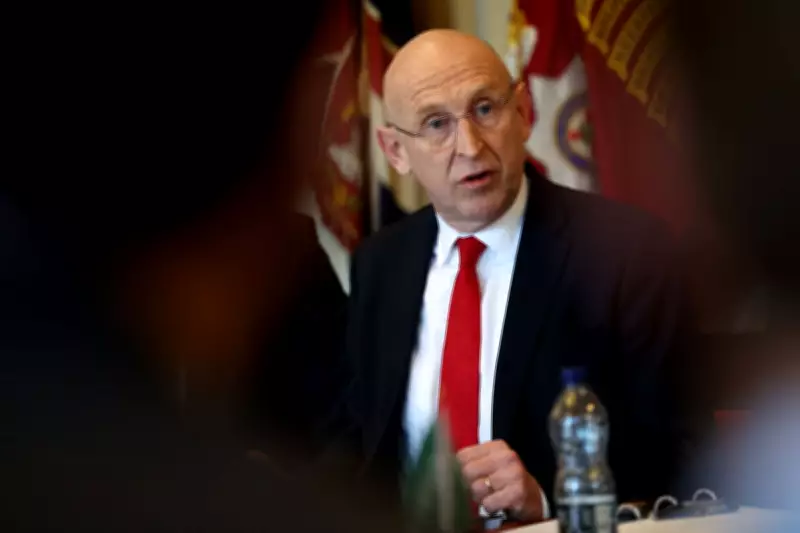
Defence Secretary Dodges Direct Answer on Iran's Missile Reach to UK
Defence Secretary John Healey has declined to explicitly rule out Iran's capability to launch missile strikes against the United Kingdom, while simultaneously asserting that military assessments indicate Tehran has no current plans for such an attack. This cautious stance emerged during a tense interview on Sky News, where Healey faced repeated questioning about whether Iranian missiles could potentially reach London.
Diego Garcia Base Targeted in Recent Escalation
The geopolitical context involves Iran's recent missile targeting of the strategic Diego Garcia military base in the Indian Ocean, which is jointly operated by the United Kingdom and United States. Healey previously stated these missiles fell significantly short of actually reaching the base, but the incident has heightened concerns about Iran's expanding military capabilities.
When pressed specifically about London's vulnerability, Healey responded: "We have no assessment of Iranian plans to strike London." Further pressed on capability rather than intent, he emphasized: "What I'm saying, and trying to reassure people, is that we've got no assessment that Iran has any plans to attack."

Alliance Strength and Russian Parallels
The Defence Secretary pointed to Britain's defensive resources and NATO alliance as key protective factors. He drew concerning parallels between Iranian tactics and Russian operations in Ukraine, suggesting: "As far as Iran goes, they're demonstrating a capacity to hit across the Middle East, we see the same tactics and technologies that we see employed by Russia in Ukraine, and this is the hidden hand of Putin in both conflicts."
Naval Shortages and German Assistance
Separately, Healey addressed criticism regarding Royal Navy capabilities, confirming that Germany will provide a frigate for an upcoming NATO mission originally assigned to HMS Dragon. The UK vessel was redirected to defend Cyprus in response to the Iran crisis. While acknowledging this as a "sign of the strength of the NATO alliance," Healey expressed dissatisfaction with Britain's warship situation, noting: "I'm not happy with the situation we have with British warships, and that's because it takes six years to build a warship."
With only 17 frigates and destroyers currently available, Healey explained deployment decisions must work within existing resources. The Defence Committee chair, Labour MP Tan Dhesi, had previously described the defence investment plan delay as a "mess," suggesting it might be postponed until after May's elections, though Healey denied Treasury obstruction.
Energy Supply Concerns and Government Interventions
The conflict's ripple effects extend to energy security, with the UK government taking unprecedented steps to address potential shortages. Business Secretary Peter Kyle has approved up to £100 million in grants to reopen the mothballed Ensus carbon dioxide plant on Teesside. This facility, closed last year due to US trade deal impacts on bioethanol tariffs, will operate initially for three months to produce vital CO2 by-products for sectors including beverages and nuclear industries.
This marks the first major government intervention targeting Iran conflict-induced shortages, but concerns extend beyond CO2. Former BP executive Nick Butler warned Times Radio of potential oil and gas shortages within two to three weeks, urging serious government planning. Shell CEO Wael Sawan issued similar cautions at an industry conference, though Energy Minister Michael Shanks assured Parliament that petrol supplies remain reliable and no blackout or rationing plans exist.
Strait of Hormuz Blockade and Diplomatic Efforts
The crucial question remains how long Iran will maintain its effective blockade of the Strait of Hormuz, through which approximately one-fifth of global oil shipments pass. Despite Iranian Foreign Minister Abbas Araghchi's claims that the strait remains open to "non-hostile" shipping, it remained closed on Wednesday.

Foreign Secretary Yvette Cooper will urge Iran to reopen the vital waterway during G7 foreign ministers' meetings in France, while committing additional £2 million humanitarian aid to Lebanon and pledging UK assistance for safe maritime passage. Cooper is scheduled to meet with US Secretary of State Marco Rubio, France's Jean-Noel Barrot, and Germany's Johann Wadephul.
Contradictory Statements from Washington and Tehran
The diplomatic landscape remains fraught with contradictory narratives. White House spokeswoman Karoline Leavitt described "productive" talks with Tehran while warning the US would hit Iran "harder" if it refused to acknowledge military defeat. Conversely, Araghchi denied any negotiations occurring, interpreting US diplomatic outreach as implicit admission of defeat: "The fact that they are mobilising their highest officials to negotiate with the Islamic Republic indicates their acceptance of defeat."
As tensions persist, the UK government balances defensive reassurances with practical preparations for potential supply chain disruptions, while diplomatic efforts continue to resolve the blockade that threatens global energy stability.