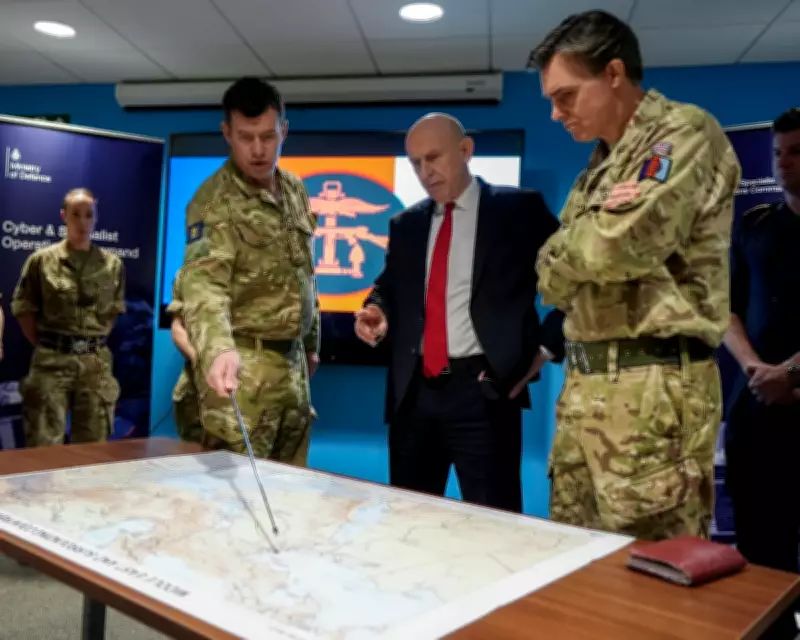
During a significant visit to the United Kingdom's permanent military headquarters in Northwood, located in north-west London, Defence Secretary John Healey engaged directly with senior military commanders. He specifically questioned two high-ranking officers about potential evidence of coordination between Russia and Iran within the escalating conflicts across the Middle East.
Strategic Inquiry Amid Regional Escalation
The inquiry came against a backdrop of heightened tensions, following a drone strike on a coalition base in Erbil, northern Iraq, used by British and other anti-Islamic State forces. Although no serious casualties were reported, the attack marked a notable breach of western defences. Healey was briefed that the drones' successful penetration reflected advanced tactical sophistication, with expertise reportedly transferred from Russia to Iran and its allied groups.
Military Analysis and Drone Warfare
Lieutenant General Nick Perry, the Chief of Joint Operations, confirmed that these refined tactics had become "problematic" as the conflict entered a new phase. Iran has demonstrated resilience under intense bombardment from the United States and Israel, adapting its strategy by increasingly deploying drones like the Shahed 136. This model, characterized by its delta wing and noisy engine, was originally designed by Iran and later supplied to Russia, which has used it extensively in Ukraine.

While Iran's ballistic missile launches have decreased by over 90% since late last month, drone attacks remain a persistent threat. For instance, 39 drones were fired at the United Arab Emirates recently, indicating a shift toward asymmetric warfare to inflict economic and military damage on the US and its allies.
Political Implications and Diplomatic Challenges
By highlighting the connection between Iran and Russia, Healey effectively links the war in Ukraine with the Middle East conflict. This move capitalizes on relatively high public support in the UK for Ukraine's defence, contrasting with the unpopularity of direct involvement against Iran. It also diverts attention from recent controversies, such as the delayed deployment of Royal Navy destroyer HMS Dragon to Cyprus, which has sparked criticism within government circles.
When pressed about confidence in the Chief of Defence Staff, Sir Rich Knighton, Healey affirmed "total confidence," aiming to quell speculation about leadership stability. However, the broader challenge lies in potential future military engagements, such as protecting merchant shipping in the Strait of Hormuz, where justifying action solely to assist the US may lack public appeal.
International Relations and Covert Alignments
The notion of a covert Russian-Iranian alignment is a narrative the UK may seek to reinforce with the White House, though diplomatic hurdles persist. Anglo-American relations have strained, with former President Donald Trump dismissing Prime Minister Keir Starmer in undiplomatic terms, complicating British influence. Despite Putin's denials of aiding Iran, the strategic exchange of drone technology and targeting information suggests ongoing collaboration, underscoring the complex geopolitical landscape Healey must navigate.