Defense Secretary Warns Iran Conflict Is Only Just Beginning
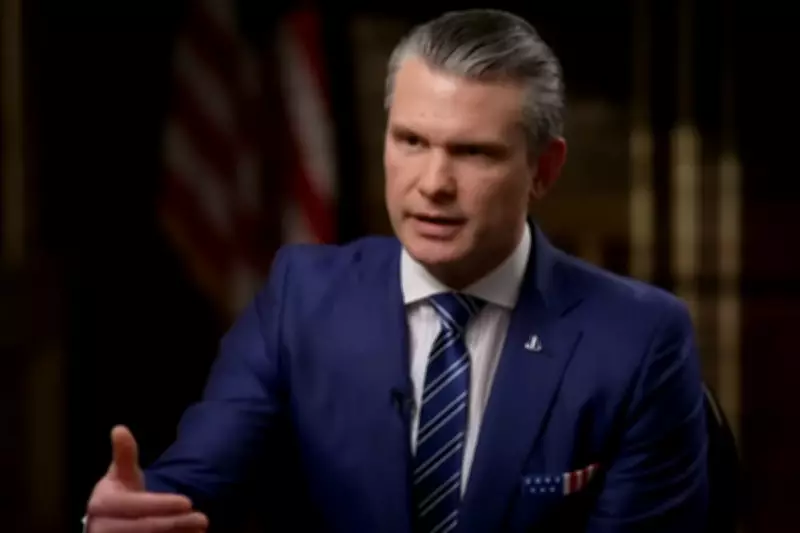
Defense Secretary Pete Hegseth has issued a stark warning that the United States' military engagement with Iran is only in its initial stages, with further American casualties anticipated as the conflict intensifies. In an interview with CBS News's 60 Minutes, Hegseth emphasized that the war is far from over, stating, "this is only just the beginning," and highlighting the grim reality of ongoing hostilities.
Hegseth Insists US Is 'On Track' Despite Mounting Losses
Speaking to host Major Garrett, Hegseth asserted that the US military campaign is proceeding according to plan, despite the recent death of a seventh US servicemember and surging global oil prices exceeding $100 per barrel following airstrikes. He dismissed comparisons to past conflicts, noting, "We're not flying a mission accomplished banner – like George W Bush on an aircraft carrier. We're not doing that and we haven't done that."
Hegseth underscored the overwhelming superiority of US capabilities, describing the fight as intentionally one-sided. "We can be clear with the American people that this is not a fair fight. And that's on purpose. Our capabilities are overwhelming compared to what Iran's are," he declared, reinforcing confidence in the strategic approach.

More Casualties Expected to 'Stiffen Resolve'
Addressing the prospect of additional US troop fatalities, Hegseth acknowledged the inevitability of losses in such a conflict. "The president's been right to say there will be casualties. Things like this don't happen without casualties. There will be more casualties," he stated. However, he argued that these sacrifices would strengthen national determination rather than weaken it.
"No one is – I mean, especially our generation knows what it's like to see Americans come home in caskets... But that doesn't weaken us one bit. It stiffens our spine and our resolve to say this is a fight we will finish," Hegseth affirmed, projecting a message of unwavering commitment to achieving victory.
War Duration and Objectives Remain Unclear
When pressed on the likely duration of the war, Hegseth declined to provide specific timelines, citing operational security. "People ask boots on the ground, no boots on the ground, four weeks, two weeks, six weeks? President Trump knows, I know, you don't tell the enemy, you don't tell the press, you don't tell anybody what your limits would be on an operation. We're willing to go as far as we need to in order to be successful," he explained.
He clarified that the objective is not regime change in the traditional sense, drawing lessons from past failures in Afghanistan. "We tried that. The American people have rejected that. President Trump called those wars dumb. And we're not fighting that way," Hegseth said, emphasizing a focus on neutralizing Iran's threat rather than imposing democratic reforms.
US Demands Unconditional Surrender from Tehran
Hegseth outlined the US demand for unconditional surrender from Iran, framing it as a decisive move to end the conflict. "It means we're fighting to win. It means we set the terms. We'll know when they're not capable of fighting. There'll be a point where they'll have no choice but to do that. Whether they know it or not, they will be combat-ineffective. They will surrender. This is war. This is conflict. This is bringing your enemy to their knees," he asserted.
Additional Context and Investigations
The interview took place amid significant regional developments, including the appointment of Mojtaba Khamenei as Iran's new supreme leader after his father's death in initial airstrikes. Hegseth also addressed other critical issues, insisting the US maintains control over military operations despite its partnership with Israel, and dismissing characterizations of the conflict as an opportunity for regime overthrow as "silly and academic."

He revealed that the US is investigating responsibility for an airstrike on a girls' school that killed numerous pupils on the first day of hostilities, and warned that any foreign interference, such as from Russia providing intelligence to Iran, would be "confronted strongly." Hegseth concluded by reiterating his central message: "What I want your viewers to understand is this is only just the beginning," signaling a prolonged and challenging conflict ahead.