

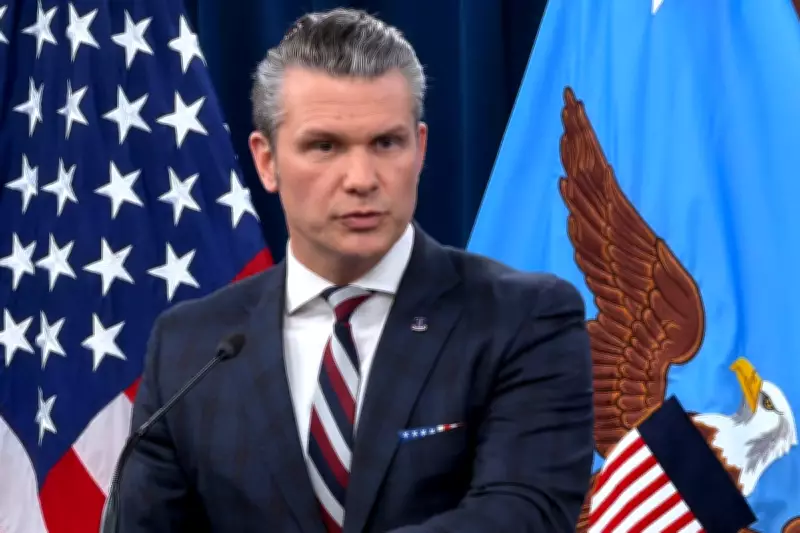
Defense Secretary Pete Hegseth made bold statements during a press conference on Tuesday morning, asserting that the United States is decisively "crushing the enemy" in the ongoing war in Iran. He emphasized that this conflict should not be viewed as a repeat of the 2003 Iraq war, drawing clear distinctions between the two military engagements.
Hegseth's Confident Declaration on Iran Conflict
In his address, Hegseth expressed strong confidence in the US military's progress, stating, "We are winning" in the war against Iran. He highlighted operational successes and strategic advantages that have positioned American forces favorably in the region. The defense secretary's remarks aimed to reassure the public and international observers about the direction of the conflict.
Contrasting Iran with the Iraq War Legacy
Hegseth specifically addressed comparisons to the 2003 Iraq invasion, asserting, "This is not 2003." He outlined key differences in objectives, tactics, and geopolitical context that set the Iran war apart from the earlier conflict. According to Hegseth, lessons learned from Iraq have been applied to avoid similar pitfalls and ensure a more effective military campaign.

The press conference, held in New York on Tuesday, March 10, 2026, at 12:18 GMT, provided Hegseth with a platform to update on the war's status. His comments come amid ongoing operations and diplomatic efforts related to the Iran conflict, which has drawn global attention and scrutiny.
Broader Implications for US Defense Strategy
Hegseth's statements reflect a broader US defense strategy focused on demonstrating strength and resolve in international conflicts. By publicly declaring the enemy is being crushed, he seeks to project an image of military dominance and strategic clarity. This approach is part of efforts to maintain domestic support and deter adversaries in the volatile Middle East region.
As the war continues, Hegseth's promises and assessments will be closely monitored by analysts, policymakers, and the public. The defense secretary's emphasis on avoiding an Iraq-like scenario underscores the complex challenges and high stakes involved in the Iran conflict, with implications for regional stability and US foreign policy.






