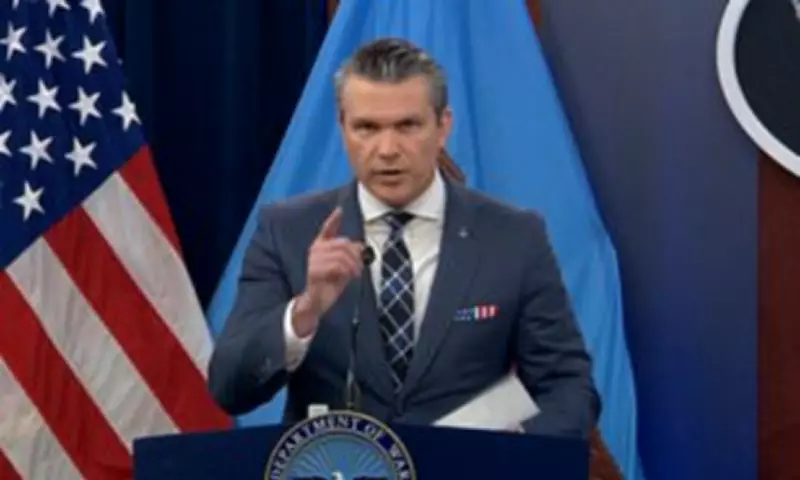
Defense Secretary Pete Hegseth launched a blistering attack on the media during a Pentagon briefing on Thursday, accusing journalists of suffering from 'Trump Derangement Syndrome' and insisting that the ongoing war in Iran represents an overwhelming success for the United States. The former Fox News host tore into press members present, asserting that they are not the intended audience and that their negative coverage is misguided.
Media Under Fire for Alleged Bias
Hegseth directly challenged reporters, stating, 'Yes, there are reporters in front of me, but they are not our audience today.' He accused the media of deliberately painting a bleak picture of the conflict, which began just 19 days prior, suggesting they want the public to believe the situation is spiraling toward an endless quagmire. Hegseth emphatically declared that nothing could be further from the truth, contrasting this war with previous conflicts in Iraq and Afghanistan, which he attributed to what he called foolish politicians like Bush, Obama, and Biden.
Escalating Tensions and Economic Impact
The briefing occurred amidst heightened regional tensions, following Israeli strikes on Iran's South Pars gas field that triggered retaliatory attacks against American Arab allies. President Trump has publicly criticized Israel for what he described as lashing out in anger, emphasizing that the United States had no prior knowledge of the assault. This incident has reportedly angered Gulf allies, who have demanded an end to U.S. and Israeli strikes on Iranian energy infrastructure due to vulnerabilities exposed in the war.

In a Truth Social post, Trump issued a stark warning, threatening to 'massively blow up the entirety' of the South Pars field if Iran continues targeting refineries. He clarified that Qatar was not involved in the Israeli attack, seeking to mitigate diplomatic fallout. The conflict has already had severe economic consequences, with gas prices surging from $2.90 to $3.90 per gallon since hostilities began three weeks ago.
Market Turmoil and Strategic Concerns
The blockade of the Strait of Hormuz by Iranian mines and missiles has disrupted global oil flows, contributing to market volatility. On Thursday, US crude oil prices jumped by 1.5 percent, while Brent crude, the global benchmark, soared by 5.9 percent to reach $114 per barrel. An Iranian official has likened these developments to a full-scale economic war, underscoring the high stakes involved.
Trump has drawn a red line regarding further Israeli attacks on the South Pars field, but warned that if Iran retaliates against Qatar again, he would authorize devastating force against the Persian Gulf nation. The human cost of the conflict is also mounting, with 13 US troops killed and 140 wounded across the Middle East so far, adding urgency to the administration's claims of success.
Broader Implications and Future Outlook
Hegseth's defiant stance highlights the administration's commitment to framing the Iran war as a strategic victory, despite media skepticism and growing international tensions. The situation remains fluid, with ongoing diplomatic efforts to stabilize relations with Arab allies and manage the economic fallout from energy market disruptions. As the conflict continues, the administration faces the dual challenge of maintaining military momentum while addressing domestic and global concerns over inflation and security.