Defense Secretary Hegseth Addresses Escalating Iran Conflict, Asserts It Is 'Not Endless'
Defense Secretary Pete Hegseth has directly confronted growing fears that the recent US-Israeli military strikes in Iran could develop into a prolonged and devastating regional war. In a firm declaration aimed at calming international anxieties, Hegseth stated, "This is not Iraq. This is not endless." His remarks came during a high-profile news briefing on Monday, the first such public address by the Trump administration since the coordinated strikes began over the weekend.
Administration Briefing Details Mission and Casualties
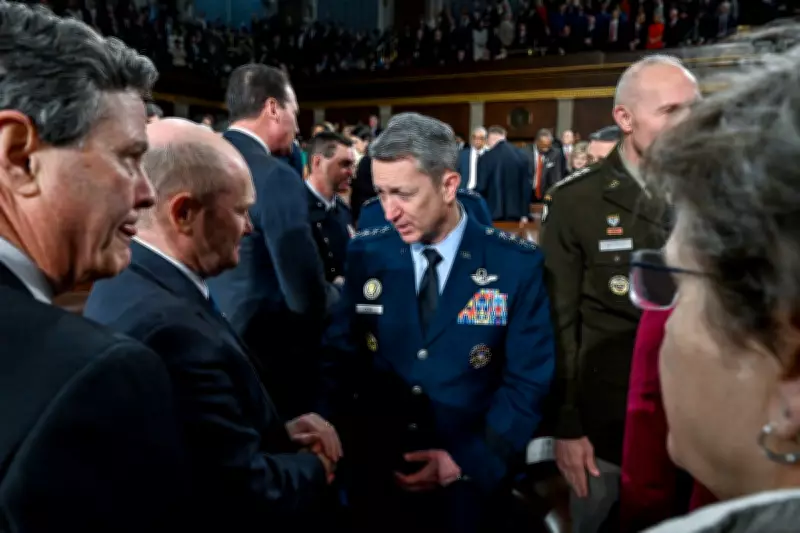
Hegseth, alongside Air Force General Dan Caine, the Chairman of the Joint Chiefs of Staff, outlined the strategic objectives behind the offensive. He described the operation as having a "clear, devastating, decisive mission" primarily focused on eliminating Iran's missile capabilities, crippling its naval forces, and ensuring the prevention of nuclear proliferation. "This is not a so-called regime change war, but the regime sure did change and the world is better off for it," Hegseth asserted, referencing the reported death of Iranian Supreme Leader Ayatollah Ali Khamenei, which has plunged the region into deeper uncertainty.
The briefing occurred against a backdrop of intensifying hostilities, with Iran and its allied militias launching retaliatory missile attacks against Israel, various Arab states, and US military installations across the Middle East. The human cost is mounting: four American troops have been confirmed killed in action, and both President Donald Trump and General Caine have warned that further US casualties are anticipated. Caine expressed solemn condolences, stating, "We grieve with you, and we will never forget you," in a message to the families of the fallen.

Regional Instability and Accidental Engagement
A stark illustration of the escalating chaos emerged with reports that Kuwait, a US ally, "mistakenly shot down" three American F-15E Strike Eagle fighter jets during a combat mission. This incident occurred as Iranian aircraft, ballistic missiles, and drones were actively engaging targets. US Central Command confirmed that all six pilots ejected safely and are in stable condition, but the event underscores the volatile and unpredictable nature of the conflict.
Despite the administration's forceful rhetoric, US officials have not presented any concrete exit strategy or indicated a swift conclusion to the hostilities. The vacuum left by Khamenei's death has further complicated the geopolitical landscape, casting significant doubt on the future stability of the Islamic Republic and the wider Middle East.
Justification for Strikes and Iranian Threats
In defending the decision to launch the strikes, Hegseth framed the action as a necessary response to decades of aggression. He accused the Iranian regime of having "waged a savage, one-sided war against America" for 47 years. "Their war on Americans has become our retribution against their Ayatollah and his death cult," he declared.
Notably, Hegseth did not cite an imminent nuclear threat from Iran, instead claiming that US and Israeli strikes the previous summer had "obliterated their nuclear program to rubble." The justification shifted to conventional weapons, with Hegseth arguing that Iran was developing advanced ballistic missiles and drones to create a "conventional shield for their nuclear blackmail ambitions." He also revealed that during pre-strike negotiations, Iranian officials were deliberately "stalling."
Conflict Timeline and Regional Toll
President Trump, in a Sunday interview, projected that the military campaign could persist for "four to five weeks." He confirmed that hundreds of targets had already been struck, including Iranian missile sites and naval assets, with claims of destroying naval headquarters and multiple warships.

The humanitarian impact is severe. According to the Iranian Red Crescent Society, at least 555 people have been killed in Iran due to the US-Israeli operations. Authorities report additional fatalities, with 11 deaths in Israel and 31 in Lebanon, highlighting the conflict's expanding regional toll.