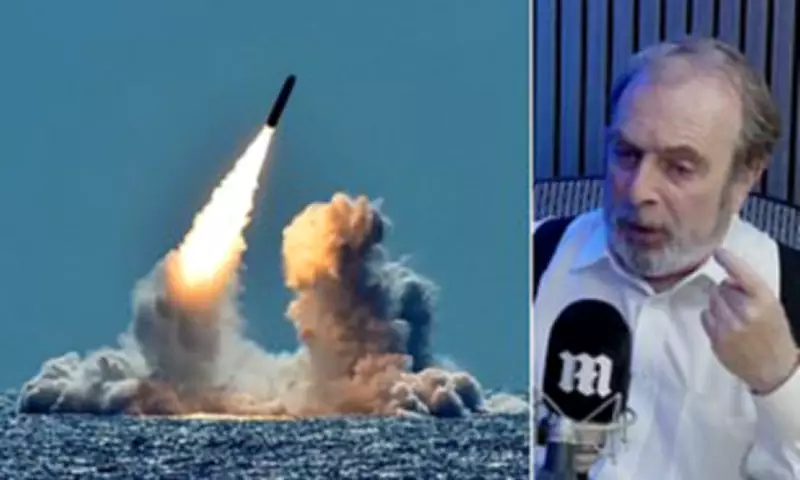
Peter Hitchens Calls for UK to Emulate France with Independent Nuclear Arsenal
Britain should follow France's example and construct its own fully independent nuclear deterrent, severing what columnist Peter Hitchens describes as a perilous reliance on the United States. In a recent episode of the Alas Vine & Hitchens podcast, Hitchens contended that the United Kingdom can no longer entrust its status as a nuclear power to the capricious decisions of a potentially vengeful President Donald Trump.
The Current Dependence on American Missiles
While Britain designs and manufactures its own nuclear warheads, the missiles necessary to deliver them are leased from the United States. These missiles are stored and maintained at the Kings Bay naval base in Georgia, where they are pooled with American counterparts. This arrangement grants the US effective veto power over any potential British launch, meaning Washington holds the final say on whether the UK could ever deploy its nuclear arsenal.
Britain's nuclear deterrent, known as the Trident programme, is not only strategically limited but also exorbitantly expensive. The system restricts launches to sea-based platforms only, with annual costs to the Exchequer ranging between £2 billion and £3 billion. This financial burden and operational constraint have sparked renewed debate about the programme's viability.

Political Support for Independence
This week, at the Liberal Democrat spring conference in York, party leader Sir Ed Davey urged the government to replace Trident with a genuinely independent weapons system. His call comes amid Trump's expressed anger over Britain's refusal to join America's military actions against Iran. Hitchens echoed this sentiment, noting that France maintains complete control over both its warheads and missiles.
"The French have their own warheads and missiles," Hitchens stated. "As Ed Davey rightly points out, this means they are not subject to the whims of a President who, during breakfast, may divert such a rage against us that he stops us having them. What we currently have costs a huge amount of money and doesn't work... it would be crazy to give up the bomb altogether, it gives you a certain standing in the world that you would never recover without it."
Strategic Vulnerabilities and Alternatives
Hitchens further warned that if nuclear weapons were ever used, they would most likely be detonated high above a city to disable electronic devices and communication systems—a capability Britain entirely lacks. Unlike France, which retains specially adapted aircraft and trained pilots for aerial nuclear delivery, Britain abandoned this ability decades ago.
There is also a significant risk that American modifications to the leased missiles could render Britain's Trident submarines obsolete. "We have ended with a gap between what we would want to do and what we can do," Hitchens cautioned. "Very serious people in the armed forces have said we should get rid of Trident—this is not some kind of weird, ultra-left, hippy position."
He proposed that Britain could develop a smaller, more credible nuclear weapon at a lower cost, free from American dependence. "We could have a small and credible nuclear weapon: which we may be able to use at a much lower price, which would not be dependent on the Americans," Hitchens argued. "I think Ed Davey is thinking further ahead and more openly than any of the major political parties are doing."
The debate underscores growing concerns about national sovereignty and defence strategy in an unpredictable global landscape. To hear the full discussion between Peter Hitchens and Sarah Vine on Britain's nuclear future, listeners can search for the Alas Vine and Hitchens podcast on their preferred platform.