

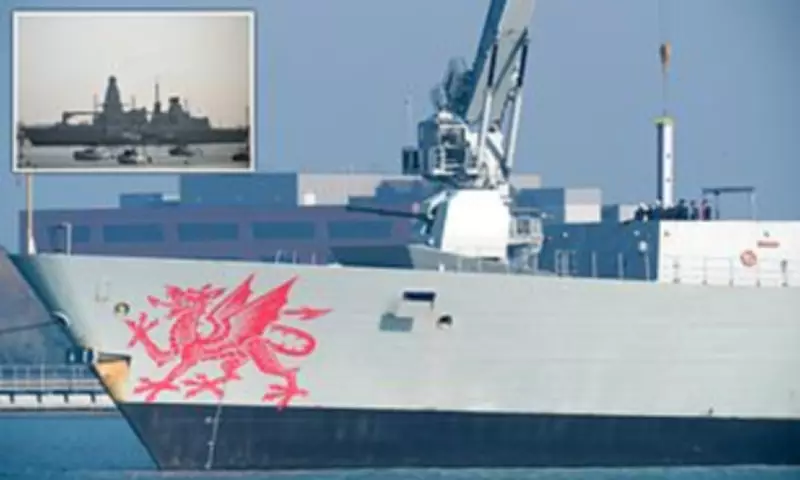
The deployment of the Royal Navy's Type 45 destroyer HMS Dragon to Cyprus has been significantly delayed, amid allegations from union officials that the Portsmouth naval base responsible for its repairs now operates on a restrictive 'nine-to-five, Monday-to-Friday' schedule. This critical mission, intended to safeguard the British RAF Akrotiri base in Cyprus following recent Iranian drone strikes, has been stalled as maintenance crews scramble to complete essential welding and other urgent repairs.
Union Blames Cost-Cutting Measures
According to the Prospect union, these operational delays are a direct consequence of what they describe as 'cost-cutting' measures implemented by the Ministry of Defence and its private contractor, Serco. The union alleges that the Portsmouth naval base has abandoned its previous around-the-clock staffing model in favour of a standard weekday-only operation, severely impacting the base's ability to respond to urgent military needs.
Mike Clancy, General Secretary of Prospect, stated emphatically: 'Our members are stepping up to help during this crisis, but such a vital service should not be dependent on the goodwill of staff working overtime. Out-of-hours support must be formally locked into the contract. This contract has failed its first real test during a serious international crisis and requires urgent review and rectification.'

Political and Strategic Implications
Prime Minister Sir Keir Starmer has faced criticism for the timing of the deployment decision. He ordered HMS Dragon to sail to the Eastern Mediterranean on Tuesday, more than 72 hours after conflict escalation in the Middle East began. This delay follows the attack on RAF Akrotiri by an Iranian drone fired from Lebanon on Sunday, which raised significant concerns about the adequacy of local air defences.
Although officials described the damage as minor, it was later revealed that the drone struck a hangar used by the United States for U2 spy planes conducting high-altitude reconnaissance missions. After France agreed to send frigates to protect the island, the British government's response has been hampered by the unreadiness of HMS Dragon.
Extended Delays and International Comparisons
The destroyer will not be ready to depart from Portsmouth until next week at the earliest, having been disarmed for planned maintenance prior to the crisis. Even after departure, it could take an additional week to reach Cyprus, meaning it will arrive after warships from allied nations including France and Spain.
Defence Minister Al Carns confirmed the delay, explaining that the ship would not leave until engineers had completed 'a variety of different bits of maintenance.' This timeline has raised questions about the Royal Navy's operational readiness and response capabilities during international emergencies.
Contractual Disputes and Operational Realities
According to a Politico report, the Ministry of Defence signed a contract with Serco Marine Services in May of last year that effectively ended 24-hour staffing at Portsmouth naval base. Prospect, which represents engineers and tug boat workers, claims this reduced capacity has forced its members to volunteer for evening and weekend shifts to prepare HMS Dragon for deployment following recent escalations in the Middle East.
Serco has strongly countered these allegations, asserting that their contract defines the core working day as 7 am to 7 pm and includes provisions for overtime when required. A Serco spokesman stated: 'HMS Dragon is being prepared to sail with the full support of our dedicated teams in Portsmouth. Serco has fulfilled every task requested by the Royal Navy on time and to the agreed standard. Any suggestion that our working patterns have impacted HMS Dragon's ability to sail is completely untrue.'
The situation highlights broader tensions between military operational requirements, private contracting arrangements, and workforce management during periods of international tension. As HMS Dragon remains in port awaiting completion of maintenance, questions persist about the adequacy of current naval support contracts and their flexibility during crises.






