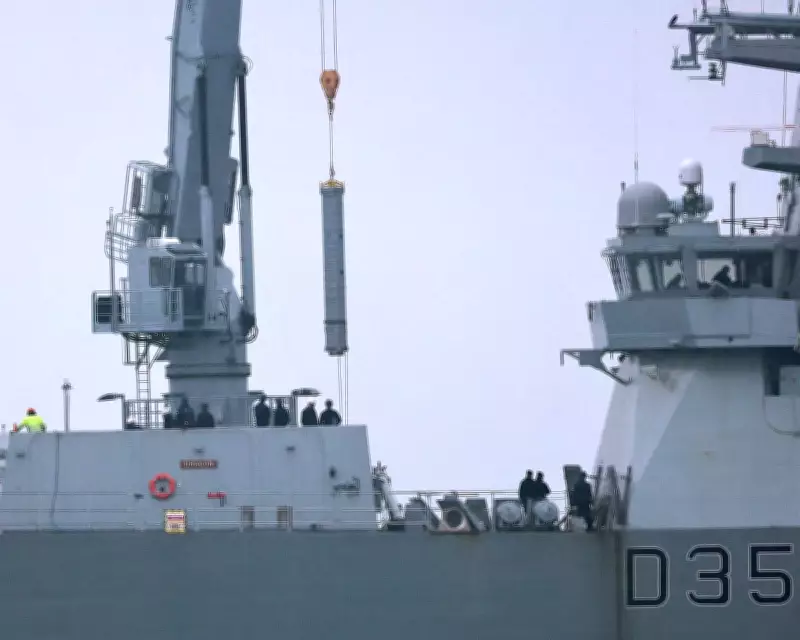
HMS Dragon Deployment to Eastern Mediterranean Faces Delays Amid Criticism
Equipment was loaded onto HMS Dragon, a Royal Navy destroyer, on Monday in preparation for its dispatch to the eastern Mediterranean. The vessel is set to head to Cyprus in the coming days, according to Defence Secretary John Healey, who addressed the House of Commons amidst growing scrutiny over the UK's response time to recent drone attacks.
Slow Preparation Timeline Raises Concerns
John Healey informed MPs that navy crews are working "tirelessly, 22 hours a day" to ready the warship, but acknowledged that it may not arrive off the coast of Cyprus until after the weekend. The sailing time from Portsmouth is estimated at between five and seven days, casting doubt on its timely deployment.
Proposals to deploy HMS Dragon were discussed six days ago and signed off approximately 36 hours after a drone struck the RAF airbase at Akrotiri on Cyprus. This incident occurred during a joint US-Israel attack on Iran, which followed a six-week buildup of US forces in the Middle East and triggered Iranian retaliation against multiple countries within 24 hours.

International Comparisons Highlight UK Lag
France has already deployed its Charles de Gaulle aircraft carrier to the eastern Mediterranean, with President Emmanuel Macron meeting Cyprus's President Nikos Christodoulides and Greece's Prime Minister Kyriakos Mitsotakis on Monday. Britain has faced criticism from Cyprus for not acting swiftly enough to protect the country, which hosts two UK bases. Nearby villages and non-essential personnel were evacuated after the drone attack, with two additional incoming drones intercepted.
Shadow Defence Spokesperson James Cartlidge complained that France, Greece, and Spain had already sent warships to Cyprus, stating, "Labour's failure to deploy the Royal Navy to the eastern Mediterranean has completely undermined our international standing." In response, Healey accused past Conservative governments of having "hollowed out and underfunded" British forces, citing a £12 billion cut from the defence budget and a reduction in frigates and destroyers from 23 to 17.
Technical and Operational Challenges
Three of the Royal Navy's six Type 45 destroyers, equipped with counter-drone systems, were theoretically available for deployment last week, though HMS Dragon had to be taken out of dry dock maintenance. Earlier, Downing Street downplayed reports that the Prince of Wales aircraft carrier could be sent to the Middle East, with officials hinting it was due for NATO commitments in the northern Atlantic.
Healey revealed that the drone that hit Akrotiri was small and originated from either "Lebanon or Iraq," with its exact origin still undetermined by UK experts. Cypriot sources had previously suggested it was flown from territory controlled by the Iran-backed Hezbollah militia. Fragments of the attack drone, described as an Iranian Shahed type, are being analyzed for foreign military hardware, though the UK cannot confirm social media reports of Russian components.
Broader Security Context and Financial Support
Typhoon pilots shot down two more drones, with one intercepted heading towards Bahrain and another destroyed over Jordan. The RAF is also conducting missions to protect the UAE. Healey emphasized that the Iranian regime has been "a source of evil," supplying over 60,000 drones used by Russia against Ukraine and firing over 500 ballistic missiles and 2,000 drones at Israel and other Middle Eastern countries since the war began.
Prior to Healey's statement, Chancellor Rachel Reeves announced that the Treasury's strategic reserve is available to fund military operations in the Middle East, with no immediate budgetary reason for the delay in deploying HMS Dragon. This underscores the complex interplay of operational readiness, international diplomacy, and domestic policy in addressing escalating threats in the region.