

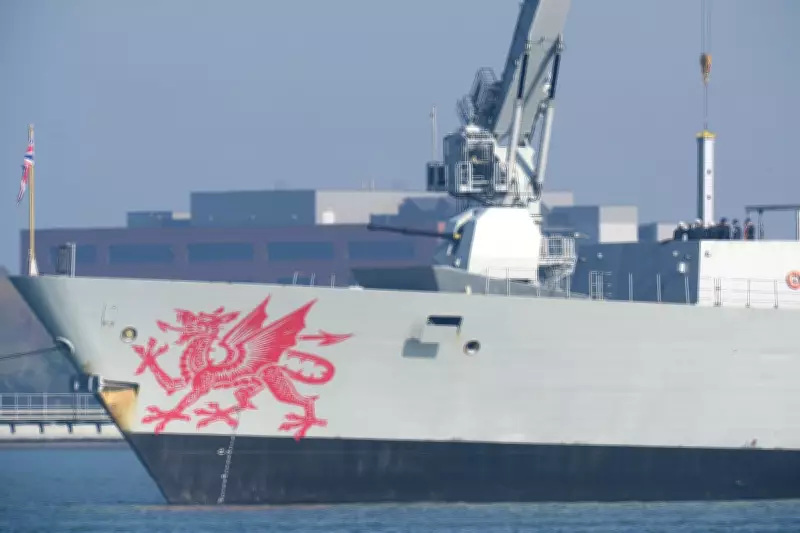
The Royal Navy's Type 45 destroyer, HMS Dragon, has set sail from Portsmouth Harbour, embarking on a critical mission to the eastern Mediterranean. This deployment aims to strengthen the United Kingdom's defensive posture around Cyprus, responding directly to escalating tensions in the Middle East.
Rapid Deployment in Response to Regional Threats
Officials confirmed that the warship's departure follows an announcement made just one week prior, underscoring the urgency of the situation. The deployment was triggered by a drone attack targeting the RAF Akrotiri base in Cyprus, highlighting the immediate threats in the region.
In an extraordinary logistical effort, naval personnel and civilian teams compressed what is typically six weeks of preparatory work into a mere six days. Defence Secretary John Healey lauded this achievement, stating the teams "worked flat out" and delivered "a remarkable effort around the clock."

Advanced Capabilities and Crew Readiness
HMS Dragon, manned by approximately 200 crew members, possesses formidable air defence systems. The destroyer is equipped to launch eight Sea Viper missiles in under ten seconds, providing a robust shield against aerial threats such as drones and ballistic missiles, which have been linked to Iran and its proxies.
Commander Iain Giffin, the vessel's commanding officer, expressed confidence in the mission. "We are trained for this, we are ready for this, we have the equipment and people, we have the support of the British people and, most importantly, our families and friends," he affirmed.
Political Reactions and Broader Military Preparations
The deployment has sparked political commentary. Tory leader Kemi Badenoch remarked, "After two weeks of Keir Starmer's dithering, HMS Dragon is finally leaving port," while extending wishes for a safe deployment to the servicemen and women.
Concurrently, the Ministry of Defence is preparing a second vessel, the landing ship RFA Lyme Bay, for potential deployment. This ship offers aviation and medical facilities, positioning it to assist with evacuation operations from Lebanon if the crisis intensifies, particularly amid Israeli actions targeting Iran's Hezbollah allies.
A Ministry of Defence spokesman noted, "As part of prudent planning, we have taken the decision to bring RFA Lyme Bay to heightened readiness as a precaution, should she be needed to assist in maritime tasks in the eastern Mediterranean."
Economic Implications and Market Responses
The geopolitical unrest has reverberated through financial markets, though some calm returned after US President Donald Trump characterised potential military action as a "short-term excursion" rather than a prolonged war. He issued stark warnings to Iran, threatening "death, fire and fury" unless vessels are permitted passage through the Strait of Hormuz, a crucial conduit for global oil and gas shipments.
Despite this, concerns persist regarding the economic fallout, particularly from potential spikes in energy costs. The UK's Office for Budget Responsibility (OBR) has cautioned that inflation for the year could exceed earlier projections.
Professor David Miles, a member of the OBR's budget responsibility committee, informed MPs, "Right now, if prices don't change from where they are – both the spot prices and market expectations for futures prices, which is particularly important for the Ofgem price cap – we think the inflation rate would end the year not near 2%, but nearer 3%."
This deployment underscores the UK's strategic military responsiveness amid complex international crises, balancing defence imperatives with broader economic and political considerations.






