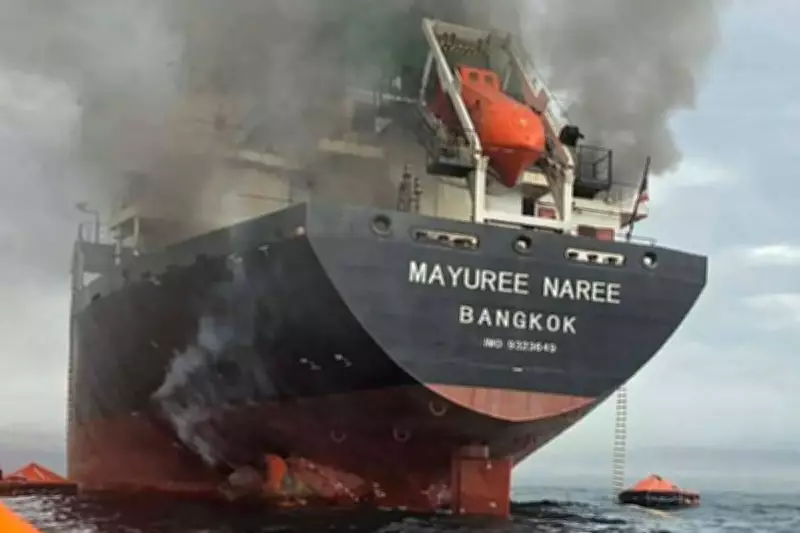
Iran has issued a fresh demand for maritime coordination in the Strait of Hormuz, stating that vessels must now coordinate with the Iranian navy to pass through the crucial waterway. This announcement comes as the United States military prepares to deploy naval forces to escort ships through the strait, marking a significant escalation in the ongoing regional conflict.
Iran's New Maritime Demand
According to reports from the Mehr news agency, Iran's Foreign Ministry spokesperson, Esmaeil Baghaei, declared that the situation in the Strait of Hormuz cannot revert to conditions prior to February 28. He emphasised that Iran has recognised the paramount importance of safety in the strait, a realisation he claims is shared by other parties. "After the current events, generally we cannot return to conditions before February 28 ... as we have understood how important the safety of the Strait of Hormuz is, and so did the others," Baghaei stated, outlining Iran's position that ships must now coordinate with its naval forces for passage.
US Military Prepares Escort Operations
In response to the heightened tensions, the United States has announced plans to prepare the US Navy for escorting vessels through the Strait of Hormuz. U.S. Treasury Secretary Scott Bessent confirmed that the US Navy, potentially in collaboration with an international coalition, will begin escort operations as soon as it is militarily feasible. Bessent added that this could occur once the US achieves "complete control of the skies and ... (Iran's) rebuilding capabilities for the missiles completely degraded." This move signals a robust US commitment to securing the strait and countering Iranian influence in the region.

Impact on Global Energy Markets
The ongoing conflict between the US, Israel, and Iran has severely disrupted the Strait of Hormuz, a vital conduit for global oil transport. This paralysis has led to significant disruptions in oil shipments, causing global energy prices to skyrocket. The strait's closure or restricted access poses a major threat to international energy security, with far-reaching economic implications.
Escalation of Hostilities
Tensions have been further inflamed by reports that Iran began laying mines in the channel, prompting former President Donald Trump to authorise a series of attacks on Iranian mine-laying vessels. These actions have contributed to a volatile environment, with Tehran issuing warnings over what it terms a "grave miscalculation" by the US, and Iran's supreme leader threatening fresh attacks. The situation remains precarious, with both sides positioning for potential further confrontations in the strategically important waterway.