Iran has once again extended an order shutting its airspace to all commercial aircraft, a move that has sent immediate ripples through global aviation networks. The decision, announced early on Thursday, 15 January 2026, was made without official explanation as tensions with the United States remain critically high following Tehran's violent suppression of nationwide protests.
Aviation Chaos on a Key Global Route
The closure has had a profound impact because Iran sits directly on a major East-West flight corridor used by numerous international airlines. The aviation safety monitor SafeAirspace.net reported that several carriers have already reduced or suspended services, with most now avoiding Iranian airspace entirely. This is not the first such closure; Iran previously shut its skies during the 12-day war with Israel in June and during exchanges of fire in the Israel-Hamas conflict.
However, unlike those prior instances, there are no current signs of active hostilities. Experts warn the closure itself could be a precursor to further military activity. "The situation may signal further security or military activity, including the risk of missile launches or heightened air defence, increasing the risk of misidentification of civil traffic," SafeAirspace stated. This concern is rooted in tragic precedent.

A Tragic Precedent and Escalating Rhetoric
In January 2020, Iranian air defences mistook Ukraine International Airlines Flight PS752 for a hostile target, shooting it down with two surface-to-air missiles. All 176 people on board were killed. Iranian authorities initially dismissed Western allegations as propaganda before finally acknowledging responsibility days later.
The latest airspace shutdown coincides with heightened military precautions in the region. Some personnel at a key U.S. military base in Qatar were advised to evacuate, while the U.S. Embassy in Kuwait ordered its staff to temporarily halt visits to multiple military bases in the Gulf state.
A Diplomatic Dance Amid Domestic Crackdown
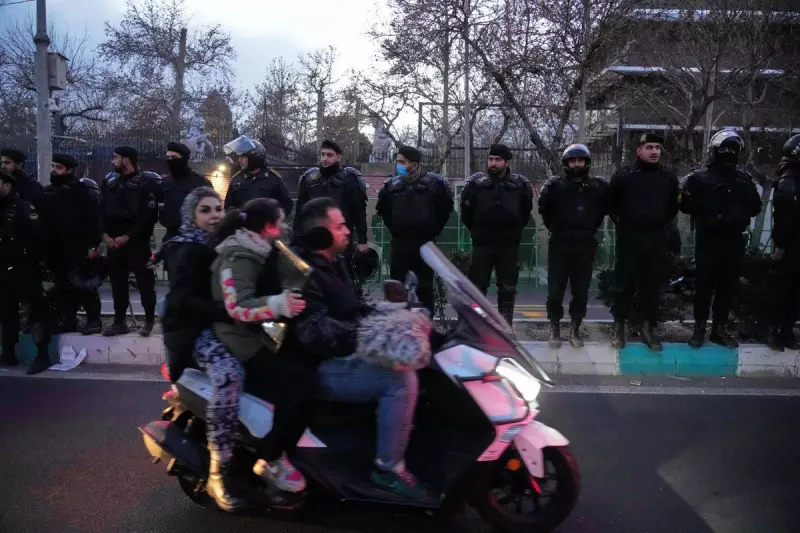
The international tension unfolds against a backdrop of severe domestic unrest in Iran. According to the U.S.-based Human Rights Activists News Agency, the security forces' crackdown on protests has killed at least 2,615 people, a death toll exceeding any other round of protest in Iran in decades and recalling the chaos of the 1979 Islamic Revolution.
Activists have warned that executions of detained protesters could be imminent, following a statement from Iran's judiciary chief urging quick punishment for thousands of detainees. In a notable shift, U.S. President Donald Trump stated on Wednesday that he had been told plans for executions in Iran had stopped, offering few details. This came a day after he told Iranian protesters that "help is on the way" and his administration would "act accordingly."
Simultaneously, Iranian Foreign Minister Abbas Araghchi struck a more conciliatory tone, urging the U.S. to choose diplomacy over conflict. In an interview with Fox News, Araghchi said, "My message is: Between war and diplomacy, diplomacy is a better way, although we don't have any positive experience from the United States. But still diplomacy is much better than war."
For now, the extended airspace closure stands as the most tangible and disruptive symptom of the unresolved crisis, grounding a vital aerial highway and leaving the aviation world watching for the next development.