

Iran Finalises Deal for Chinese Supersonic Anti-Ship Missiles
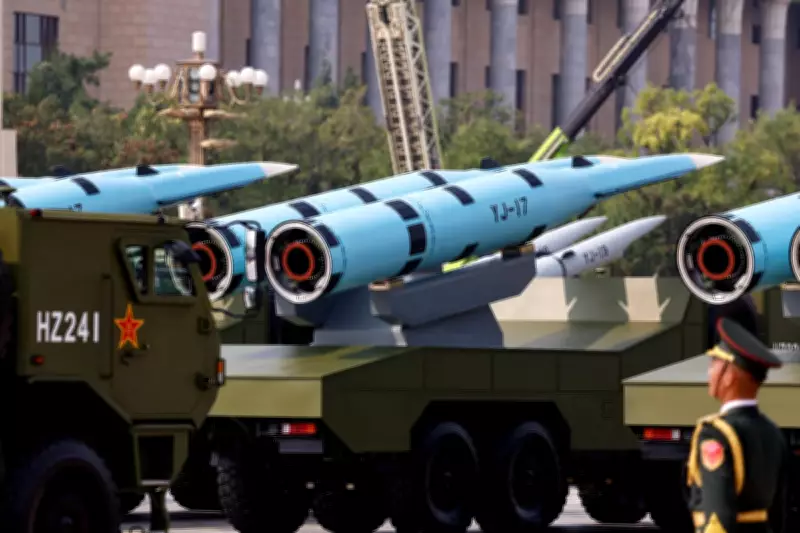
Iran is on the verge of completing a significant arms agreement with China to purchase advanced CM-302 supersonic anti-ship cruise missiles, according to six informed sources. This potential acquisition, described by experts as a "complete game changer" for regional military dynamics, would dramatically enhance Iran's ability to threaten US naval forces in the Gulf and surrounding waters.
Advanced Missile Capabilities and Strategic Implications
The CM-302 missiles, manufactured by China's state-owned China Aerospace Science and Industry Corporation (CASIC), are designed to evade shipborne defences by flying at low altitudes and high speeds. "These missiles are very difficult to intercept," stated Danny Citrinowicz, a former Israeli intelligence officer now serving as a senior Iran researcher at Israel's Institute for National Security Studies. The weapons system can be mounted on ships, aircraft, or mobile ground vehicles and is marketed as capable of sinking aircraft carriers or destroyers.
While the deal is reportedly near completion, no delivery date has been agreed upon, and the exact number of missiles and financial terms remain undisclosed. The acquisition would represent some of the most sophisticated military hardware ever transferred from China to Iran and would directly challenge a United Nations weapons embargo initially imposed in 2006.

Accelerated Negotiations Amid Regional Tensions
Negotiations for the missile systems, which began at least two years ago, intensified sharply following the 12-day war between Israel and Iran in June. According to sources, including three officials briefed by the Iranian government and three security officials, senior Iranian military and government officials travelled to China last summer as talks entered their final stages. Among them was Massoud Oraei, Iran's deputy defence minister, whose visit had not been previously reported.
"Iran has military and security agreements with its allies, and now is an appropriate time to make use of these agreements," an Iranian foreign ministry official commented. The potential sale underscores deepening military cooperation between China and Iran at a time of heightened regional instability, complicating US efforts to contain Iran's missile programme and curb its nuclear activities.
International Reactions and Diplomatic Standoff
China's Ministry of Foreign Affairs stated it was unaware of the reported missile sale talks, while its defence ministry did not respond to requests for comment. The White House, when questioned by Reuters, did not directly address the negotiations. A White House official referenced President Donald Trump's stance, noting he has been clear that "either we will make a deal or we will have to do something very tough like last time" regarding the ongoing standoff with Iran.
This development occurs as the US assembles a significant naval presence near Iran, including the aircraft carriers USS Abraham Lincoln and USS Gerald R. Ford, which together can carry over 5,000 personnel and 150 aircraft. Trump recently gave Iran a 10-day ultimatum to reach an agreement over its nuclear programme or face potential military action, with the US reportedly preparing for sustained operations if necessary.
Broader Military Cooperation and Historical Context
The missile deal signals China's growing willingness to assert itself in a region long dominated by US military power. China, Iran, and Russia conduct annual joint naval exercises, and last year, the US Treasury Department sanctioned several Chinese entities for allegedly supplying chemical precursors to Iran's Islamic Revolutionary Guard Corps for ballistic missile programmes. China rejected these allegations, emphasising strict enforcement of export controls on dual-use products.
During Iranian President Masoud Pezeshkian's visit to Beijing in September, Chinese President Xi Jinping affirmed that "China supports Iran in safeguarding sovereignty, territorial integrity and national dignity." China, alongside Russia and Iran, later contested the reimposition of UN sanctions in a joint letter, calling the decision flawed.

Replenishing a Depleted Arsenal
For Iran, the CM-302 purchase would mark a substantial upgrade to an arsenal depleted by last year's conflict. "It would be a significant improvement," noted Pieter Wezeman, a senior researcher at the Stockholm International Peace Research Institute. Beyond anti-ship missiles, Iran is also in discussions to acquire Chinese surface-to-air missile systems, man-portable air-defence systems (MANPADS), anti-ballistic weapons, and anti-satellite technologies, according to sources.
While China was a major arms supplier to Iran in the 1980s, large-scale transfers diminished by the late 1990s due to international pressure. Recent years have seen US accusations against Chinese companies for providing missile-related materials, though not complete systems, highlighting the escalating strategic rivalry and Iran's pivotal role as a battleground between US interests and those of Russia and China.





