How Iran's Revolutionary Guard Would Resist a US Ground Invasion: Historical Lessons
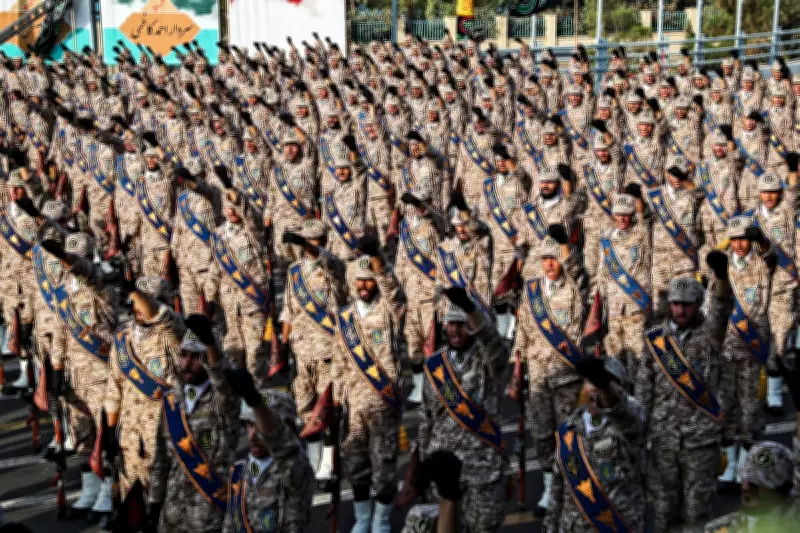
The Islamic Revolutionary Guard Corps (IRGC) of Iran represents a formidable military and political force that has consistently demonstrated resilience and tenacity throughout its history. With approximately 190,000 active members and an estimated 450,000 reserves in the Basij paramilitary wing, the IRGC not only constitutes the largest component of Iran's armed forces but also wields significant influence over the nation's politics, intelligence apparatus, and economy.
Following the assassination of Supreme Leader Ayatollah Ali Khamenei in an Israeli airstrike on February 28, US President Donald Trump offered immunity to IRGC forces in exchange for laying down their arms. The IRGC rejected this proposal outright, and despite losing numerous leaders over the subsequent month, it shows no indication of surrendering. As US ground forces deploy to the Middle East, it is crucial to recognize that despite extensive US-Israeli bombing campaigns, infrastructure damage, internal divisions, and leadership losses, the IRGC would likely mount a determined resistance to any invasion of Iranian territory. Its historical trajectory provides compelling evidence for this assessment.
From Revolutionary Militia to Frontline Combat Force
The IRGC originated during the 1979 Iranian Revolution, emerging from ad hoc street militias composed of students loyal to Ayatollah Ruhollah Khomeini's vision of an Islamic Republic. Initially established as a national guard to protect the nascent revolutionary government against secular factions, it quickly evolved into a praetorian guard for the supreme leader. In its early years, the IRGC prevented counter-revolutionary actions by the Artesh, the former Shah's military, and engaged in street battles with rival revolutionary groups, including secular leftists and competing Islamist militias.

The 1980 Iraqi invasion of Iran marked a pivotal moment, transforming the IRGC into a frontline conventional combat force alongside the national military. By 1982, they had repelled Saddam Hussein's initial attack, though the war persisted for another six years. Many current IRGC commanders gained firsthand experience during this conflict, witnessing Iraq's use of chemical weapons while Western powers remained largely silent. The IRGC also developed counter-insurgency capabilities, suppressing various internal ethnic rebellions such as Kurdish revolts in the northwest beginning in the 1980s and Baloch insurgencies in the southeast during the 2000s. Consequently, recent attempts to incite Kurdish uprisings would likely provoke intense retaliation from IRGC commanders with decades of experience combating such groups.
Strategic Lessons from Proxy Warfare
Through its regional proxy networks, the IRGC has accumulated extensive experience in protracted attritional warfare against both the United States and Israel. In 1982, the IRGC established the Quds Force, a foreign expeditionary unit named after the Arabic term for Jerusalem. This force supported the creation of Hezbollah in Lebanon following Israel's invasion that year to expel the Palestine Liberation Organization. From that point forward, the IRGC has confronted Israel indirectly through proxy forces.
Over eighteen years, Hezbollah employed tactics like suicide car bombs to gradually wear down occupying Israeli forces, culminating in Israel's withdrawal from southern Lebanon in 2000, widely perceived as a military failure. Similar strategies were deployed after the 2003 US invasion of Iraq, where Quds-backed Shi'a militias such as Kataib Hezbollah targeted US troops with improvised explosive devices. The United States ultimately withdrew from Iraq in 2011, seeking to extricate itself from what had become a "forever war."
The experiences of proxies in Lebanon and Iraq provide valuable lessons that the IRGC would almost certainly apply in the event of a US invasion. While these attrition-based tactics may not thwart an immediate, high-intensity ground assault, they could prove effective in prolonging a conflict if US objectives remain unclear or unachievable. In such a scenario, the IRGC's well-honed strategies for wearing down occupying forces would be extensively deployed, potentially leading to another protracted occupation and low-intensity conflict.

Iran-US Relations and the "Axis of Evil"
Decades of bilateral tensions between Iran and the United States were briefly interrupted following the 9/11 attacks, when both nations found themselves aligned against the Taliban in Afghanistan. Iran's regime even offered assistance to US pilots who landed on Iranian soil while combating this mutual enemy. However, in January 2002, President George W. Bush's designation of Iran as part of an "Axis of Evil" alongside Iraq and North Korea dramatically shifted Iranian public perceptions of the United States.
This move effectively ended reformist President Mohammad Khatami's efforts at rapprochement. Three years later, the regime supported the rise of hardliner Mahmoud Ahmadinejad, who, along with the Supreme Leader, invested heavily in expanding both Iran's nuclear program and the IRGC. Since then, the IRGC has assumed multiple security functions within the Islamic Republic.
The only subsequent period of détente occurred in 2014, when the Quds Force collaborated with US air support to combat the Islamic State in Iraq during the Obama administration. A year later, the United States entered a nuclear deal with Iran, from which President Trump withdrew in 2017. When IRGC bases were struck by ISIS terrorist attacks in early February 2019, the IRGC interpreted these incidents as the result of covert US actions, blaming both the United States and Israel alongside increased Balochi and Kurdish subversion.
From the IRGC's perspective, the current conflict under the Trump administration represents a continuation of systemic American efforts dating back to the 1980s to undermine the IRGC through proxies and economic warfare, thereby weakening the Islamic Republic. For them, this is a struggle that has endured since the 1979 Iranian Revolution.
Institutional Power and Survival Instincts
While the IRGC has undoubtedly been weakened by recent US-Israeli aerial attacks, its history reveals a pattern of officers with a strong corporate identity who will defend their institutional power even in the face of leadership losses. This explains why, following Khamenei's death, the IRGC rallied behind his son Mojtaba to maintain its influence. Despite varied public reactions to Khamenei's assassination, the IRGC presented a united front in supporting the regime, recognizing that the collapse of Iran's political system would jeopardize its privileged status.
Moreover, the IRGC has evolved into a significant business network, with holdings spanning media, construction, and other service sectors, controlling at least 20% of Iran's economy. Many IRGC leaders have benefited from corrupt practices within these networks, creating strong incentives to resist any political change that might hold them accountable. This network of privilege effectively constitutes a deep state, making the IRGC not merely an army but a separate, autonomous military institution with vast influence.
If historical patterns and the current conflict are any indication, the IRGC will fight to the bitter end rather than capitulate, driven by a combination of ideological commitment, institutional survival instincts, and economic self-interest. Its resilience in the face of past challenges suggests that any US ground invasion would encounter a determined and resourceful adversary prepared for prolonged resistance.