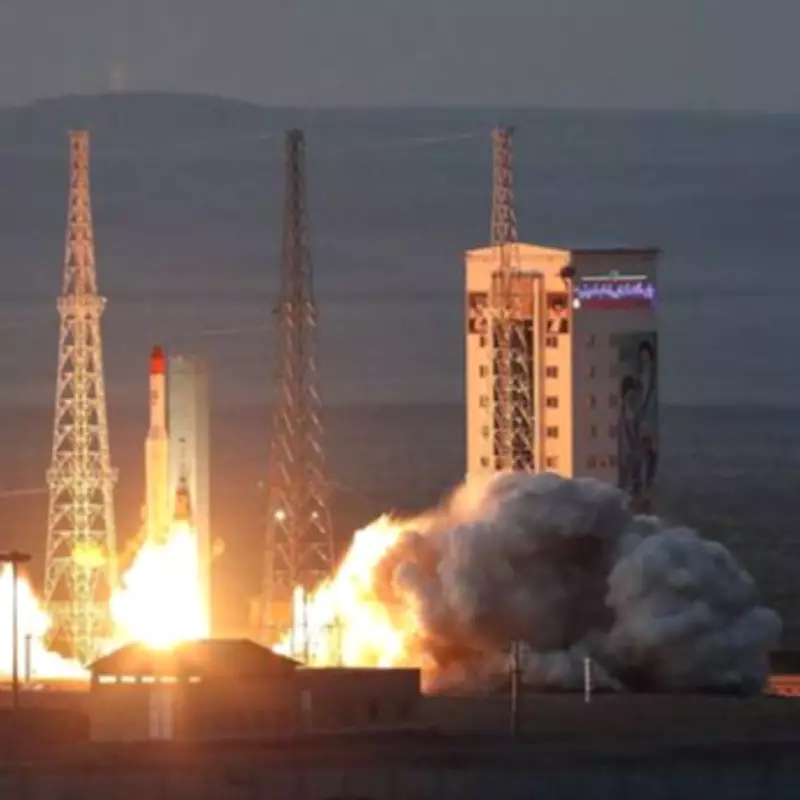
Iran's Space Launch Vehicle Suspected in Attack on UK-US Military Base
Iran may have utilised a space launch vehicle to fire two ballistic missiles at the joint UK-US Diego Garcia military base, according to defence experts. The revelation emerged on Saturday, though precise timing of the attack remains unclear. The Ministry of Defence confirmed the incident occurred before Prime Minister Keir Starmer authorised expanded US use of British military sites on Friday.
Neither warhead struck the facility on the Chagos Islands in the Indian Ocean. One missile reportedly failed during flight, while the other was successfully intercepted by US defence systems. This event signals a concerning escalation for British military leaders, who now fear the Iranian regime possesses greater military capabilities than previously estimated.
Extended Range Capabilities Raise European Security Alarms
Previously, intelligence suggested Iran's missiles had a maximum range of 2,000 kilometres (1,243 miles). However, the Diego Garcia base lies approximately 3,800 kilometres (2,361 miles) from Tehran, indicating significantly enhanced reach. Experts believe this development potentially places major European capitals, including Paris, within striking distance.

Retired Royal Navy Commodore Steve Prest stated: "Ballistic missiles are essentially space rockets. They launch, ascend to extreme altitudes, and descend rapidly. Any nation with a space programme inherently possesses ballistic missile capabilities." Prest interpreted the launches as a deliberate message of defiance, demonstrating Iran's expanded military prowess.
The Simorgh Space Rocket: Technical Specifications and Strategic Implications
The suspected vehicle, known as Simorgh or Safir-2, is a 90-foot, two-stage, liquid-fuelled rocket originally designed for satellite deployment. It represents Iran's first domestically produced launch vehicle capable of placing multiple payloads into orbit.
Justin Bronk, senior research fellow at the Royal United Services Institute defence think tank, noted that while Simorgh likely offers increased range, this probably comes "at the likely cost of terminal accuracy." This trade-off between distance and precision creates complex defensive challenges.
Government Response and Diplomatic Tensions
Foreign Secretary Yvette Cooper addressed concerns about Iran's potentially enhanced weaponry: "This represents the latest in Iran's reckless strikes targeting Gulf partners, international shipping, allies, and British interests." She emphasised continued UK support for defensive actions against ballistic missile threats while advocating for swift conflict resolution to ensure regional stability.
General Sir Richard Barrons, former head of Joint Forces Command, argued Iran's regime has been "serially underestimated." He warned: "This conflict now endangers British interests and those of our allies. Complete indifference is no longer viable, despite initial decisions differing significantly."
Broader Regional Conflict and Global Implications
The attack occurs amid escalating US-Iran hostilities. The UN nuclear watchdog has appealed for "military restraint" to prevent potential nuclear accidents, particularly after strikes targeted Iran's Natanz nuclear facility. Meanwhile, Israel Defense Forces conducted extensive air strikes in Tehran, hitting ballistic missile production sites and rocket fuel facilities.
Iran's Islamic Revolutionary Guard Corps claims to have attacked air bases in Kuwait and the UAE, allegedly used by US and Israeli forces. Concurrently, the US military asserts that operations have degraded Iran's ability to threaten the strategic Strait of Hormuz.
Political Divergence and Alliance Strains
Prime Minister Starmer initially declined US requests to utilise British bases for offensive strikes against Iran, only permitting defensive operations after Iranian retaliation. This cautious approach has drawn criticism from former US President Donald Trump, who expressed surprise at Britain's delayed response.
Iranian Foreign Minister Abbas Araghchi previously warned that allowing US forces to use British bases would be considered an act of aggression, a message reportedly delivered during a tense phone conversation with Foreign Secretary Cooper.

A Ministry of Defence spokesperson reiterated: "Iran's reckless attacks across the region and its disruption of the Strait of Hormuz threaten British interests and allies. RAF jets and other UK military assets continue defending our personnel, with specific, limited defensive operations authorised for US forces using British bases."
As defences at UK Gulf bases remain at maximum alert, analysts warn the Diego Garcia incident may represent more than a simple attack—it could be a strategic demonstration of expanded capabilities that fundamentally alters regional security calculations.