

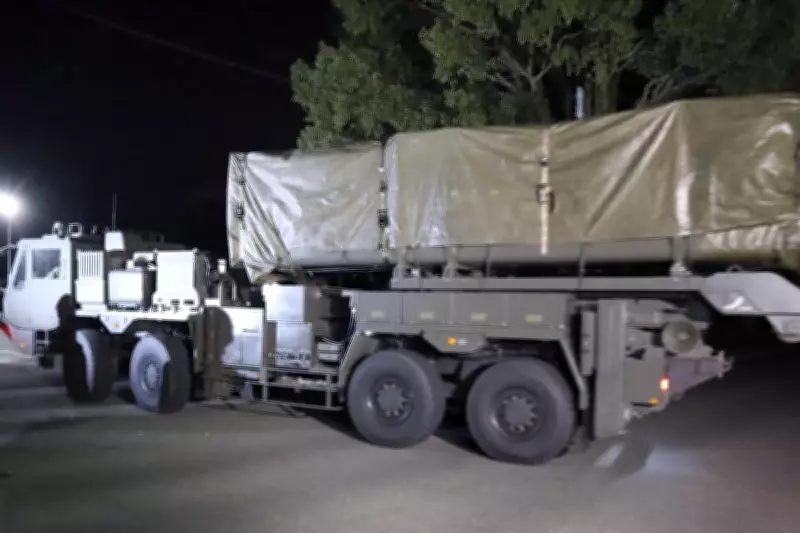
Japan has initiated the deployment of its first batch of domestically developed long-range missiles, marking a significant step in the nation's military expansion. Launchers and equipment arrived at Camp Kengun in Kumamoto prefecture early Monday in a secretive operation that has sparked local protests and criticism over a lack of transparency.
Accelerated Military Buildup in Response to Regional Challenges
Chief Cabinet Secretary Minoru Kihara confirmed that the upgraded Type-12 land-to-ship missiles will be fully deployed by the end of March, though specific details were withheld. This deployment is part of Japan's accelerated military strategy, with the Defense Ministry advancing the schedule by one year due to escalating tensions in the region, particularly around Taiwan, which China claims as its territory.
Local Opposition and Transparency Concerns
The arrival of army vehicles carrying missile launchers past midnight drew dozens of protesters outside Camp Kengun, who shouted slogans like "Stop long-range missile deployment!" and held banners expressing dissent. Kumamoto Governor Takashi Kimura voiced disappointment, stating that the prefecture was never officially notified and learned of the deployment through media reports. Opponents argue that the move lacks transparency, could heighten regional tensions, and make the missiles potential targets for attacks.

Enhanced Capabilities and Strategic Deployment
Developed and produced by Mitsubishi Heavy Industries, the upgraded Type-12 missile boasts a range of approximately 1,000 kilometers (620 miles), a substantial increase from the original 200-kilometer (125-mile) range, enabling it to reach mainland China. Following the deployment at Camp Kengun, the missiles will be stationed at Camp Fuji in Shizuoka, west of Tokyo, later this year. Japan views China as a growing security threat and has been reinforcing its military presence on southwestern islands near the East China Sea, including Okinawa, Ishigaki, and Miyako, with PAC-3 interceptors and midrange surface-to-air missiles.
Broader Defense Policy Revisions
Prime Minister Sanae Takaichi has emphasized that any Chinese military action against Taiwan could justify a Japanese response, further escalating tensions. Her government is committed to revising security and defense policies by year-end, aiming to bolster Japan's military with unmanned combat weapons and additional long-range missiles. Additionally, plans are underway to lift restrictions on lethal arms exports in the coming weeks, based on a proposal from Takaichi's party and its coalition partner, to enhance Japan's defense industry and international cooperation.
Defense Minister Shinjiro Koizumi recently announced that midrange surface-to-air missiles will be deployed on Yonaguni Island, Japan's westernmost point near Taiwan, by March 2031. This comprehensive military buildup reflects Japan's proactive stance in addressing regional security challenges while facing domestic scrutiny over transparency and escalation risks.






