

Why Iran's Critical Kharg Island Oil Terminal Stays Unharmed Amid US-Israel Strikes
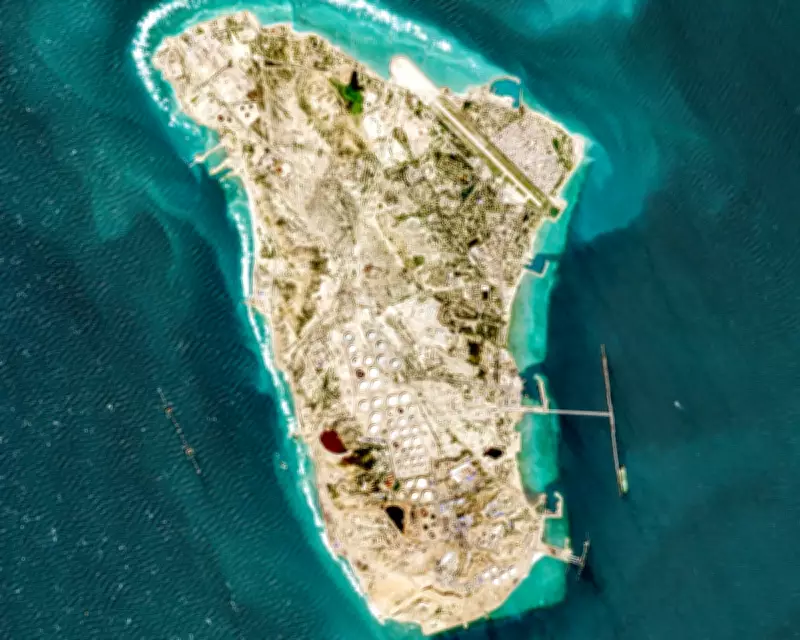
Kharg Island, a coral island in the Persian Gulf, serves as the primary export terminal for Iran's oil, facilitating approximately 90% of the nation's crude exports. Despite extensive US-Israel bombing campaigns targeting thousands of sites in Iran, this crucial economic hub has remained untouched, raising questions about strategic calculations and global market implications.
Global Energy Markets at Risk from Potential Attack
Experts caution that any assault on Kharg Island could trigger a sustained surge in oil prices, exacerbating existing market volatility. Neil Quilliam of Chatham House predicts that an attack might drive prices from recent highs of $120 per barrel to as much as $150, emphasizing the terminal's vital role in global energy supply chains. The interconnected nature of oil markets means that disrupting Iran's exports would have worldwide repercussions, particularly as the Strait of Hormuz remains effectively closed due to fears of Iranian retaliation, already adding nearly $20 per barrel to oil costs.
Strategic and Economic Considerations in Targeting Kharg
Kharg Island, established by US oil conglomerate Amoco and seized during Iran's 1979 revolution, features deep-water access ideal for large crude tankers, with satellite imagery revealing extensive loading jetties. According to JP Morgan, the terminal typically handles 1.3 to 1.6 million barrels of oil daily, though Iran ramped up volumes to 3 million barrels in mid-February in anticipation of attacks, with an additional 18 million barrels stored as backup. Michael Rubin, a former Pentagon adviser, has advocated for targeting Kharg to economically cripple the Iranian regime, arguing that without oil sales, Iran would struggle to meet payroll and sustain its economy.

Political and Operational Challenges of an Assault
Destroying or seizing Kharg Island presents significant hurdles. Lynette Nusbacher, a former British army intelligence officer, warns that damaging the export site could cause an "economy-shaping increase" in oil prices that would not quickly subside, with repairs potentially taking years due to the complex infrastructure. Moreover, a seizure operation would likely require a large, sustained military effort beyond typical special forces incursions. Quilliam adds that such a move could backfire, creating a standoff where Iran retains production capacity but cannot export, while the US controls the terminal but lacks production, potentially sending markets into a "tailspin."
Long-Term Implications for Iran's Future
Beyond immediate economic impacts, targeting Kharg Island carries political risks. Nusbacher notes that destroying the facilities would undermine any pretense of fighting for a brighter future in Iran, as it would deprive a potential successor regime of vital oil revenue. This consideration, coupled with the global market instability, may explain why Israel refrained from attacking Kharg during last summer's conflict and why US-Israel forces have so far avoided it, despite striking other oil infrastructure like refineries and depots in Tehran that caused widespread disruptions.
As tensions persist, the untouched status of Kharg Island highlights the delicate balance between military objectives and economic consequences in the ongoing US-Israel campaign against Iran.






