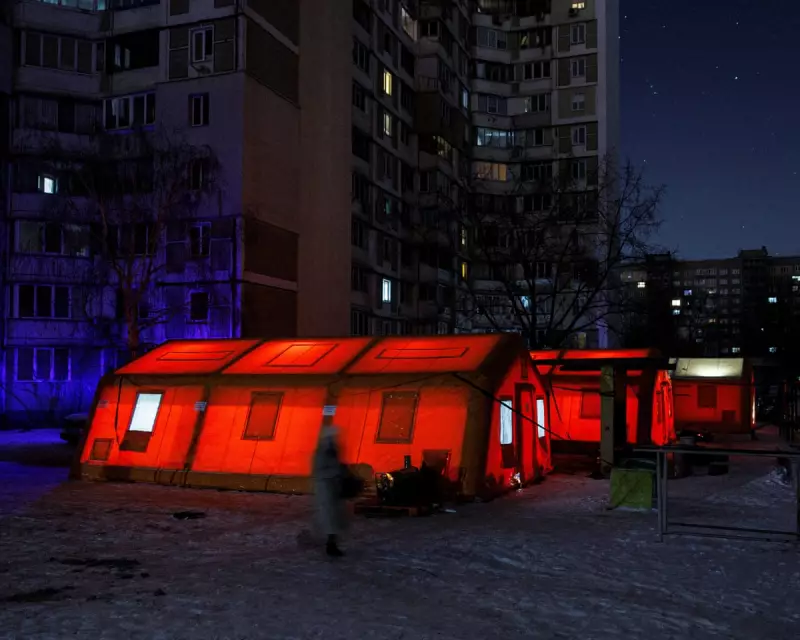
Kyiv is enduring some of its darkest and coldest days since the full-scale invasion began, as a concerted Russian campaign against Ukraine's energy infrastructure leaves residents freezing in the dark. The impact of the latest strikes, which authorities say aim to disconnect the capital, rivals the dire early weeks of the war.
A Midnight Meal in the Freezing Dark
On the night of 9 January, Tetiana Shkred began cooking for her children at midnight. Heeding warnings from President Volodymyr Zelenskyy of massive imminent airstrikes, and fearing another power cut in her left-bank Kyiv apartment, she cooked until 3am. Right on cue, her flat was plunged into freezing darkness.
"Everything in the apartment is electric. No electricity means no water and I can't cook," Shkred explained. For the first 24 hours after the attack, there was no heating. Her family, including her four- and eleven-year-old children, huddled in thermal wear and ski clothes, all sleeping in one bed for warmth amidst daytime temperatures of -12C and nighttime lows of -19C.

A Deliberate Strategy to 'Disconnect the City'
The intention behind the strikes is clear. Following a fresh wave of attacks on Monday night, Ukraine's state grid operator, Ukrenergo, stated Moscow's goal was to "disconnect the city." Chief executive Vitalii Zaichenko confirmed substations had been hit, leaving 70% of Kyiv without electricity and forcing people to consider leaving.
This strategy extends beyond the capital. Recent weeks have seen major blackouts in Odesa, Dnipro, and Zaporizhzhia, exacerbated by freezing weather and a growing shortage of spare parts for repairs. Even in central Kyiv, rolling blackouts darken streets, cafes, and supermarkets, where escalators and checkouts grind to a halt.
Community Resilience Amidst the Cold
In the worst-hit neighbourhoods, where power remains unreliable days later, emergency services have erected heated tents in the snow. These points offer warmth, hot food, and drinks. At one such tent on Kharkivske Shose, Alla Polischuk sought refuge with her teenage daughter, Iryna, after three days without power in their old apartment block.
"I'm afraid they are trying to freeze us," Polischuk said. "They waited for this cold snap... I'm worried now that they will strike again now it's so cold." Some residents have heeded Mayor Vitali Klitschko's advice to temporarily leave for warmer countryside homes.
Local initiatives highlight the community's determination. School 329, now closed due to the cold, serves as a warming centre and distributes emergency LED lighting. Building manager Oleksandr Matienko carefully manages a bank of batteries for his block, aware that neighbouring buildings lack such resources and are freezing.
The human cost is stark. On 9 January, a Russian missile hit an apartment block just 100 metres from where school deputy director Valentina Verteletska lives, killing a mother and her daughter. "I think the Russians want to break us," Verteletska said. "They want to make Ukrainians angry and unhappy... But this makes us tougher and more determined."
As Oleksandr Matienko summarised while trying to fix a cafe's generator: "You can see with your own eyes what is going on. They are trying to kill us. They can't win any other way. So they are willing to do anything to destroy Ukraine." For now, Kyiv's battle is not just on the frontline, but against the cold and darkness within its own homes.