Lord Hague Condemns Starmer's Iran War Management and UK Defence Shortfalls
Sir Keir Starmer has encountered a new wave of criticism regarding his administration's handling of the Iran war and Britain's military preparedness. Former Foreign Secretary Lord Hague has openly criticised the Prime Minister's two-stage response when former US President Donald Trump sought British assistance.
Two-Stage Response Draws Scrutiny
The former Conservative leader asserted that the Government "could have handled all of this better" by providing a single, clear answer to the Americans from the outset. Specifically, Lord Hague suggested that Britain should have immediately agreed to allow US forces to utilise British bases for defensive actions against Iran.
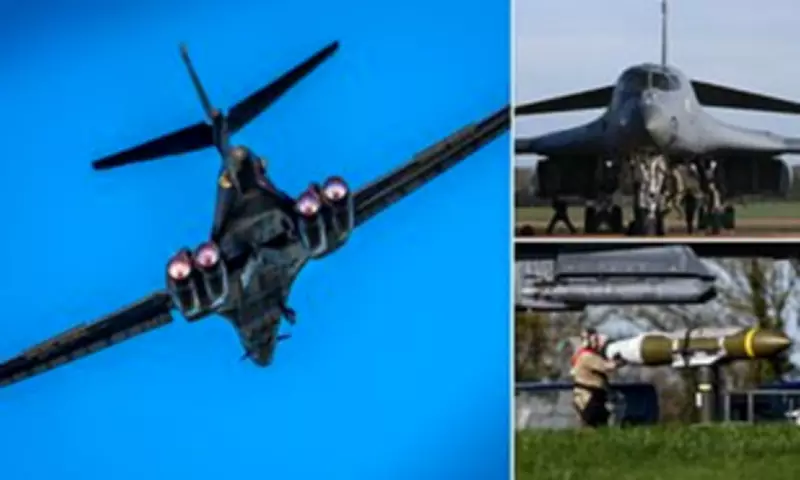
In reality, Sir Keir initially refused President Trump's request to use UK bases for offensive operations. However, he later reversed this decision, permitting American bombers stationed at bases like RAF Fairford to conduct defensive strikes targeting Iranian missile launch sites.

Military Preparedness Under Fire
While speaking to The Telegraph, Lord Hague acknowledged that the Government was correct to avoid direct involvement in US strikes on Iran. He noted that Mr Trump had entered the conflict "without a clear exit strategy." Nevertheless, he insisted that the Prime Minister should have agreed to assist the Americans defensively while refusing to join the war outright.
Lord Hague particularly criticised the lack of British military preparations for the ensuing conflict. "They could have positioned enough ships in the right place to do so," he stated, highlighting broader concerns about Britain's diminished defence capabilities.
Broader Defence Capacity Concerns
The Tory peer elaborated that this issue reflects more than just Sir Keir's leadership. "It reflects how much Britain's defence capacity has been reduced," he declared. He recalled that during his tenure as Foreign Secretary, it would have been unthinkable not to have minesweepers stationed in Bahrain or a frigate ready in the Mediterranean to deploy to Cyprus.
These criticisms follow recent revelations from the Mail on Sunday, which highlighted concerns from former First Sea Lord Admiral Lord West regarding Labour's decision to withdraw Royal Navy ships from the Gulf region.
Calls for Increased Defence Spending
Lord Hague emphasised that the Government has been caught unprepared, underscoring the urgent need for significantly higher defence spending. However, he also noted that in geopolitical terms, larger questions about Iran's future, oil prices, and Middle Eastern stability matter far more than whether the UK had a destroyer optimally positioned.
These remarks emerge amid claims that Royal Navy leaders were "furious" about the handling of the Middle East crisis, with reports suggesting they were outmanoeuvred by senior army and RAF officials in key command positions. The Times additionally reported that the Government itself suffers from a shortage of senior staff with substantial military experience.
Strained US-UK Relations
Lord Hague also expressed concerns about the future of the special relationship between the UK and the US. President Trump reacted to Sir Keir's initial response by declaring that the Prime Minister was "no Winston Churchill." The Tory peer predicted that the relationship would be rocky in the coming months.
He acknowledged historical disagreements, such as Britain not joining the Vietnam War despite pressure from President Lyndon Johnson, Margaret Thatcher's dispute with Ronald Reagan over Grenada, and the Suez Crisis. However, he noted that the relationship always recovered, partly due to aligned strategic interests during the Cold War.
Navigating a New Geopolitical Landscape
"Today we don't have that same context, and we also have a very temperamental US president," Lord Hague observed. "So I expect turbulence." He admitted that he was relieved not to be dealing with the current US administration, describing it as extremely difficult.

He contrasted Trump with former President Barack Obama, noting that while there were problems under Obama, he was predictable and honoured agreements. "Trump is very different," Lord Hague remarked.
Strategic Recommendations for the Future
Lord Hague suggested that Britain's approach should focus on maintaining personal relationships at the leadership level, presenting close intelligence and military cooperation, strengthening business and institutional links, and exercising patience. "You do just have to ride out difficult periods," he advised.
He proposed that one key lesson from recent events is the need for the UK to become more independent from the US in defence and foreign policy. "Britain must strengthen its own capabilities, because there will be times when we are more on our own," he urged.
He emphasised the importance of developing defence systems that are not entirely reliant on American components, citing projects like the new fighter jet programme with Italy and Japan as positive examples. While the special relationship will remain significant, Lord Hague concluded that it may be less dominant than in previous eras.