

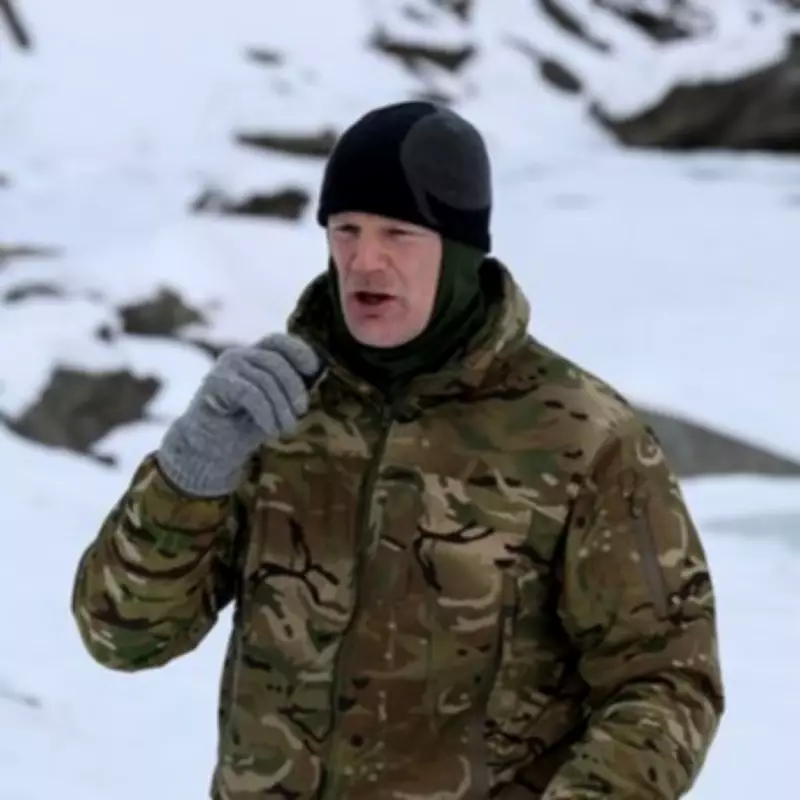
Britain Already Battling World War III Frontlines, Warns Armed Forces Minister
Armed Forces Minister Al Carns has delivered a stark warning that Britain finds itself already engaged in frontline battles against Russia, with the global situation bearing terrifying similarities to the build-up preceding World War II. The war veteran minister made these sobering remarks during a briefing marking the fourth anniversary of Russia's full-scale invasion of Ukraine.
Historical Parallels and Current Realities
When questioned about Ukrainian President Volodymyr Zelensky's assertion that Russian President Vladimir Putin has already initiated global conflict, Minister Carns responded with chilling historical context. "Well, they say history doesn't repeat itself, but it sure was right," Carns stated frankly. "If you were to go back to 1936, 1937, 1938, there's definitely a lot of similarities."
The minister unequivocally declared Ukraine as "the frontline of European defence" and praised Ukrainian forces for their "absolutely sterling job" in holding that critical position against Russian aggression.

Britain's Multiple Frontlines
Contrary to popular perception, Carns emphasized that Britain does indeed maintain multiple active frontlines against Russian threats. "A lot of people say that the UK doesn't have a frontline, but the reality is that we do," he revealed. "It sits in the North Atlantic. It sits in the high North. It sits in cyberspace and it sits in influence."
The minister described these battles as ongoing daily and weekly conflicts that predate the current Ukrainian war, noting that "this war has been going since 2014" when Russia first invaded Crimea and eastern Ukraine.
Russia's Staggering Casualties and Desperate Measures
Newly revealed data exposes the catastrophic human cost Russia has endured in just the past three months. Official figures indicate Russian forces have suffered more than 35,000 battlefield losses during this period, exceeding their recruitment capabilities. Russian troops are regularly experiencing over 1,000 casualties per day from death and injury.
This desperate situation has forced Moscow to seek reinforcements from unlikely allies. Last year, Vladimir Putin successfully persuaded North Korean leader Kim Jong-Un to dispatch 14,000 troops to support Russian operations in Ukraine. Subsequent reports suggest approximately 6,000 of these North Korean soldiers have been killed, with few captured alive due to widespread accounts of injured soldiers taking their own lives.
Russia's Recruitment Crisis and Societal Impact
Growing concerns are emerging about Putin potentially implementing forced conscription, a move that could prove disastrous for the war's already dwindling domestic support. Previous recruitment efforts have heavily relied on Russia's prison populations, offering convicted murderers, rapists, and other violent criminals substantial payments and freedom promises if they survived predetermined periods on the frontlines.
The war's psychological toll is creating severe societal problems within Russia. Many returning veterans struggle with reintegration, compounded by a failing economy and limited employment opportunities. These traumatized soldiers, twisted by frontline nightmares, are contributing to soaring crime rates across Russian communities.
Unimaginable Human Cost
The four-year conflict has exacted a devastating human toll, with over 1.24 million Russian troops killed or injured according to military analysts. This staggering figure surpasses American casualties during the entire Second World War.
"The cost to Russia has been almost unimaginable," Minister Carns emphasized. "1.25 million is more casualties than America had in the entire Second World War. Russia has now been at war longer than it was in the Second World War."
The minister expressed profound disbelief at current developments, stating he "never thought" he would witness North Korean troops fighting on European soil. As global tensions continue escalating, Carns' warnings highlight the urgent need for international vigilance against what increasingly resembles a new world war already in progress.






