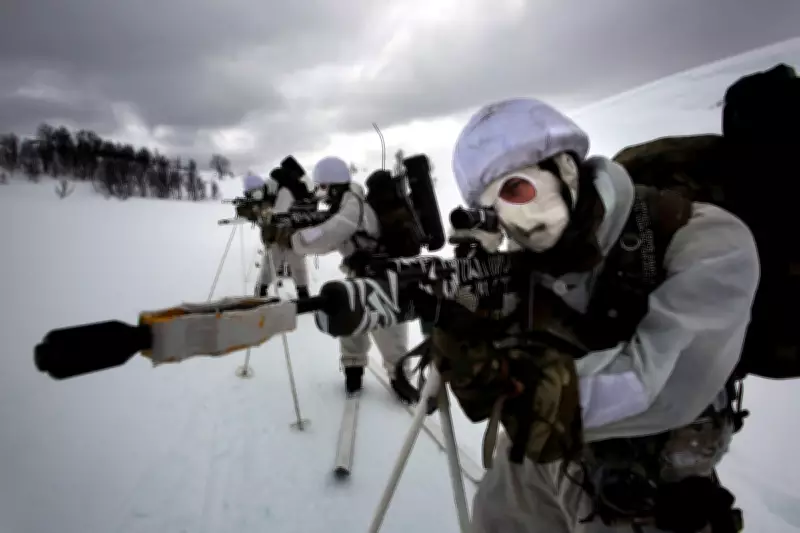
NATO Launches Major Arctic Military Exercises Amid Heightened Greenland Tensions
NATO has initiated its biennial Arctic war games, known as Cold Response, with an unprecedented focus on civilian involvement in military operations. This comes as tensions escalate over former US President Donald Trump's persistent ambition to acquire Greenland from Denmark, a fellow NATO member. The drills, running from 9 to 19 March 2026, are primarily staged across northern Norway and Finland, both of which share borders with Russia.
Unprecedented Scale and Strategic Integration
Approximately 25,000 troops from 14 nations are participating in the Cold Response exercises, including significant contributions from the United States and Denmark. The US has deployed around 4,000 personnel, though it recently withdrew one squadron of F-35 fighter jets from the drills. A spokesperson for the U.S. Marine Corps Forces Europe stated that such adjustments are normal for a globally deployed force, without confirming if the ongoing Middle East conflict influenced the decision.
This year's drills have been integrated into the broader Arctic Sentry initiative, a NATO strategy launched to strengthen the alliance's presence in the polar region. A key objective is to de-escalate friction with President Trump over Greenland, where he has argued the US needs control to counter perceived Russian and Chinese threats, claiming Denmark cannot ensure its security. Both Danish and Greenlandic governments have firmly rejected any sale of the island.

Emphasis on Civilian Readiness and Total Defence
Norway has declared 2026 the year of "total defence," placing significant emphasis on boosting civilian, business, and institutional preparedness for war and other catastrophes. This aligns with broader Nordic efforts to enhance civilian resilience. Major-General Lars Lervik, head of the Norwegian Army, explained that military defence relies on society functioning normally, and the exercises provide an opportunity to rehearse civilian support, such as healthcare services treating increased numbers of injured soldiers.
On Thursday, the military will conduct a scenario testing northern Norwegian hospitals' capacity to handle a high influx of casualties from an imaginary frontline in Finland. This drill underscores the critical role of civilian infrastructure in wartime, with the health service expected to manage more injured personnel than usual, including both Norwegian and allied forces.
Geopolitical Context and Regional Security
The Cold Response exercises are designed to bolster NATO's defensive capabilities in the European Arctic, a region of growing strategic importance due to climate change and increased military activity by Russia and China. The integration into Arctic Sentry reflects NATO's commitment to maintaining stability and deterring aggression in the High North.
Recent drills in Greenland, such as a September 2025 exercise involving Danish and European NATO troops, highlight the island's geopolitical significance. The ongoing tensions over Greenland's sovereignty add a layer of complexity to these military preparations, as NATO members navigate alliance cohesion while addressing individual national interests.
As the exercises progress, the focus on civilian-military cooperation and total defence concepts will likely set a precedent for future NATO operations, emphasizing that modern warfare requires seamless integration between military forces and societal support structures.