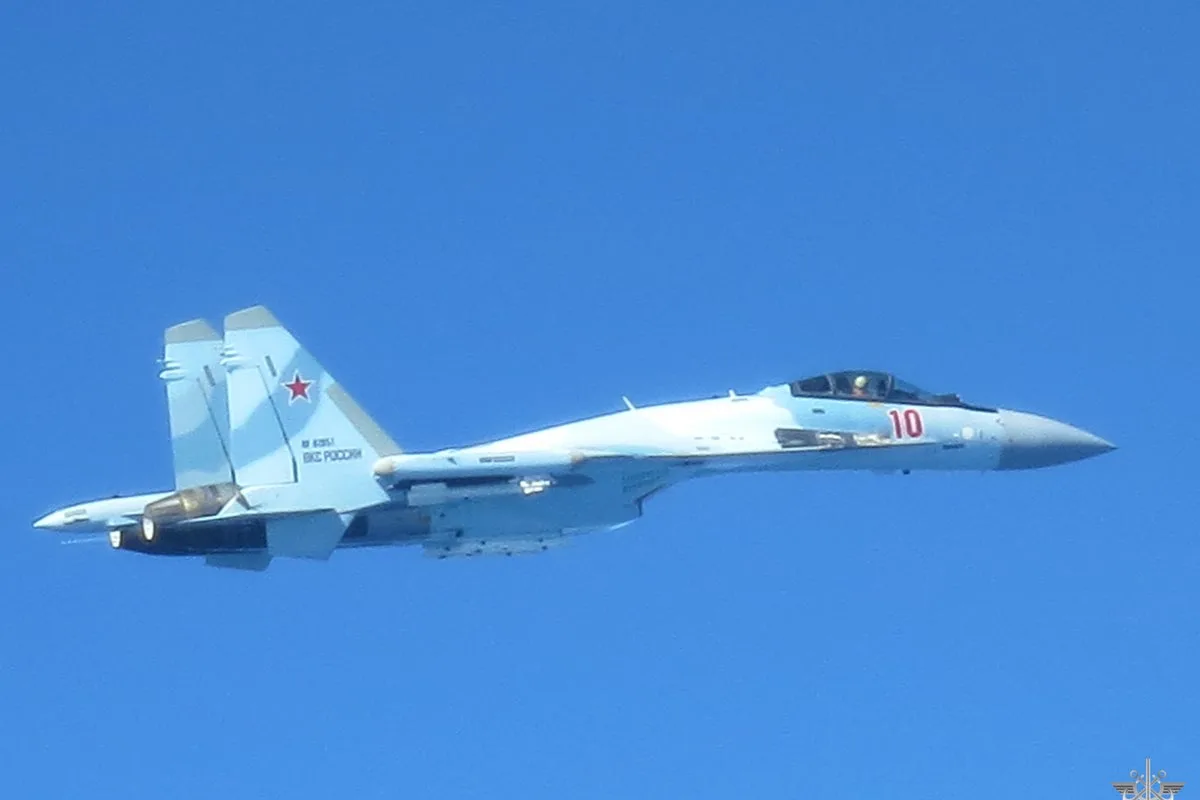
Nato forces intercepted Russian strategic bombers and fighter jets over the Baltic Sea on Monday, in a show of air power on the alliance’s eastern flank. French Rafale fighters, stationed at a Lithuanian air base for Nato’s air-policing mission, were scrambled to join aircraft from Sweden, Finland, Poland, Denmark and Romania in monitoring the Russian formation.
The Russian formation comprised two supersonic Tu-22M3 bombers and approximately 10 fighters, including SU-30s and SU-35s, that alternately escorted the larger aircraft, the French detachment confirmed. Russia’s defence ministry stated the flight was scheduled, occurring in neutral Baltic Sea airspace and lasting over four hours.
The ministry said: “At certain stages of the route, the long-range bombers were accompanied by fighters of foreign states.” It added that all flights are carried out in strict compliance with international rules. Nato routinely scrambles jets to intercept Russian warplanes that approach its airspace, often without transponders or flight plans.

A journalist from The Associated Press witnessed the French detachment’s response from Šiauliai Air Base in Lithuania. Two Rafale crews, already suited up on standby, raced to their hangars and took off within minutes. Monday’s interception was the latest in a series of Russian manoeuvres over the Baltic Sea.