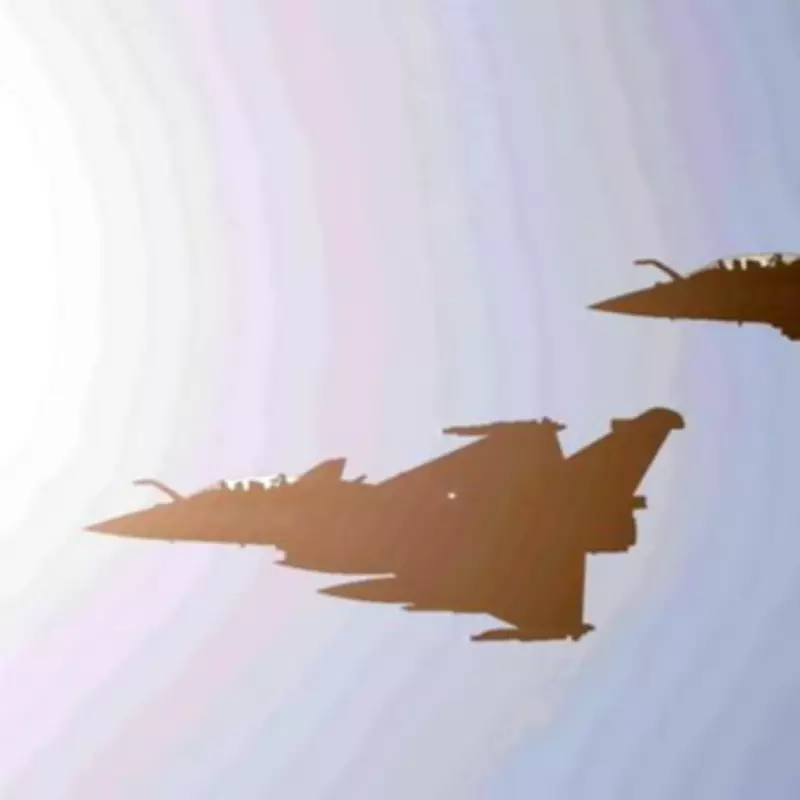
NATO Fighter Jets Scrambled Four Times to Intercept Russian Aircraft in Baltic Airspace
NATO Air Policing fighter jets were urgently scrambled on four separate occasions between April 13 and 19 to intercept Russian military aircraft that were violating established flight regulations near the borders of the Baltic States. This information was officially confirmed by Lithuania's Ministry of National Defence, highlighting a significant escalation in aerial tensions in the region.
Series of Interceptions Over Six Days
The first incident occurred on April 13, when NATO jets were dispatched to identify and intercept an IL-20 aircraft. This plane was travelling through international airspace between the Kaliningrad region of the Russian Federation and back again. Crucially, the aircraft was operating without an active transponder, had not filed a flight plan, and failed to maintain any radio contact with the Regional Air Traffic Control Centre. These actions constituted a clear and deliberate breach of international flight regulations.
On the same day, a second aircraft, identified as an AN-26, was also intercepted by NATO forces. Lithuania's defence ministry noted that while this particular aircraft did have its transponder active and was maintaining radio communication, it too was operating without a submitted flight plan, raising further concerns about procedural compliance.

Continued Violations and Escalating Tensions
The following day, April 14, NATO air policing jets were once again scrambled to intercept the same IL-20 aircraft. The pattern continued on April 15, when NATO aircraft took to the skies to identify two SU-30SM fighter jets. These aircraft were travelling the same route to and from Russia and were found to be in identical violation of flight regulations, operating without proper authorisation or communication protocols.
A final interception occurred on April 17, when NATO fighter jets were deployed once more to intercept the IL-20 aircraft. The Lithuanian Ministry of National Defence revealed that the aircraft again breached aviation regulations, flying through international airspace with its transponder switched off, without a filed flight plan, and failing to maintain radio contact with the relevant air traffic services.
Broader Context and Russian Response
These incidents occurred against a backdrop of heightened regional tensions. There have been recent claims that Finland and the Baltic nations of Estonia, Latvia, and Lithuania had permitted their airspace to be utilised by Ukrainian drones targeting vital Russian oil ports. In response, Sergei Shoigu, secretary of the Russian security council, issued a stark warning, cautioning of Russia's "inherent right" to self-defence.
Shoigu reportedly delivered a "final" warning, backed by the authority of President Vladimir Putin, stating that the Baltic states should avoid making the "mistake" of acting with "impunity" against Russian interests. This rhetoric underscores the serious geopolitical stakes involved in these aerial encounters.
Furthermore, the Russian defence ministry's official TV channel, Zvezda, acknowledged that NATO fighter jets had shadowed Russian bombers during a four-hour sortie over international waters. "At certain stages of the route, the aircraft were escorted by fighter jets from foreign states," the report stated, while insisting that "All flights are conducted in strict accordance with international rules for the use of airspace." This statement directly contradicts the findings reported by NATO and Lithuanian authorities.
The repeated scrambling of NATO jets highlights the ongoing volatility in Baltic airspace and the persistent challenges in maintaining aviation safety and international norms amidst broader geopolitical friction.