

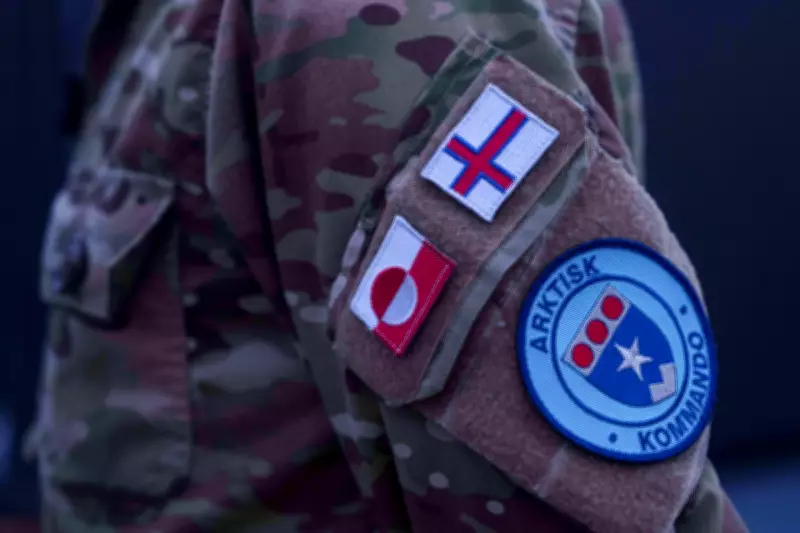
NATO has officially launched a new military effort named Arctic Sentry, designed to significantly boost security and stability across the High North region. This strategic initiative comes precisely one month after former U.S. President Donald Trump escalated tensions within the alliance by threatening to annex Greenland, a move that deeply unsettled European allies.
Coordinated Military Exercises Under a Unified Banner
Initially, Arctic Sentry will serve as the overarching NATO label for a series of national military exercises already planned for the Arctic region. This includes Denmark's Arctic Endurance drills, which previously provoked Trump's ire leading to threats of tariffs against participating allies, and Norway's established Cold Response exercises. It is crucial to note that Arctic Sentry does not entail the permanent or long-term stationing of troops under NATO command in the area.
Instead, the alliance's role will be one of coordination and strategic oversight, managed through its U.S. headquarters located in Norfolk, Virginia. The primary objective is to present a united front to counter the growing influence of both Russia and China in the High North, a region that encompasses the strategically vital territory of Greenland.

Allied Commitment and Strategic Statements
U.S. Air Force General Alexus Grynkewich, NATO's Supreme Allied Commander Europe, emphasized the significance of this new effort. In an official statement, he declared, "Arctic Sentry underscores the alliance's unwavering commitment to safeguard its member states and maintain stability in one of the world's most strategically significant and environmentally challenging areas."
He further added, "This initiative will leverage NATO's collective strength to protect our sovereign territory and ensure the Arctic and High North remains a secure and stable domain for all."
Concrete Contributions from Member Nations
As a direct component of the Arctic Sentry framework, the United Kingdom has announced a substantial increase in its military presence in Norway. The number of British troops deployed will double over the next three years, rising from 1,000 to 2,000 personnel. A contingent of these forces is scheduled to participate in the already planned Exercise Lion Protector this September.
While specific operational details remain limited at this early stage, NATO officials have confirmed that additional allied activities will be incorporated into the Arctic Sentry portfolio. This expansion will occur following a comprehensive assessment of broader regional security needs and as the current cycle of national military exercises concludes.
Key European powers France and Germany have publicly pledged their participation in the initiative, although they have not yet disclosed the exact number of troops or resources they will commit.
Context: Moving Beyond the Greenland Dispute
Arctic security has been a persistent item on NATO's agenda for several years, given that seven alliance members have territories within the region, alongside Russia. However, the impetus for decisive action intensified dramatically following Trump's vocal determination to "acquire" Greenland, which fueled significant diplomatic friction among the allies.
This episode was particularly jarring as NATO's foundational principle is the collective defense of all 32 member states' territories. The notion of the alliance's most powerful member threatening to annex part of Denmark, a fellow ally, sent shockwaves through the diplomatic community. Greenland operates as a semiautonomous territory within the Danish realm.
European allies now express hope that the launch of Arctic Sentry, coupled with ongoing diplomatic discussions between the Trump administration, Denmark, and Greenland's local government, will enable NATO to finally put the contentious annexation dispute behind it. The ultimate goal is to refocus the alliance's efforts and resources on what is widely regarded as Europe's paramount security priority: countering the ongoing threat posed by Russia's war in Ukraine.






