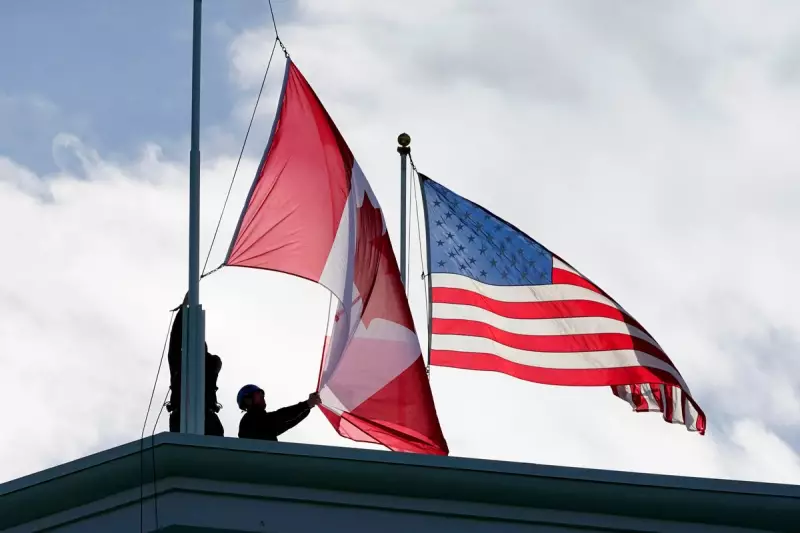
A significant portion of the Canadian public holds fears of a potential military incursion by their southern neighbour, according to a revealing new poll. The survey, conducted in the wake of former President Donald Trump's aggressive foreign policy moves, indicates that geopolitical anxieties are running high.
Polling Data Reveals Deep-Seated Anxieties
The poll was carried out by Leger between January 9 and January 11, 2026, interviewing 1,540 Canadians and 1,011 Americans. It found that 31 percent of Canadian respondents explicitly fear an invasion of their country by the United States. This sentiment emerges against a backdrop of Trump's military operation in Venezuela, which involved the capture of President Nicolas Maduro, and his repeated threats towards Greenland.
The data suggests these events have heightened concerns about a more interventionist US stance. A majority of Canadians, 55 percent, believe Greenland is next on Trump's list. Furthermore, 51 percent predict US intervention in Cuba, and 47 percent foresee action in Panama. Notably, only 36 percent thought Trump would follow through on promised support for protesters in Iran.

Political Context and Canadian Patriotism
Andrew Enns, executive vice-president for Central Canada at Leger, provided analysis on the findings. He noted that Canadian opinion of the US government was not "very high to begin with," but suggested the poll results could benefit Prime Minister Mark Carney. Enns stated the figures help keep "embers of patriotism and that 'defend Canada' sentiment burning pretty strong," which he views as helpful for the current government.
Carney's own election in 2024 was fuelled by a surge of anti-Trump feeling after the then-president threatened to invade and incorporate Canada as the 51st state. Trump further inflamed tensions by repeatedly referring to former Prime Minister Justin Trudeau as "Governor Trudeau," a label implying subservience, which was echoed by some right-wing US media outlets.
Enns emphasised that this history means it "doesn't take much" to worsen Canadian perceptions of Washington. The poll confirms this, with 53 percent of Canadians viewing any US intervention as negative, primarily seeing it as a "serious violation of a country's sovereignty." The capture of Maduro was viewed positively by only 23 percent, while 56 percent said it worsened their view of the US government.
Shifting Alliances and Public Vigilance
As cross-border relations remain strained, Canada is actively seeking to diversify its international partnerships. During recent trade talks in Beijing, Prime Minister Carney told Chinese President Xi Jinping he expected "historic gains" from a renewed partnership, aiming to deliver "stability, security and prosperity for people on both sides." President Xi hailed a "turnaround of ties" between the two nations.
Meanwhile, the Canadian public is watching US activities closely. Around two-thirds are following the situation in Venezuela, a figure that rises to a striking 77 percent among Canadians aged 55 and over. Vigilance is also high among younger demographics, with 60 percent of 18-34 year-olds and 55 percent of 35-54 year-olds paying close attention.
The poll reveals a nation grappling with the geopolitical actions of its closest ally and largest trading partner, leading to a resurgence of defensive nationalism and a strategic pivot towards other global powers.